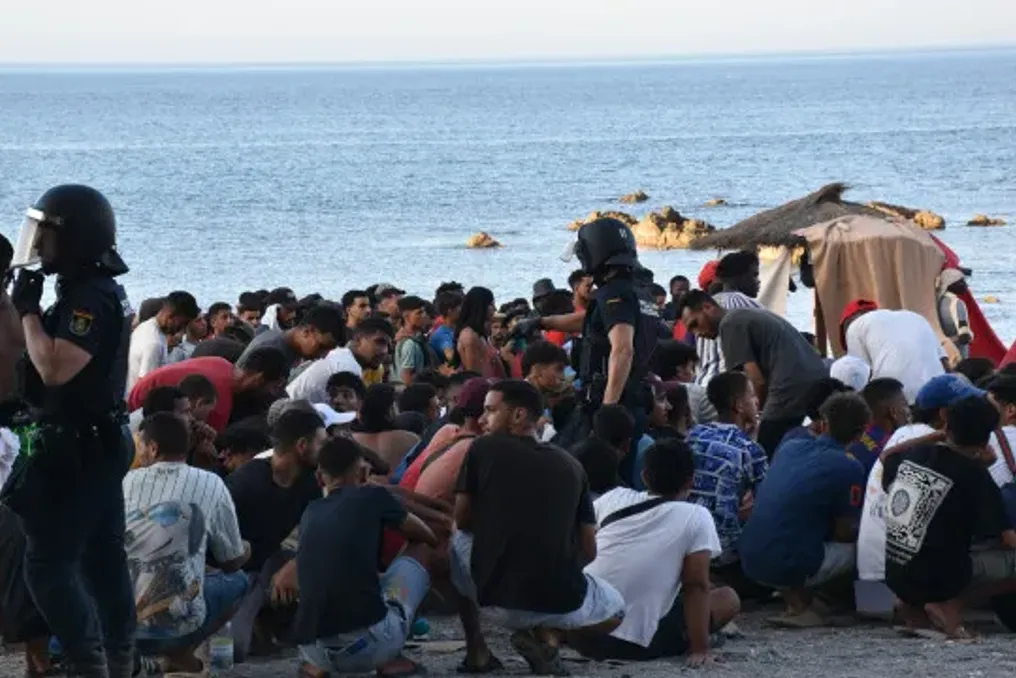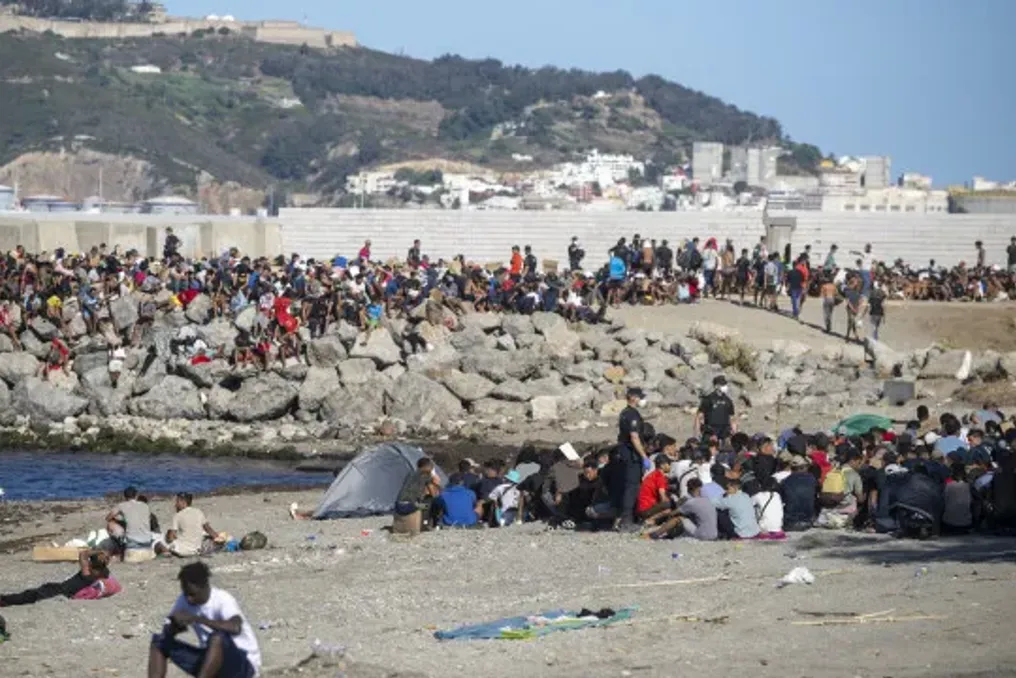
Three weeks later, thousands of migrants remain on the streets of Seuta
Read more
Noticias ao Minuto
noticiasaominuto.com

Three weeks later, thousands of migrants remain on the streets of Seuta

Three weeks later, over 300 migrants gathered near the Loma Colmenar reception area, where one of the temporary facilities established to serve people left in Seuta after the mass arrival is located.

The center is overcrowded, and those on the street hope to secure accommodation and, in many cases, begin the asylum application process. This situation reflects a reality spreading across various points in the city: people spend the day on the streets and search for places to sleep at night, awaiting a decision on their status.

The government created new temporary spaces due to the presence of thousands of migrants in Seuta after the eviction from Trampolín beach forced hundreds of people to move to other reception points.

Hamza, a young Moroccan who claims to have illegally entered Seuta on July 30, has been in the city for about 23 days. Today, he waited with other migrants in the vicinity of the Loma Colmenar concentration point.

He stated to the news agency EFE: 'We are waiting for some decision.' He added that his intention was to get to the center to apply for asylum. He added: 'We are poor, we haven't done anything, we want a solution.' Regarding the reasons that prompted him to cross the border into Seuta, he assured that he did so because he wanted to 'change his life' and because he was poor in Morocco.

Three weeks after this mass arrival, the image of hundreds of people gathered in front of the center, which has no free spots, demonstrates that the migration crisis in Seuta remains unresolved. While new locations are being sought to reduce the burden on reception structures, thousands of migrants continue to wait for a decision and the opportunity to legalize their status or, if necessary, begin appropriate international protection procedures.

Similar stories

Morocco blocks entry of hundreds of migrants into Ceuta
Read more
noticiasaominuto.com

Morocco blocks entry of hundreds of migrants into Ceuta

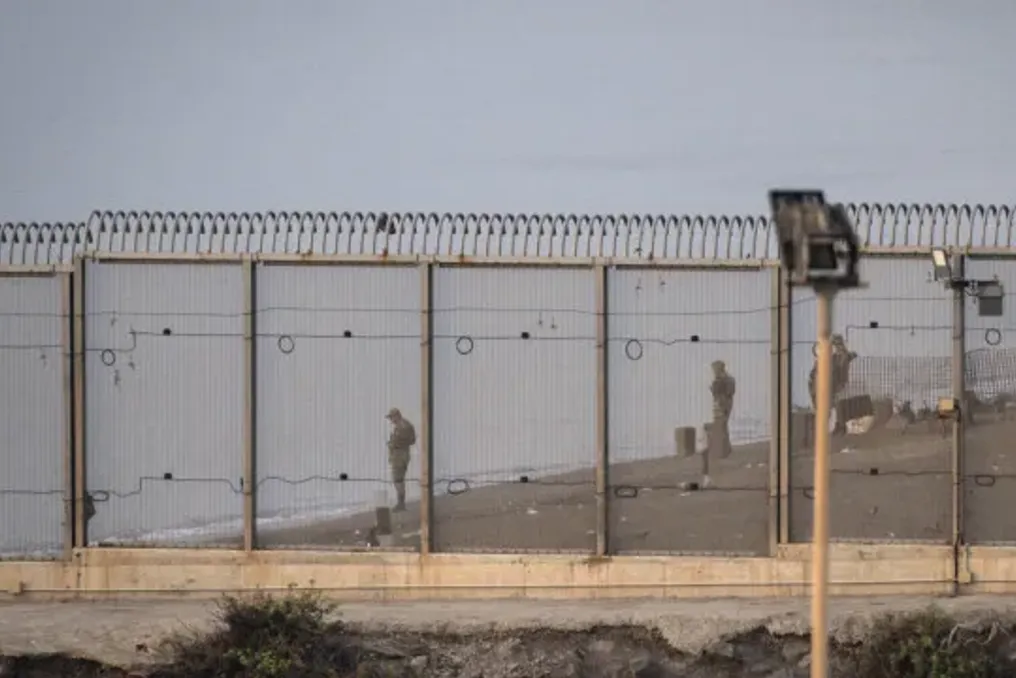
According to sources, the incident occurred in the mountainous area near the border town of Fnideq (Castillejos in Spanish), southwest of Ceuta. Morocco deployed a large security complex involving thousands of operational personnel to prevent a mass influx of migrants into Ceuta, which had been announced on social media.

At the end of July, about 72,000 people entered the autonomous city of Ceuta, located in North Africa, within 24 hours. According to Spanish authorities, 70,000 of them had already returned to Morocco by August 6.

It is reported that at least 82 people died while attempting to reach Ceuta by swimming.

Ceuta is a small region with a population of 80,000, located in the extreme north of Morocco and bordered by the Strait of Gibraltar. It is one of two land borders between Africa and Europe, alongside the other Spanish enclave of Melilla.

Spain intends to curb illegal entry into Ceuta, stating there is no room for illegal migrants
Read more
noticiasaominuto.com

Spain intends to curb illegal entry into Ceuta, stating there is no room for illegal migrants

Minister Marlaska stated that in Spain, as well as in Ceuta, Melilla, and other cities in the country, there is no place for those who attempt to enter illegally and against the law. He commented on calls on social media to repeat the events of the 15th, which resembled the situation from July 30th, when about 72,000 people entered Ceuta within 24 hours.

On that day, at least 82 people died while trying to reach the Spanish city in North Africa, located on the border with Morocco, by swimming. Spanish authorities reported that after this, at least 70,000 people were returned to Morocco, and the remaining ones, mainly young people, stayed in the small Spanish enclave with a population of about 80,000 residents.

Marlaska told journalists that the Ministry of the Interior is working to prevent situations like the one that occurred on July 30th. He also noted that Morocco is actively and significantly strengthening border protection measures in both Ceuta and Melilla, continuing to do so, but even more intensely.

The Minister of the Interior emphasized the readiness to prevent and avoid such a possible invasion. He highly praised Spain's cooperation with Morocco, which is characterized by loyalty and trust. Marlaska assured that they have the necessary means and cooperation to prevent a situation like the one on July 30th.

It was explained that all social networks are under monitoring with the participation of intelligence services and data exchange with Morocco. The goal is to check the operational situation regarding the mobilization of citizens within Morocco. Marlaska warned that those who attempt to illegally enter Ceuta will not be transferred to the peninsula and will not be able to receive any form of protection.

He reminded migrants attempting to bypass control that they are risking their lives, as happened on July 30th. Marlaska stated that this path is not a path to the future, but rather a tragedy that will ultimately return people to where they came from.

Furthermore, he specified that Spain applies the Foreigners Law in humanitarian terms, which does not exclude strictness in countering any violations and preventing illegal immigration.

Regarding requests for international protection from migrants remaining in the autonomous city, Marlaska mentioned more than 400 already opened processes that will be reviewed in accordance with the law. However, he also gave a 'very clear' directive to security forces to detain illegal immigrants involved in criminal activities in Ceuta. Police forces must request judicial authorization for the deportation of such individuals, as allowed by the Foreigners Law, added Socialist government minister Pedro Sánchez.

Concerning minors, he stated that all authorities are working to comply with the law. He stressed that children who need to be returned will be returned, and those who cannot be returned under any circumstances or without permission, such as from the Prosecutor's Office, will not be returned.

Marlaska also defended the actions of the Civil Guard and National Police, noting that they act with full respect for human rights and fundamental freedoms, in response to accusations from Morocco regarding mistreatment of migrants arriving in Ceuta.

Over 15 thousand people protest in Ceuta demanding solutions to the crisis situation
Read more
noticiasaominuto.com

Over 15 thousand people protest in Ceuta demanding solutions to the crisis situation

More than 15 thousand people participated in a demonstration in Ceuta to demand answers regarding the current crisis. This rally was organized by the Quatro Culturas movement, which unites the city's main religious groups. Christians, Muslims, Hindus, and Jews gathered in Plaza de la Constitución under the slogan 'Enough! Ceuta will not surrender.'

Ramesh Chandiramani, chairman of the Hindu community and representative of the organizing committee, read the movement's manifesto after a minute of silence dedicated to the victims of the mass invasion of the North African Spanish territory that occurred on July 30, with 83 victims dying only in Spanish waters. Most of the approximately 60 thousand migrants who arrived in Ceuta, many of whom were swimming, have already returned to Morocco.

The Quatro Culturas movement expressed its willingness to 'be part of the solution' and stated that the meeting was held to express what unites the people of Ceuta 'above any differences in faith, culture, origin, or tradition.' The movement emphasized that Ceuta is experiencing an 'extremely critical situation' due to what it considers a 'violation of its territorial integrity.'

Demands were put forward for the provision of 'sufficient financial, human, and material resources, priority attention to borders, and a stable response' to ensure security, humanitarian aid, protection of public services, and citizen well-being. Representatives of the religious groups stated that 'Ceuta cannot handle this situation alone, which significantly exceeds its capabilities and affects all of Spain and Europe.'

Protesters chanted slogans related to the migration situation and the defense of the city's Spanish identity while waving flags of Spain and Ceuta. The gathering included Juan Vivás, president of the autonomous city from the Popular Party (PP), and members of his government, as well as representatives of the parties Ceuta Ya!, Socialist Workers' Party (PSOE), and Movement for Dignity and Citizenship (MDyC); however, representatives of Vox (the far-right party) were absent.

According to Europa Press, at the end of the event, 'a large number of participants began a spontaneous march towards Plaza de los Reyes, where the Government Delegation headquarters is located.' Police established a security perimeter around the area using several vehicles and special forces. After more than half an hour of protest, during which criticism was directed at Spanish Prime Minister Pedro Sánchez and Interior Minister Fernando Grande-Marlaska, as well as demands for the resignation of the Government Delegate in Ceuta, Miguel Ángel Pérez Triano, the demonstrators left the venue.

Popular