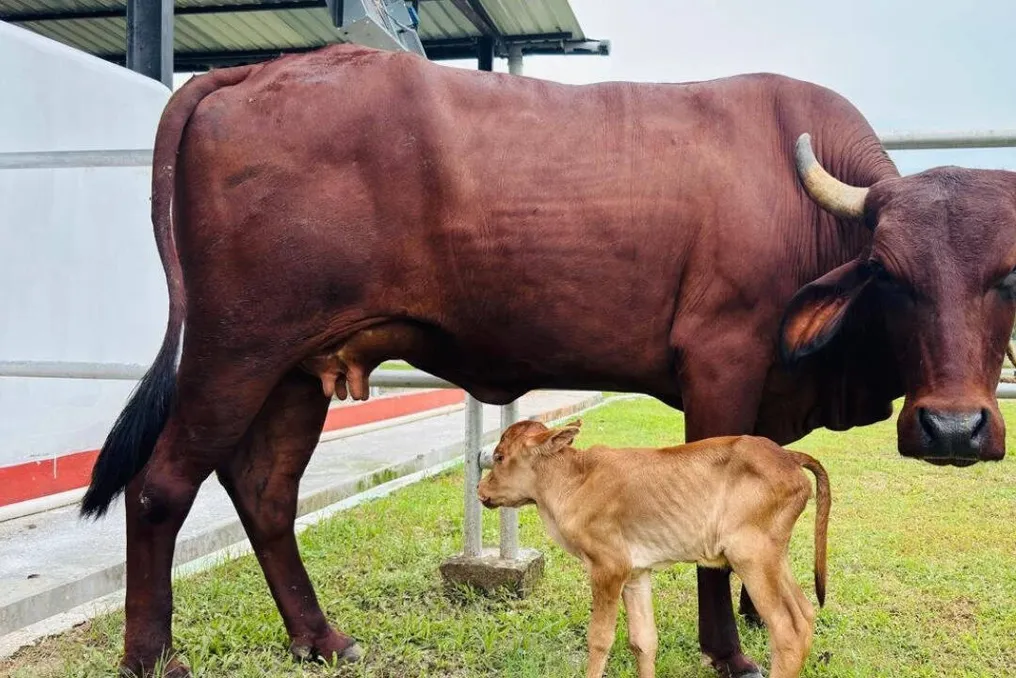
The Chief Minister of Assam, Himanta Biswa Sarma, announced a major achievement in livestock biotechnology: the birth of the world's first female Lahimi breed cow obtained through in vitro fertilization (IVF).
Publishing the information on the social network X, Sarma characterized this event as a historic confluence of 'Sabhyata, Sanskriti, and Srijan' of Assam, noting that this achievement could open new opportunities for the state's livestock and dairy sector.
The Minister stated that the first female Lahimi breed cow, which is indigenous to Assam, was born at the Veterinary and Fishery University of Assam. This breakthrough was realized in the IVF laboratory of the College of Veterinary Sciences at the Veterinary and Fishery University of Assam in Hanapara, Guwahati.
The laboratory was established with the support of the Rashtriya Gokul Mission. This development is particularly significant for the conservation of the Lahimi breed, a local Assamese breed, as advanced assisted reproductive technologies allow for the breeding of genetically superior animals while preserving valuable local genetic resources.
Sarma emphasized that this achievement can contribute to the development of several areas, including the preservation of local breeds, improved disease control, and increased milk yields. In the long term, such measures are expected to strengthen Assam's dairy economy and increase the income of livestock farmers.
The Chief Minister congratulated all veterinary scientists and specialists behind this historic success, adding that their work has the potential to usher in a new era for Assam's dairy sector. He described the newborn calf as small but scientifically significant for Assam's biotechnology ecosystem.
This latest success continues Assam's efforts to integrate assisted reproduction technologies into livestock development. Earlier this year, scientists from the veterinary college received the first Assamese calf born via IVF—a Gir breed female born in Sonapur, demonstrating the feasibility of embryo transfer technology in the field.
Scientists note that such technologies can ensure faster breeding of superior genetic herds, potentially improving milk yields and supporting farmers' incomes. Thus, the successful birth of the Lahimi combines modern reproductive biotechnology with the conservation of an indigenous cattle breed, providing Assam with a new tool to strengthen its livestock sector.