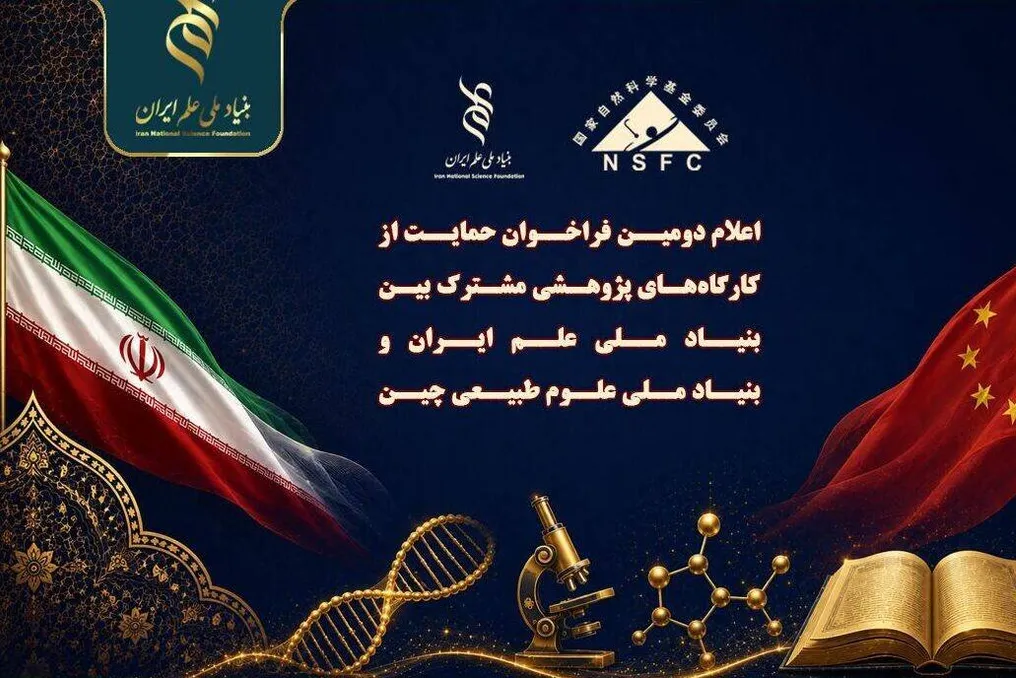
The Iranian National Science Foundation (INSF) and the Chinese National Natural Science Foundation (NSFC) plan to support the implementation of a second joint specialized seminar. The goal of this event is to develop scientific diplomacy, strengthen research ties, and exchange technical knowledge.
According to an IRNA report, a grant of 7 billion rials (equivalent to approximately 3,700 US dollars) will be allocated for each one-year research project. These projects will cover the following areas:
- Advanced Materials: study and processing of rare earth elements, creation of nanocomposites for seismic-resistant building materials, and green synthesis of nanomaterials using biological resources.
- New Sensors: development of intelligent nanomaterials for biosensors that allow early detection of diseases and pathogens, and nanostructured gas sensors for monitoring industrial and environmental pollution.
In July, INSF and NSFC announced support for 15 research projects to be implemented by faculty members. A grant of 50 billion rials (approximately 26,595 US dollars) per project for a term of at least three years will be directed towards the following areas, as reported by INSF.org:
- Water and Energy: implementation of AI-based smart irrigation systems for arid and saline environments; comprehensive water resource management under drought and climate variability; and energy-efficient advanced technologies for water purification and desalination of seawater/brackish water.
- Energy Storage and Hydrogen Technologies: integration of renewable energy sources into national distribution grids; agricultural and medical biotechnology; genetic improvement of strategic crops to enhance resistance to drought, salinity, and heat using molecular breeding methods; microbial biotechnology for food security (biofertilizers, single-cell protein, probiotics, biopesticides, and biological control); and recombinant drugs and biologics: process development, purification, and quality control; and new drug delivery systems based on biological components (nanocarriers, liposomes).
In January, INSF and NSFC agreed on cooperation in joint projects concerning traditional medicine and medicinal plants. These projects include:
- Integration and standardization of evidence-based traditional Chinese and Persian medicine for treating serious diseases; sustainable use of medicinal plants, including eco-cultivation, biodiversity conservation, and resilience enhancement; and the application of digital tools and AI for the classification, analysis, and clinical studies of traditional medicine and medicinal plants.
- Energy: renewable energy sources, high-efficiency utilization of traditional energy resources, energy-related materials, storage technologies, and the application of artificial intelligence in the energy sector.
The support from INSF and NSFC enabled the Iran-China seminar held from November 10 to 12, 2025. The main focus of the event was on new technologies for decarbonization and creating a sustainable urban environment. This three-day forum was organized by Sharif Institute of Energy, Water and Environment Research and Wuhan University, China, and was conducted in English, with options for both in-person and online participation, according to IRNA.
The seminar addressed pathways to achieving carbon neutrality and a decarbonized energy future, sustainable industries, carbon efficiency, as well as innovations and digitalization for the energy transition and the development of cities resilient to climate change and efficient in resource use. The event marked an important step in expanding scientific ties between the two countries with the aim of reducing carbon emissions and fostering a sustainable environment.