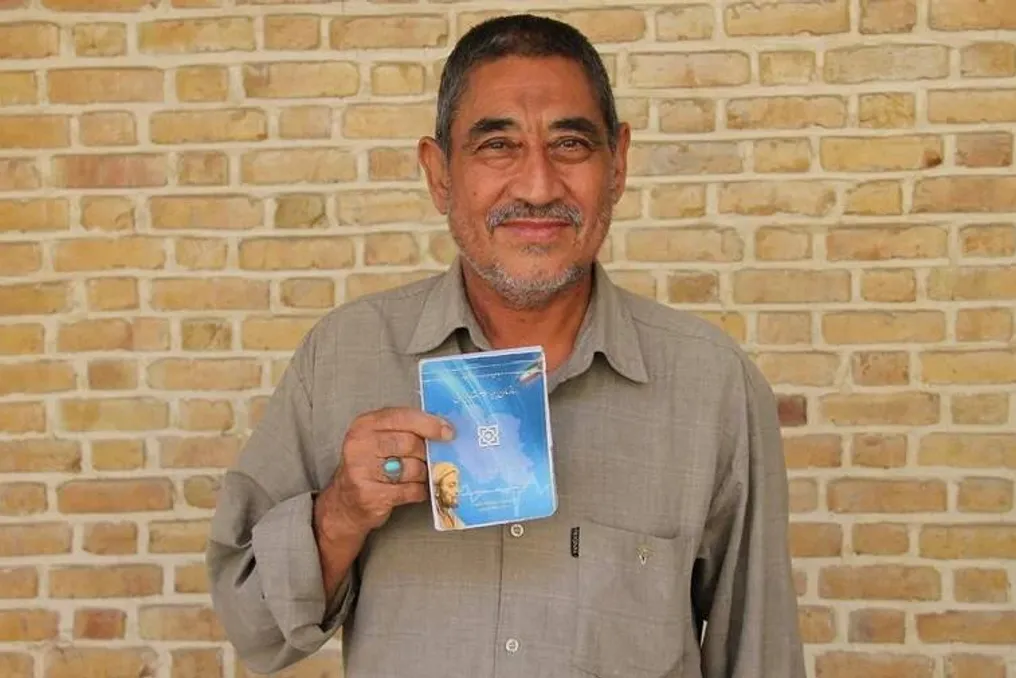
The head of the Non-Communicable Diseases Office of the Iranian Ministry of Health stated the country's generosity towards foreign nationals, noting that Iran provides medical services to foreigners beyond established obligations.
According to Kobad Moradi, a significant portion of the country's healthcare system resources is directed towards serving foreigners, while international aid covers only a small fraction of the costs. He emphasized that Iran provides medical assistance to refugees and migrants in the spirit of solidarity, taking on substantial financial burdens in this area.
Given the high cost of free medical services for foreigners, the Ministry of Health implements a policy requiring all refugees to have medical insurance upon arrival in the country. Despite existing restrictions, the official representative added that efforts are being made to ensure access to healthcare for every person, especially regarding vaccination.
Approximately 10–15 percent of vaccines offered in national immunization programs are allocated to foreign citizens, and the healthcare system's policy aims to ensure that no one is deprived of the opportunity to receive a vaccination. The high prevalence of infectious diseases among foreigners, such as tuberculosis, Crimean-Congo hemorrhagic fever, and malaria, indicates an urgent need to pay serious attention to the health of these individuals.
Under a new Cabinet resolution, all foreigners residing in or not residing in Iran with legal status are required to have basic medical insurance. As reported by the UN High Commissioner for Refugees (UNHCR) in a press release dated February 16, this resolution from December 7, 2025, obligates the Ministry of Interior to provide insurance coverage for applicants for or renewal of residency permits.
The resolution also stipulated that non-residents with legal status can utilize insurance by paying a medical insurance premium. In the absence of insurance, all provided medical services will cost them either according to medical tourism tariffs or at least at private sector prices.
On December 24, the Deputy Minister of Cooperatives, Labor, and Social Welfare (MCLSW) announced the issuance of 13,000 visas out of 23,000 applications under the recently introduced work visas for labor-intensive professions. Previously, the head of the National Migration Organization, Nader Yar-Ahmadi, had stated that this visa could only be obtained by heads of households and was valid for nine months, after which a mandatory three-month stay outside the country was required.
After visiting the Dogharon border crossing, the Deputy Governor of Khorasan Razavi for Security and Public Order reported that biometric registration of foreigners has officially begun in Dogharon. This allows authorities to monitor entries and exits based on fingerprints, iris scans, and facial data, rather than just documents. He noted that linking the biometric system to foreigner databases now enables the identification of previous residence and judicial records of people in Iran. It was announced that this biometric registration system will soon be expanded to Mashhad Shahidi Hashemi Nejad Airport to strengthen control over the residence, movement, accommodation, and employment of foreigners in the province.
In December 2025, the first biometric verification system for identifying foreigners, particularly Afghan refugees, was implemented at the Dogharon terminal in Taibad city, northeastern Khorasan Razavi province, Iran. The official representative added that this system will soon be launched at other border points across the country to monitor the entry and exit of all foreign nationals.
Over the past four decades, Iran has been one of the leading countries accepting the largest number of refugees and migrants, despite numerous difficulties the country faces. Most of these refugees originate from Afghanistan, who fled their country due to wars, instability, poverty, and crises.
In 2023, the global figure for international migrants was approximately 304 million people, of whom 83 million were internally displaced. According to UNHCR, Iran hosts about 773,000 refugees holding Amaesh cards and over 2.7 million people in refugee status. The total number of refugees makes Iran the second-largest host country. By hosting more than 3.5 million refugees, Iran plays an important role in this global picture and is one of the key participants in managing the migration crisis.
Interestingly, field reports and unofficial statistics claim that seven million Afghans reside in the country, four million of whom are undocumented. International organizations such as the International Organization for Migration (IOM) have consistently praised Iran for providing various services, including education and healthcare, to refugees. Afghan children study in the same schools as Iranian students without paying extra fees, whereas in other countries, refugees face serious limitations in accessing treatment and educational services.
Danandzaya Bhattaraee, head of the UNHCR office in Holy Mashhad, commended Iran's generosity in hosting refugees and treating them with dignity.