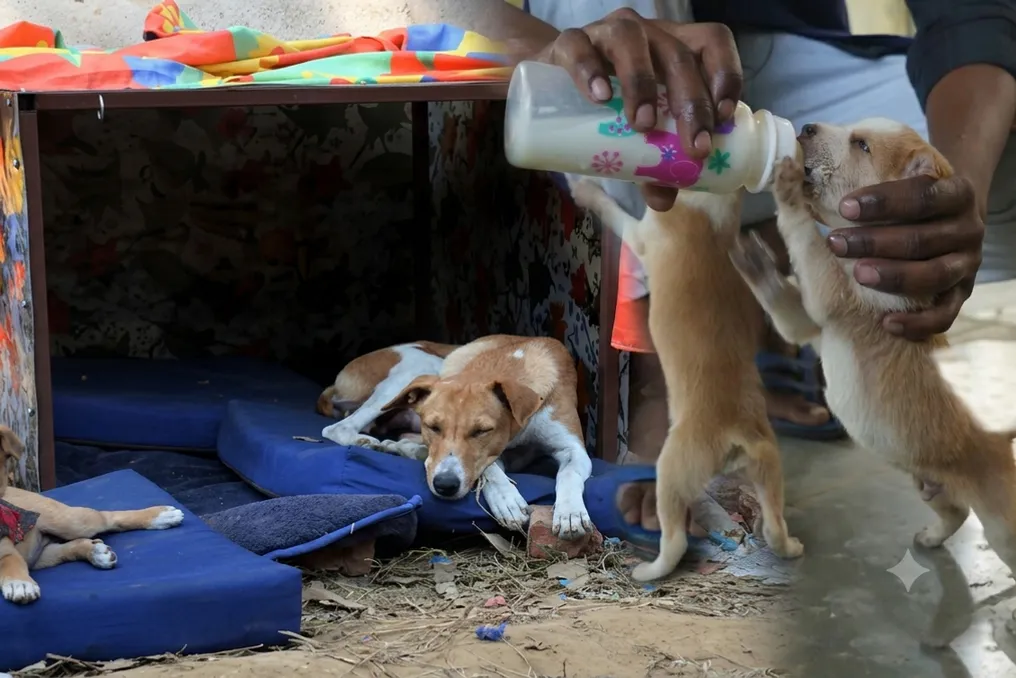
Every June, when the first heavy downpours flood the low-lying areas of Bengaluru, a familiar ritual begins in many homes near stray dog gathering spots. Someone looks for a cardboard box in the storeroom, wraps it with tarpaulin, and places it under the gate before the next downpour. It seems like a minor gesture.
For approximately 270,000 homeless dogs living in the city during the monsoon season, this can be the deciding factor between staying dry and developing a fever that could become dangerous within a few days.
Local feeders, dog care groups, and shelters in Bengaluru have honed methods over the years to help stray animals survive the wet period, and their routine has settled into a clear sequence. A dry dog must be fed. However, even a well-fed dog can fall ill if its food or water is contaminated with bacteria.
Even the healthiest dog can sustain an injury or get a tick, which, if left untreated, can turn into an emergency. Shelter, food, and first aid are not three separate tasks but a single continuous act of care that requires no special training or large budget.
A classic monsoon shelter starts with a sturdy cardboard box. A small entrance is made on one side, the interior is lined with plastic sheeting or tarpaulin so the cardboard does not come into contact with water, and then the box is placed in a raised, protected spot, such as under stairs or a canopy.
One such shelter costs less than 500 rupees, and for larger colonies, an old blanket or banner stretched between two supports serves the same function. Local groups, such as Cubbon Park Canines, which feed about 120 dogs in the park, and a wider network managed by CJ Memorial Trust track which dogs use which shelters, allowing the disappearance of an animal to be noticed within a day rather than a week.
Some groups go further and equip dogs with reflective collars so they are visible after dark, when rain and poor visibility increase the risk of traffic accidents. Nevertheless, a dry dog still needs food, and one shelter is not enough to maintain the health of a stray animal throughout four months of rain.
This is where feeding comes into play, and the goal is not so much the quantity as keeping the food dry and soft for the stray animal's stomach. Dry kibble or simple biscuits stored in an airtight container tolerate humidity much better than curry leftovers or wet bread. Cooked rice mixed with a small amount of boiled chicken or egg, without salt or spices, is also suitable, as it nourishes the dog without upsetting its digestion.
Most feeders now completely avoid milk, as many strays have lactose intolerance, instead using diluted yogurt when puppies need something soft. A clean, covered bowl of water is as important as the food itself, as stagnant puddles are a primary source of leptospirosis—a bacterial infection transmitted through floodwaters that can lead to death within days.
However, a dog that is dry and well-fed can still develop a torn ear, an embedded tick, or a small scratch that a fly might notice before anyone else. This is why the third habit in this chain—a basic first-aid kit—is most crucial during the rainiest weeks.
The kit itself fits in a shopper bag. A small vial of povidone-iodine solution, sold as Betadine or Cipladine in any pharmacy, cleans a fresh wound without causing the burning sensation of alcohol or Dettol, which are more aggressive to a dog's skin than to human skin. Antiseptic powder keeps the cleaned wound dry, which is especially important during the rains, as moist wounds are an ideal place for flies to lay eggs, and applying an Ayurvedic fly ointment, such as Himax, to a healing wound often prevents it from becoming an infected wound within 48 hours.
Fine combs for removing ticks or blunt tweezers allow the feeder to carefully remove an attached tick close to the skin, as the bite can transmit ehrlichiosis or babesiosis within a few hours; the tick is then placed in soapy water, never crushed between fingers.
Gloves, a flashlight, a soft muzzle, and the saved number of the nearest veterinarian or rescue group, such as Sarvoham Animal Foundation or Charlie's Animal Rescue Centre, complete this set. What is excluded from the kit are any medications whose dosage depends on weight, such as antibiotics, dewormers, or ivermectin, because a dose estimated visually for a dog of unknown weight can cause real harm.
Pale gums, difficulty breathing, a swollen limb, or a foul-smelling wound are signs that should be photographed, the location noted, and immediately reported to a veterinarian or NGO hotline, rather than attempting home treatment. This kit is designed to help the dog last one or two days, not to replace the veterinarian it will eventually need.
None of this depends on grand infrastructure. It depends on residents who notice a wet, shivering dog at their gate and decide to act, following the example of a couple who once turned their yard into a shelter for over 85 rescued strays.
Across Bengaluru, thousands of small acts of kindness determine whether a stray dog survives the monsoon season. A cardboard box, a bowl of safe food, and a basic first-aid kit may seem simple, but together they can mean the difference between survival and suffering for 270 thousand urban dogs.