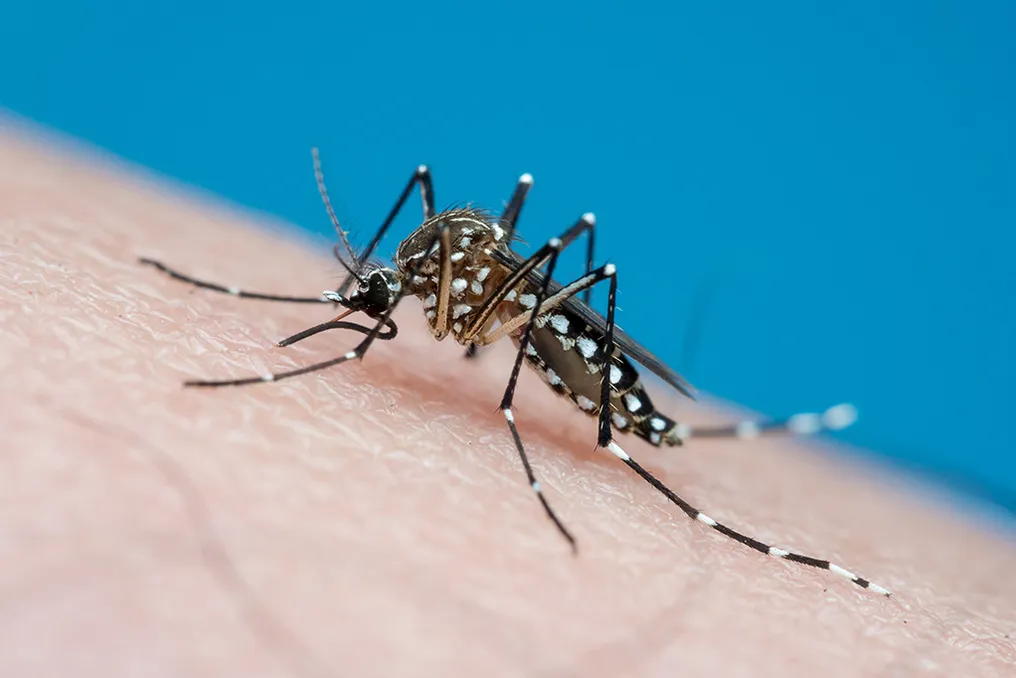
The chikungunya virus has been a concern for health authorities in Brazil and globally for over ten years. Confirmed in the country in 2014, this arbovirus, transmitted by the bite of infected female mosquitoes of the Aedes genus, has been becoming progressively more frequent in all Brazilian regions, driving efforts to find a vaccine.
Expectations for improving disease prevention have increased with recent announcements about new immunizers. In June, the pharmaceutical company Eurofarma filed an application with the National Health Surveillance Agency (Anvisa) for the analysis of the 'CHIKV VLP' immunizer. This product already has approval for people aged 12 and older in countries such as the United States, European Union, United Kingdom, Switzerland, and Canada. The vaccine is administered as a single dose and uses virus-like particles, or VLPs.
In May, Anvisa granted authorization for the Butantan Institute, located in São Paulo, to begin the production of Butantan-CHIK. This vaccine was developed in collaboration with the Franco-Austrian pharmaceutical company Valneva and uses a live attenuated virus, indicated for individuals aged 18 to 59 with a high risk of exposure.
Impact of Chikungunya and Public Health Strategies
Despite having a low mortality rate, chikungunya can cause disability, resulting in joint pain that persists for months or years. Infectologist Luís Fernando Aranha Camargo, from Einstein Israelite Hospital, emphasizes that 'the clinical repercussion is very unpleasant and can, in some circumstances, keep a person out of work or other activities,' which makes vaccination a crucial public health tactic.
In 2025, the Pan American Health Organization (PAHO) registered 129,123 probable cases of chikungunya in Brazil, of which 107,975 were confirmed, plus 121 deaths. Between the end of 2025 and the beginning of 2026, PAHO noted a continuous increase in cases in various parts of the Americas and the return of local transmission in areas where the virus had not circulated for years.
In a statement sent to the Einstein Agency, the Ministry of Health clarifies that immunization is currently occurring only in a pilot strategy, coordinated by the Butantan Institute with support from the Ministry. This initiative aims to evaluate the effect of large-scale vaccination on disease dissemination and covers municipalities in Alagoas, Goiás, Minas Gerais, Mato Grosso do Sul, Sergipe, and São Paulo, having applied about 48,000 doses so far.
The Ministry did not provide information on applications under review or plans for routine vaccine supply. According to the agency, the inclusion of new technologies in the Unified Health System (SUS) depends on a favorable opinion from the National Commission for the Incorporation of Technologies into the Unified Health System (Conitec), which analyzes factors such as cost-effectiveness, safety, and efficacy.
Technological Differences Between Immunizers
The CHIKV VLP vaccine works by reproducing the external structure of the virus without incorporating its genetic material. Since these particles do not infect cells, nor replicate, nor cause the illness, they are recognized by the immune system, which then begins to generate antibodies against the virus. The absence of an attenuated virus distinguishes this product from the Butantan vaccine and may expand its applications.
Immunizers of this type generally offer greater safety for groups requiring caution with live vaccines, such as the elderly and immunocompromised individuals. Pediatric infectologist Renato Kfouri, Vice President of the Brazilian Society of Immunization (SBIm), points out that 'we are a bit careful with vaccinating individuals aged 60 or older with live virus vaccines,' due to a phenomenon that appears related to lower preparation or aging of the immune system.
Butantan-CHIK shares the same active principle, composition, and manufacturing method as Ixchiq, which was the first chikungunya vaccine registered worldwide. Consequently, the safety and immunological response data obtained in Ixchiq studies are applicable to the national version.
Usage restrictions for Ixchiq were imposed by regulatory agencies following reports of serious adverse events. In May 2025, the European Medicines Agency temporarily limited its use to people aged 65 and older. Two months later, after examining 28 serious cases, most in the elderly with multiple chronic diseases, the agency removed the restriction but added new warnings, recommending the vaccine only when there is a significant risk of infection, after an individual assessment of risks and benefits.
In Brazil, the immunizer is authorized only up to age 59, excluding the age group where most severe events were concentrated, and remains contraindicated for pregnant women, immunocompromised, and immunosuppressed individuals. Within the technology transfer agreement, Butantan assumed responsibility for the formulation and filling of the vaccine.
For the infectologist Dr. Julio Croda, former president of the Brazilian Society of Tropical Medicine (SBMT), mastering these stages grants greater autonomy to the country, in addition to increasing supply and decreasing dependence on imported doses. Croda assesses that 'chikungunya is a problem in Brazil; it has caused outbreaks and deaths frequently, and it is important to have this national production capacity to eventually vaccinate the population.'
Other Prevention Strategies
In addition to the two vaccines that reached the regulatory phase, researchers from the University of São Paulo (USP) and the University of Bonn, Germany, are testing a third approach. This candidate is still in the preclinical phase, being evaluated exclusively in mice.
The team made modifications to the genetic material of the chikungunya virus to prevent its complete maturation. The scientists replaced the segment recognized by furin, a human enzyme that makes the virus infectious, with a sequence that can only be activated in the laboratory by a tobacco mosaic virus enzyme.
With this alteration, the particles created in the laboratory can infect a cell only once. The new viruses generated by this cell remain immature and do not spread throughout the organism. The intention is to induce an immune response similar to that of live vaccines, while minimizing the risk of replication.
In tests, all vaccinated mice survived after being exposed to the wild virus, while animals in the control group died within three days. The candidate also demonstrated reduced viral load in the blood and swelling in the paws. Particles produced with the new methodology stimulated approximately nine times more antibodies than untreated particles.
The findings were published in the scientific journal NPJ Vaccines, but are not yet sufficient to determine their safety or efficacy in humans. Even with vaccine progress, the sustained reduction of chikungunya will depend on the combination of immunization and control of the Aedes aegypti. This action also protects against unvaccinated diseases, such as Zika, and reduces the risk for the elderly, children, and immunocompromised individuals not covered by the indications of the immunizers. The Einstein infectologist concludes: 'No vaccine is 100% effective, and eliminating the vector is much harder than vaccinating the population.' He adds: 'I don't know if we need to talk about eradicating [chikungunya], but reducing the disease to minimal levels is already a big step.'