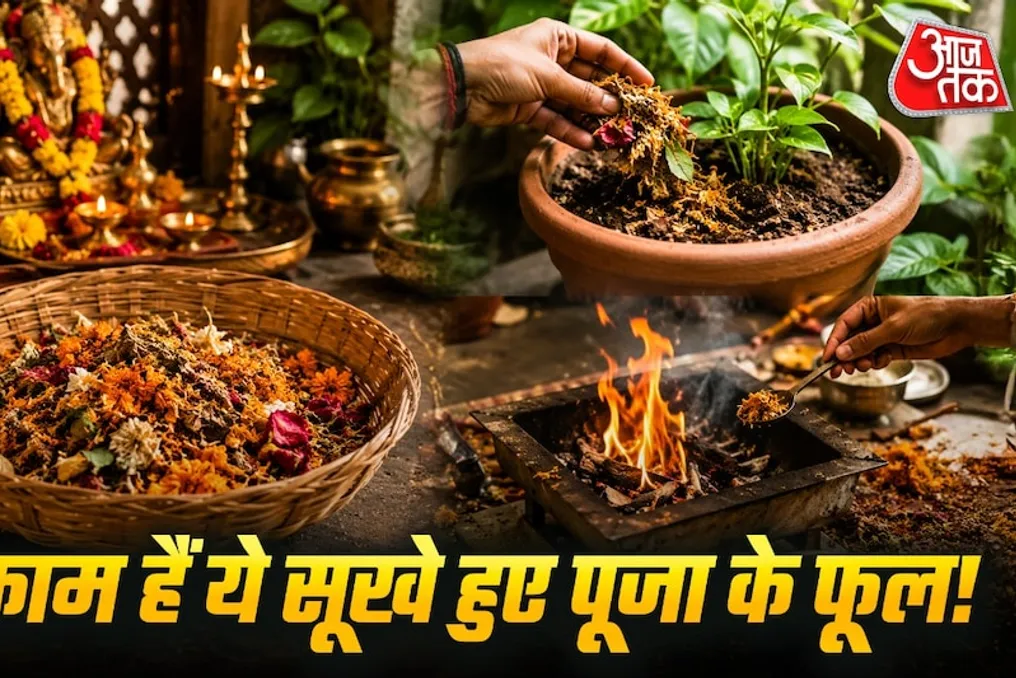
In Indian families, the morning traditionally begins with religious rituals in the home temple, during which flowers and garlands are offered to the deity. Usually, after use, old floral garlands are either thrown into a river or left under a tree, leading to the accumulation of waste in water bodies and around trees.
However, instead of discarding these petals, they can be collected in a plastic bag, as what seems like trash can be very useful for various household needs. There are many simple methods for reusing these materials, allowing for better utilization of worship items and reducing household waste.
Ways to Reuse Flowers
Creating Natural Flower Compost
If you have a small garden plot or pots, these flower petals can be very useful. Instead of buying commercial fertilizer, you can prepare natural compost from flowers yourself, after separating any plastic, threads, or other inorganic materials. It is important not to add flowers showing signs of decay or mold to the compost, but rather to incorporate them into the compost pile.
Decorative Use of Dried Flowers
Flowers such as roses, marigolds, and others can be used to decorate interiors after thorough drying. Small bouquets, garlands, or decorative elements for worship can be made from dried flowers. They can also be used to decorate frames and trays, which looks beautiful and requires little effort.
Creating Floral Mulch for the Garden
Completely natural flowers, cut into small pieces, can be applied in small amounts to the top layer of soil. This organic material gradually mixes with the earth. Care should be taken to avoid creating thick layers of flowers and only use those that show no signs of mold.
Making Natural Potpourri for the Home
Take rose, marigold, and magnolia petals, mix them with a small amount of cinnamon powder and your chosen essential oil. Placing this mixture in a glass container and putting it in the living room can create natural potpourri, which will give the home a pleasant aroma and improve the atmosphere.
Obtaining Natural Dyes from Flowers
During festivals such as Janmashtami and Diwali, people often use chemical dyes to create rangoli. However, natural pigments can be prepared from flowers, such as marigolds, roses, and hibiscus. To do this, boil the petals in water and strain the liquid. The resulting dye can be used not only for rangoli but also for handicrafts, paper art, or decorative purposes.
Decorative Sachets from Dried Servingware
Flowers can be thoroughly dried and filled into small fabric sachets, adding dried flowers or other aromatic natural components. These sachets can be used to decorate cabinets or rooms. It is necessary to ensure that the flowers are completely dry to prevent mold growth. Such sachets also help reduce the problem of furniture infestation by woodworms.
Preparing Havan Materials from Floral Garlands
After being used in the temple, floral garlands can be turned into material for conducting a havan. First, all garlands must be dried in the sun. After drying, they are crushed, and then the resulting powder is mixed in a large bowl with equal parts black cumin, barley, and rice. Next, ground saffron, guggal, incense, and a little sandalwood powder are added to this mixture to obtain the ready composition for the havan.
Proper Disposal of Floral Cotton Waste
If there are traces of oil or ghee remaining in floral cotton waste, it should not be thrown away with regular garbage. Before use, it must be ensured that this cotton does not contain plastic, synthetic thread, or other inorganic impurities.