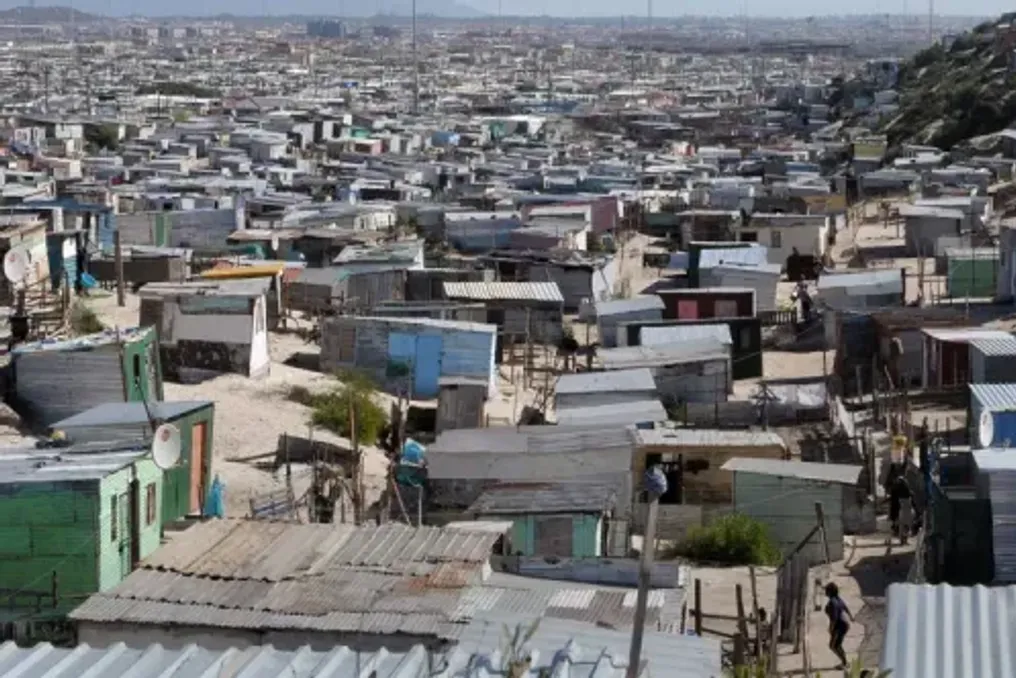
There is an opinion that Cape Town no longer needs housing exhibitions; the city requires actual homes. Hundreds of thousands of people remain on the housing waiting list, and working families face displacement from the property market, while young people cannot enter the housing market. People are forced to spend hours commuting because they cannot afford to live near their workplaces.
This week in Century City, the city is gathering developers, financiers, and housing sector participants to discuss investments and affordable housing. It is acknowledged that Cape Town needs investment, including developers, banks, builders, social housing institutions, engineers, planners, and capital.
However, the author emphasizes that investments cannot be equated with the actual implementation of projects. Over nearly two decades of DA party rule in Cape Town, it is evident that the city has failed to provide social and affordable housing at the necessary scale, speed, location, or price point to change the lives of ordinary Cape Town residents.
By mid-2025, 4,849 units of social housing were completed, with only 855 of them located within ten kilometers of the city center. Although the City has repeatedly stated plans to create around 12,000 affordable housing units, a significant portion of the planned units in certain areas has not yet been definitively allocated between truly affordable and higher-class housing.
The author insists: a development plan is not a home, a tender is not a home, land transfer is not a home, appointing a developer is not a home, and a press conference is not a home. A home is a family receiving keys. We must count keys, not plans.
Since the DA began ruling the city in 2006, delays have ceased to be an excuse and have become a result of policy. Repeated launches of strategies turn into a facade, and investor gatherings into a silent admission of the failure of the old model. The question arises: can the same solution truly be applied to the same problem and expect a different result?
Years ago, the city relied on land transfers, private developers, mixed-income projects, and investment incentives. Some projects were built, but the scale of the housing crisis far exceeds the measures taken. Hundreds of thousands of people remain on waiting lists, working families are displaced, young people cannot enter the market, and people spend a lot of time commuting due to the inability to live close to work.
The situation is linked to apartheid geography, which continues to affect life chances. This applies to the domestic worker who cleans in an area she cannot afford to live in, the nurse finishing a night shift and facing a long commute home, the teacher, security guard, artisan, municipal worker, young graduate, and pensioner. These people are Cape Town residents, not those asking to enter the city.
Therefore, the Constitutional Court's decision in the Tafelberg case is hugely significant, as it enshrines social and affordable housing in well-located areas as a constitutional obligation to eliminate spatial injustice.
It is necessary to stop reducing the problem solely to real estate economics. State land is not just an asset for monetization; it is a tool for justice. Private capital is not the enemy, but it must serve public goals. Investments should be welcomed without privatizing public objectives.
The first question should not be: what profit does the developer need? It should be: what can a Cape Town household afford? We must start with the household and then design finances in reverse. If a family earns R10,000, R15,000, or R20,000 per month, what rent or mortgage can they sustain after deducting expenses for food, electricity, transport, school, and basic dignity? That is affordability.
Affordability is not 'cheaper than the market,' not 'lower than prices in Sea Point,' and not a 'discount.' Affordable for whom? This question must become one asked by every Cape Town resident. If the answer excludes ordinary workers, then the housing is not truly affordable. If the City cannot name the number of units available at prices of R3,500, R5,000, R7,500, or R10,000 per month, then it is still about branding, not transformation.
There is also a democratic aspect. Who attends meetings in Century City? Developers, banks, and investors should attend. But where are the backyard dwellers? Where are the tenants? Where are the informal settlement residents? Where are the young families? Where are the people on the housing waiting lists? Where are the communities affected by land transfer and development decisions? If they are there, a list of participants should be published showing how they influenced the agenda. If not, this cannot be called meaningful participation. Engaging with those who finance housing is stakeholder interaction; engaging with those who need housing is democracy. Cape Town needs both.
What is needed are changes, not another development plan, not another glossy event, and not another promise that the market will somehow solve a problem it helped exacerbate. Political will means choosing a different path. It means a different use of state land, and a different approach to measuring success. It means accepting that a housing crisis of this magnitude cannot be solved project by project or press release by press release.
The author's alternative vision is clear: Cape Town needs a 'Compact Affordable City.' Firstly, define affordability based on household income. Secondly, publish all major housing parcels in a single transparent database, including land owner, number of units, income groups, rent, purchase price, developer, subsidy, construction date, completion date, and occupancy date. Thirdly, use state land for permanent public value, preferring long-term rental over sale. Utilize long-term leases, community land trusts, joint stock ownership, lease-to-own, and cooperative housing. Fourthly, build on a large scale, not in isolated plots, creating mixed-income neighborhoods near transport, jobs, schools, and services. Fifthly, establish a unified Cape Town Housing Fund, combining state lands, municipal infrastructure, national subsidies, social housing grants, development funding, pension capital, and responsible private investment. Sixthly, institute a Residents' Assembly so that ordinary Cape Town residents can help determine affordability, location, and design before deals are finalized for investors. Finally, set strict implementation targets—homes, not possibilities; occupancy, not announcements; keys, not promises.
Cape Town is beautiful, but beauty without a sense of belonging is not justice. The city cannot celebrate rising property values while the people who keep the city functioning are pushed further away from opportunities. Ultimately, it is a matter of political will. For too long, the city has treated the housing crisis as a technical problem of land, finance, and permits, when it is also a political choice. What are we prioritizing? Who are we designing for? Who bears the risk? Who receives the land? Who receives the income? Who receives the key?
If the previous political leadership continues to lead to the same structural outcome, then Cape Town must be ready to choose change. No smoke screens and mirrors are needed, no new version of the same formula, and no need to hear that another development plan is progress. What is needed is a government brave enough to use state power, state land, and private capital differently. A government willing to declare that housing is not just a commodity in the market. A government that understands that spatial justice is economic policy. A government that measures success by whether ordinary people can live with dignity in the city they support.
So yes, invest. Yes, connect. But connect capital with needs, land with justice, development with affordability, communities with decisions, and promises with realization, and Cape Town with a different future. The evidence is already before us; the question is whether we have the political will to act.