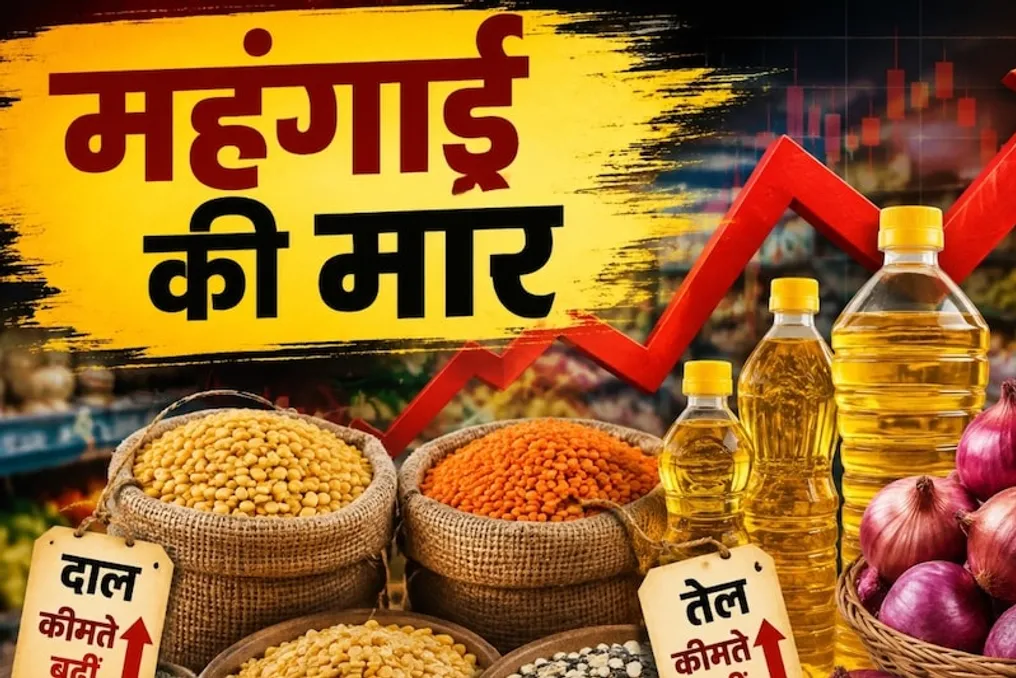
The burden on family budgets is increasing due to rising food prices across the country, which has been observed over the past week. In addition to the rise in sugar costs, prices for onions, tomatoes, and vegetable oil have increased. A jump in the prices of pulses has also been noted, and further increases are expected.
Despite the government taking steps to stabilize prices for essential goods, concerns about inflation persist. Over the last week, the cost of sugar rose to 7 rupees, and over a month, the price increased by 17 rupees per kilogram, reaching the current level of 70 rupees per kilogram.
To stabilize sugar prices, the government is working on three levels. The import of 1 million tons of duty-free sugar was approved until October 31 to increase market supply. Furthermore, storage limits have been set to prevent product accumulation. The third step is requiring sugar mills to start harvesting earlier, specifically from October 15, to ensure a sufficient sugar reserve for holidays after the new harvest appears.
Critics link the rise in sugar prices to ethanol, but the government categorically denies this connection, pointing to possible hoarding and concerns about speculation by some traders and manufacturers. To combat this, the government has set a storage limit of 400 tons for traders until November 30.
According to official data, the average retail price for onions was 40.79 rupees per kilogram on August 21. A week ago, this price was 36.56 rupees, and a month ago, it was 34.87 rupees, indicating a price increase of 4–5 rupees per kilogram. In some areas, the increase reached 25 percent. The main reason for this jump is the delay in the arrival of the new Kharif onion crop.
The arrival of Kharif onions from South India is delayed, and in the Nasik region of Maharashtra, the Kharif onion sowing was affected by the delay in the monsoon season. Nevertheless, to control prices, the government plans to release onions from buffer stocks.
Over the last month, prices for pulses such as arhar, moong, urad, and chana have risen by 1–2 rupees. The cause of this increase is considered to be an unfavorable monsoon season. According to available data, the area sown with pulses this year is 35 thousand hectares less than last year. The area sown with arhar has decreased by 1.69 lakh hectares. Due to concerns about the weak monsoon, pulse prices may continue to rise.
There has been a sharp surge in global palm oil prices, reaching a 20-month high. Indonesia is the world's largest producer of palm oil, and the price increase there is linked to drought. Palm oil is widely used in the food industry, and since India imports this oil, reduced imports have led to an increase in its cost. Additionally, the import of sunflower oil is decreasing due to the impact of the war in Russia and Ukraine on crude oil imports into India. Global markets are also recording an increase in the prices of edible oils, which have risen by 2–3 percent over the last month, including the rise in sesame and other types of vegetable oils.