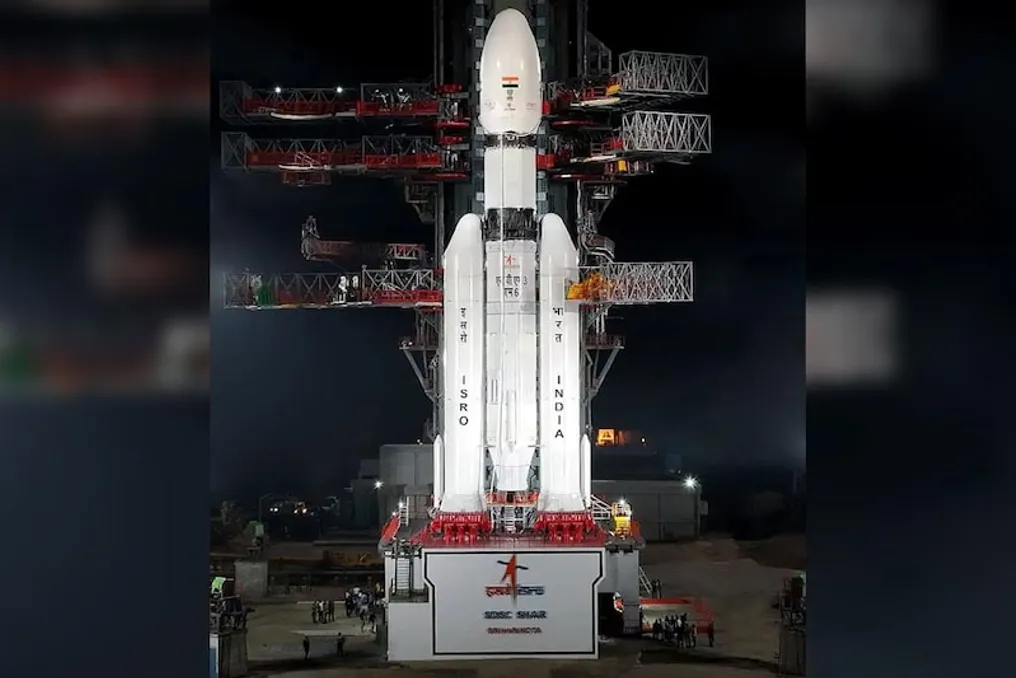
Significant changes are coming to India's space sector: ISRO will gradually stop manufacturing rockets independently. In the future, the responsibility for rocket creation will be transferred to private companies and some state-owned enterprises.
Pavan Goyank, Chairman of IN-SPACe, stated that ISRO will focus its efforts on research, developing new technologies, scientific missions, and necessary space systems. The goal of this transformation is to increase the participation of private companies in the country and accelerate the development of the space sector.
Goyank emphasized that in the coming times, ISRO will not manufacture rockets independently; this task will be assigned to the private sector or Public Sector Undertakings (PSUs). This process has already begun with SSLV, whose technologies and production rights were transferred to Hindustan Aeronautics Limited. The transfer of production for larger rockets, such as PSLV and LVM3, to private companies is also planned.
PSLV is one of the most frequently used rockets in India, and LVM3 is the country's most powerful operational rocket. In the future, the production of these two types of rockets may also transition to private contractors, without the involvement of government companies in this process.
However, this does not mean the cessation of ISRO's activities. The agency will continue to focus on creating new space technologies, conducting research, and preparing scientific missions. Furthermore, ISRO will develop specialized satellites and space systems that may be complex for private companies to create.
According to Pavan Goyank, ISRO has already transferred about 120 technologies to private companies, which can use them in their products and services. The government is also preparing to transfer the operation functions of the new spaceport to private companies, whose operator may be determined within the next four to five months.
India aims to grow its space economy. Currently, the country's economy is estimated at approximately $8 billion, and the government aims to increase it to $44 billion by 2033. To achieve this goal, it is necessary to expand the use of space technologies in other sectors, bring Indian companies to foreign markets, and increase demand for space services.
The Ministry of Defence has already placed an order for 31 satellites with private companies, while under the same program, ISRO plans to create about 21 satellites. Thus, in the future, ISRO's main activity will be focused on developing new technologies and scientific missions, while rocket and satellite production will gradually move into the hands of the private sector, strengthening the role of private companies in India's space industry.