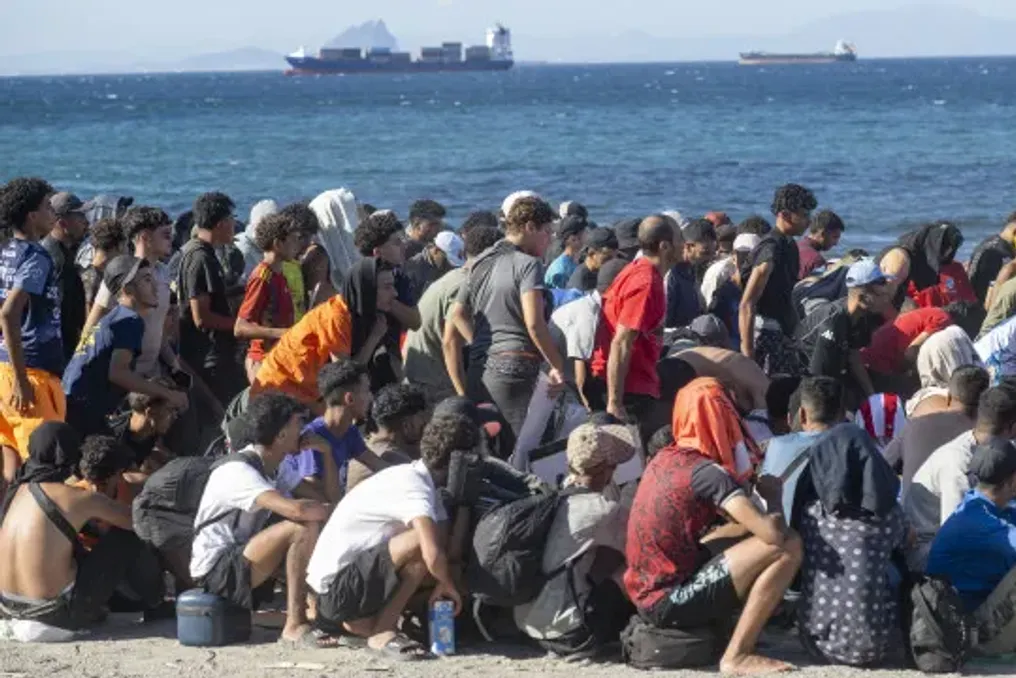
Human Rights Watch (HRW) called on the Spanish government to offer asylum options to illegal immigrants in Ceuta. The organization reported that by August 20, there was no evidence that Spanish authorities had initiated legal processes or individual assessments for adults.
As a result, thousands of people remained in a state of legal uncertainty for almost three weeks, exposed to risks such as sexual violence, lack of food, adequate clothing, and sanitary facilities.
Judith Sunderland, HRW's Associate Director responsible for refugee and migrant rights, emphasized that despite the difficulties, Spain needs to quickly mobilize the necessary resources to manage the crisis in an organized and humane way, benefiting both migrants and residents of Ceuta.
Sunderland warned that Spanish authorities must not allow populist demands for rapid and mass deportations to prevent compliance with international obligations. She requested that fair and individual assessments of protection requests be conducted and that immigrants be treated with dignity.
HRW conducted an investigative visit to Ceuta, the Spanish city located in North Africa, between August 15 and 18. During this visit, the organization spoke with 76 migrants. According to local sources, the number of migrants in Ceuta could reach 10,000, double the figure released by the Spanish Government, and many of these individuals were homeless.
Most of the recent arrivals in July consisted of Moroccans, including women who reported fleeing sexist violence. However, men and children from countries such as Chad, Senegal, Somalia, Sudan, Tunisia, Yemen, Algeria, Syria, and Egypt were also identified, who traveled in precarious conditions and expressed a desire to seek asylum in Spain.
On August 20, Spanish authorities began transferring migrants to two of the four existing tent camps, with a total capacity for 1,500 people. However, many interviewees suggested to the NGO that the Spanish Government was slow to provide assistance to persuade people to return to Morocco.
At this time, more than 1,000 men and children are sheltered in makeshift tents on a city beach, while thousands live on the streets, in an industrial warehouse area near the border with Morocco, and on the wooded hills at the edge of Ceuta.
The Forces and the State Security Corps were again deployed on Friday morning to the beach with the aim of removing the migrants, who had gathered again in that area after being removed the previous day.
Additionally, HRW recorded that there are about 700 to 750 women and girls in two outdoor sports areas organized by residents' associations, while others remain on the streets. The situation of unaccompanied girls and boys was highlighted as particularly worrying by HRW.
The organization also documented cases of sexual assault and rape involving two women and six girls. Among the victims were a 14-year-old Moroccan and an 11-year-old girl from an unspecified African country, according to reports from four emergency doctors. Furthermore, there was a report of a Moroccan woman accusing a man with 'Spanish speech' of sexual violence, although she did not file a formal complaint.
Finally, HRW cited the Public Prosecutor's Office of Ceuta, which confirmed receiving 13 reports of sexual assault between July 30 and August 17, emphasizing that most of the victims did not reside in the city.