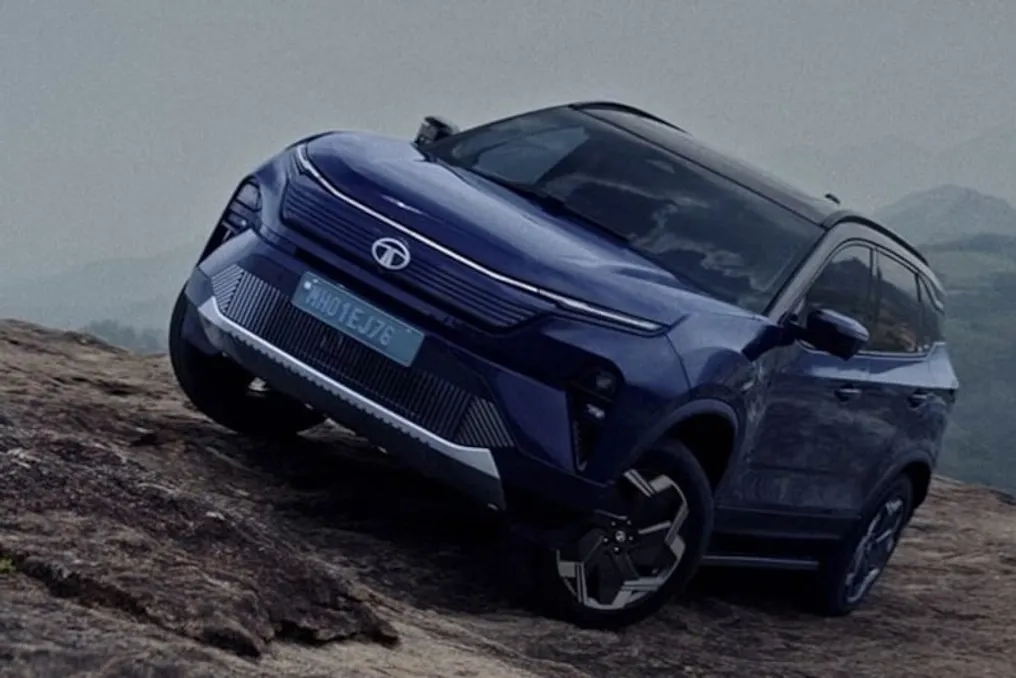
The Tata Harrier EV has changed the market by showing that the demand for electric SUVs exceeds the demand for internal combustion engine (ICE) vehicles. Although many consumers might prefer the ICE variant, statistics disprove this hypothesis.
Thanks to the launch of the Tata Harrier EV model, data demonstrates a different scenario. The pace at which this electric variant has overtaken the petrol and diesel versions is a significant indicator in itself.
Tata released the Harrier EV in June 2025. Since July 2025, this model has been sold monthly in greater numbers than its petrol and diesel counterparts. An analysis of data over 10 months, from June 2025 to March 2026, shows that 17,592 units of the Harrier EV were sold, while the cumulative sales of petrol and diesel versions amounted to 13,416 units.
This means that 57 percent of the total Harrier units sold during this ten-month period were electric. In June 2026, 2,962 Harrier SUVs were sold, of which 1,903 were EVs, accounting for 64 percent of Harrier sales in June. Thus, out of every three Harriers sold, two are electric models.
This fact is particularly important considering that the petrol and diesel variants are significantly cheaper than the EV. The Harrier Petrol starts from an export price of 12.99 lakh rupees, whereas the Harrier EV starts from an export price of 21.69 lakh rupees, demonstrating a substantial price difference.
The real competition begins when comparing the vehicle's features. Features available in the 21.69 lakh EV Harrier are absent in the 13 lakh version. Tata has cleverly priced the Harrier EV to approach the prices of premium Harrier ICE variants.
The Harrier EV boasts greater power and more features. Its 75kWH QWD all-wheel-drive variant is equipped with two motors and can accelerate from 0 to 100 kilometers per hour in 6.3 seconds. In contrast, the Harrier ICE lacks all-wheel drive capability. The car has a claimed range of 627 kilometers and supports fast charging, allowing it to cover 215 kilometers in just 15 minutes of charging.
In July 2025, after the Harrier EV launch, the company sold 2,216 units, compared to only 894 Harrier units sold in May 2025. In March 2026, Harrier sales reached 2,826 units, and in June 2026, they rose to 2,962. In July 2026, the sales figure reached 3,301. The annual sales growth rate for this model was 49 percent, indicating a continuous monthly increase in electric Harrier sales.