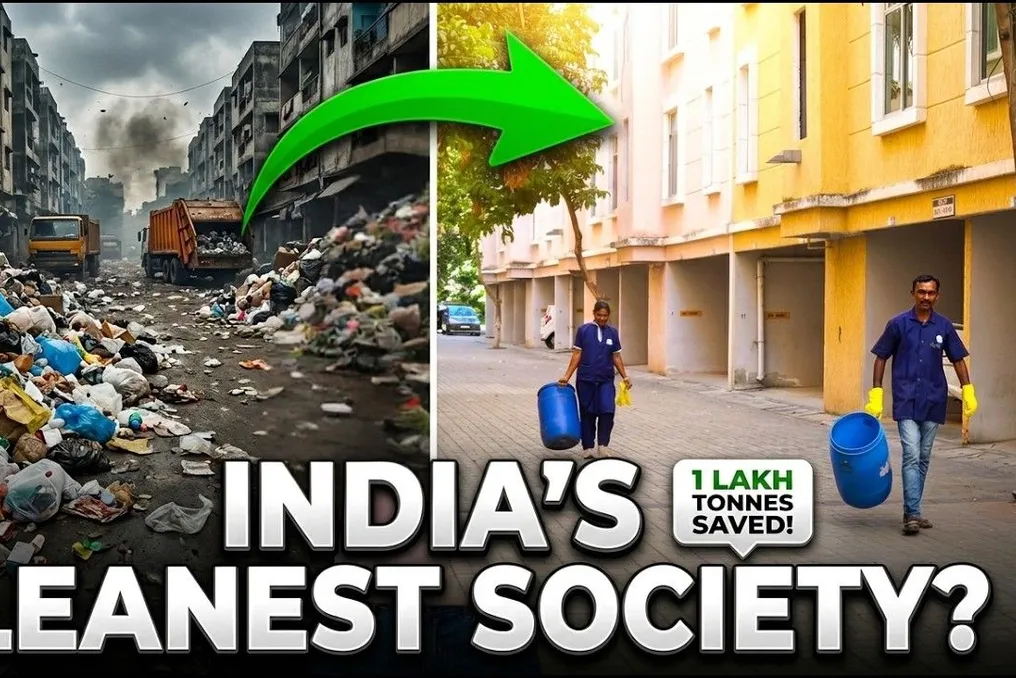
Approximately 7000 people live in the Brigade Meadows complex in Bengaluru, generating about 800 kg of waste daily. Instead of sending all this volume to landfills, the community implemented a system of waste separation, composting, recycling, and scientific disposal.
The episode 'Solved in India' examines how Brigade Meadows transformed its waste management system and what lessons other residential complexes across India can learn from this experience.
The system stipulates that about 800 kg of organic waste is turned into compost, which is then used by farmers as fertilizer. Dry and non-recyclable waste is sent for secondary recycling and appropriate treatment.
Furthermore, medical waste, diapers, and hygiene waste are disposed of in compliance with scientific standards. Milk packets undergo a process of cleaning, drying, and preparation for reuse.
Nearly 600 thousand liters of treated water are recycled daily, which is used for irrigation and toilet flushing. Recyclable materials, such as cardboard and old electronics, generate income for the community itself.
As a result of these efforts, the community, which previously faced the problem of overflowing landfills, now diverts almost all of its waste from landfills.
This example raises the question of whether a similar model can be implemented in other residential complexes in India if they adopt proper waste management—separating wet, dry, and residual fractions.