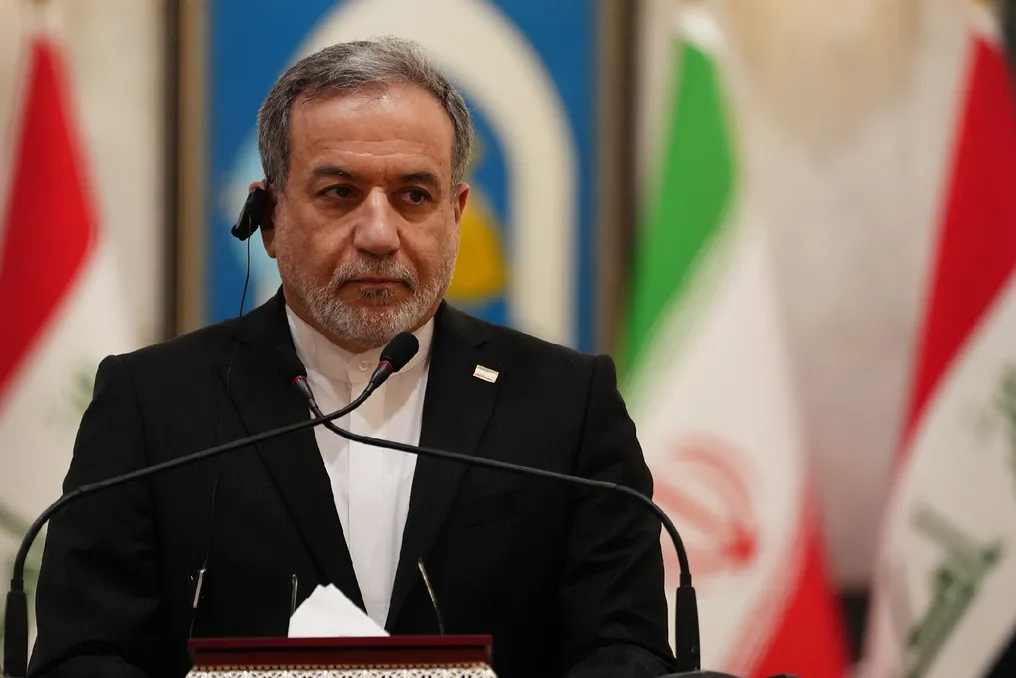
Iran's Foreign Minister, Seyed Abbas Araghchi, stated on Friday that Washington's latest campaign of economic pressure against Tehran will inevitably fail, similar to previous attempts by the US to force Iran into compliance.
On the social platform X, Araghchi posted a message noting: '14 years ago: 'The most devastating sanctions in history.' Failed. 8 years ago: 'Maximum pressure.' Failed. 5 months ago: 'Unconditional capitulation.' Failed. Today: 'The most crushing economic operation ever.' Doomed to fail.'
These statements came after US President Donald Trump announced on Wednesday that he had labeled the move against any country supporting Iran as 'the most crushing economic operation ever.'
Trump wrote in a post on Truth Social that this measure would be an 'Economic War and isolation of unprecedented scale,' calling the event an 'ECONOMIC D-DAY.'
Meanwhile, the commander of the Iranian Navy, Rear Admiral Shahram Irani, reported on Friday that the waters east of the Strait of Hormuz and in the Gulf of Oman—a key maritime zone connecting the Strait of Hormuz and the Persian Gulf—are under 'full control' of Iran.
Irani added that Iran is conducting '24-hour monitoring of all movements of hostile forces from the region,' and that Iran's armed forces remain on high alert. He warned that Iran will soon demonstrate to its adversaries 'a large, historic, and unforgettable lesson' at sea.
The latest escalation occurred amid heightened tensions between Washington and Tehran following uncertainty over the fate of the June 18 memorandum of understanding negotiations, which aimed to end regional conflicts, including in Lebanon.
According to this memorandum, both sides were supposed to negotiate within 60 days to reach a final agreement, but the process was jeopardized by renewed tensions between the two countries last month.
Despite Trump's warning that any country allowing its financial institutions, businesses, airports, or government bodies to support Tehran would face serious economic consequences, experts have questioned the effectiveness and enforceability of the recently announced 'economic war' campaign.
Qin Tian, Deputy Director of the Near East Research Institute at the China Institute of International Studies, noted that the measures announced by Trump are largely a continuation of existing US policies.
Qin emphasized: 'Currently, we have not seen the US government, particularly the Treasury Department, disclose specific details. Sanctions require clear procedures and implementation mechanisms.'
He also pointed out that many of the measures announced by Trump have already been employed by Washington in recent years.
'Due to the long-standing regime of US sanctions, foreign governments, institutions, and financial organizations have significantly reduced direct economic ties with Iran. The room for demanding cooperation from other countries with US sanctions is practically quite limited,' Qin observed.
Wang Jin, Director of the Center for Strategic Studies at Northwest University, stated that significant uncertainty remains regarding whether US economic pressure can achieve its stated goals.
Wang noted that decades of US sanctions and economic restrictions—especially after Washington's unilateral withdrawal from the nuclear deal with Iran in 2018—have failed to undermine Iran's economic foundations or disrupt the basic functioning of Iranian society.
He added that amidst ongoing military pressure from the US, domestic support for the Iranian government has somewhat increased.
Following the start of a new conflict at the end of February, Iran has also expanded the use of land trade routes through Iraq, Pakistan, Central Asian countries, and Russia, according to Wang. These networks have helped maintain Iran's economic ties with the outside world, making it difficult for Washington to completely sever the country's trade and financial links.
Wang concluded that since Iran maintains a certain resilience and ability to respond to economic pressure, US sanctions are unlikely to force Tehran into major concessions in the short term. Instead, he warned that the latest pressure campaign could prolong the confrontation between the two countries and increase the strategic and economic costs of Washington's foreign policy in the Middle East.