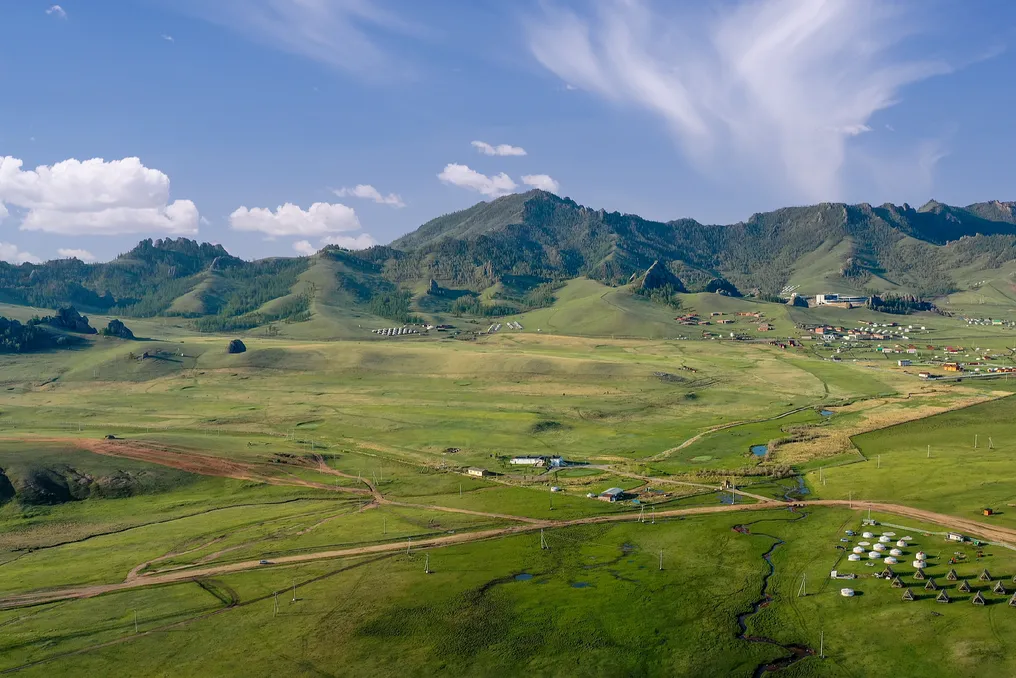
In Ulaanbaatar, the capital of Mongolia, the seventeenth session of the Conference of the Parties (COP17) to the UN Convention to Combat Desertification (UNCCD) is taking place, where China is providing decisive support to the summit. Beyond conference halls, China has long been helping its neighbor counter the growing threat.
More than seventy percent of Mongolia's territory suffers from desertification, with the southern Gobi region being the most affected. Spring dust storms regularly cross the border, posing a common environmental problem.
Since the signing of the UNCCD in 1994, China has transformed from a recipient of international green aid into a global provider of land restoration expertise, becoming the first country to reverse land degradation and reduce its desert footprint. Mongolia is a key partner in this effort.
Mongolia has an acute shortage of seedling nurseries, and China has participated in filling this deficit. The Inner Mongolia Autonomous Region in Northern China has become the main supplier of seedlings to Mongolia, sending over 11.7 million seedlings by early June.
According to Hou Shuxi, a specialist from the Inner Mongolia University of Finance and Economics, specialists from Inner Mongolia are helping to create ecological restoration zones, implement afforestation models, and launch joint sandstorm monitoring systems. At the core of this common toolkit lies the well-known Kubuci Model, based on partnership between the public, private, and civil sectors.
Meteorological cooperation is also deepening. In April, both countries held their first joint video briefing to assess the risks of spring dust storms, vegetation growth, and seasonal climate trends. At the World AI Conference in Shanghai in 2025, China transferred its AI-based warning system, MAZU, to Mongolia.
The formal basis for cooperation was laid in September 2023 with the opening of the China-Mongolia Joint Center for Desertification Prevention and Control, managed by the Beijing Forestry University.
Chinese companies are also contributing. In 2022, Shini Shini Co., Ltd., a mining company managed by China Railway Resources Group in Dornod Province, launched the first zero-waste underground waste dump system in Mongolia.
By the end of 2025, crews have planted over 12,000 trees and restored more than 30 hectares of land. These restoration efforts align with Mongolia's initiative to plant 1 billion trees by 2030.
Gun Minshan, the company's executive director, stated: 'We firmly believe that mines can serve as a model for green development.' He added: 'Our goal is to turn this mine into a flagship example of China-Mongolia cooperation in combating desertification. We will increase environmental investments, promote digital environmental monitoring and low-carbon mining technologies, and deepen experience exchange with Mongolian colleagues.'