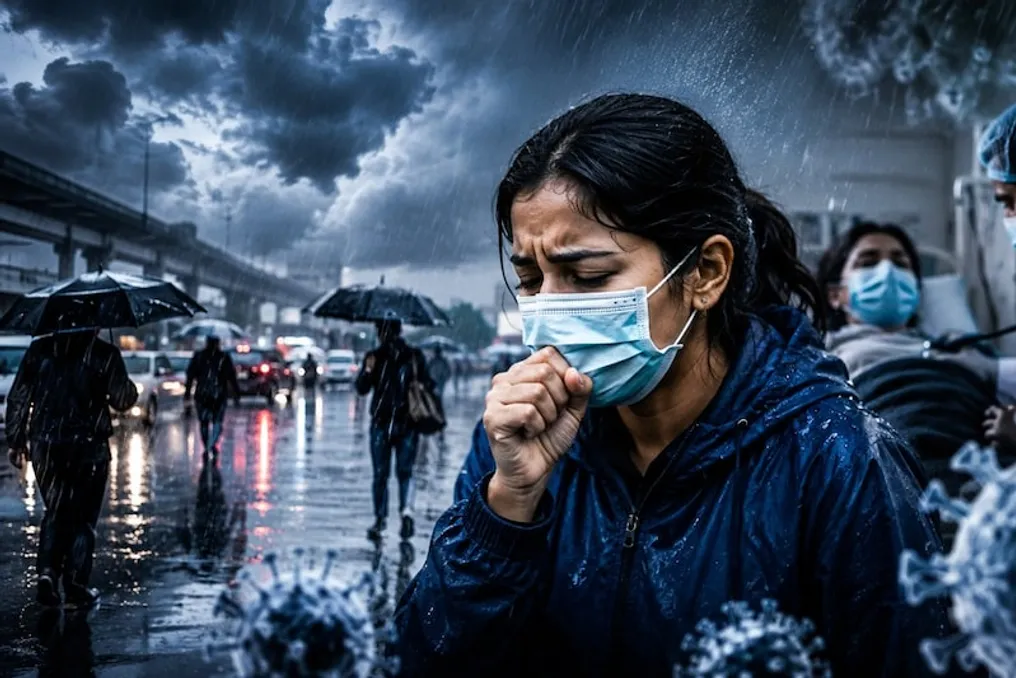
The rise in swine flu, or Influenza A(H1N1), cases in Delhi has raised concerns among the public. According to the Delhi Health Department, 1777 cases have been registered so far this year, with 433 new cases reported in the last 14 days alone, which is several times higher than in August of last year. The number of patients presenting with flu symptoms in the OPDs of various hospitals, including AIIMS Delhi, Safdarjung, and RML, is increasing, and these cases are being investigated, yielding several positive results.
In view of the growing spread of swine flu, Union Health and Family Welfare Minister J.P. Nadda held a review meeting with Delhi Health Minister Pankaj Singh. In this meeting, he directed the strengthening of the surveillance system and assured every type of assistance from the central government.
To provide information on this matter, Aajtak.in spoke with Dr. Neeraj Nishchal, Professor in the Medicine Department at AIIMS Delhi. Dr. Neeraj clarified that cold weather alone is not necessary for influenza to spread. The combination of virus circulation, reduced immunity in people, and an environment conducive to transmission through respiratory routes can increase influenza.
He mentioned that such conditions arise during the monsoon season in Delhi. There is constant change in the weather, and due to rain and humidity, people spend more time indoors. Air conditioners run in many places, and windows and doors remain closed. If there is no proper ventilation in the room and an infected person is present, the virus can reach other people. Dr. Neeraj emphasized that the reason for the increase in cases is not just the temperature, but the combination of the virus being present among people and favorable conditions for transmission.
Dr. Neeraj also mentioned that increased cases could be due to testing. Previously, patients treated for general viral fever or flu might now be tested for swine flu, which may make the figures appear higher. Therefore, to understand the rising statistics, it is necessary to see how many flu tests are being conducted, as more tests can lead to a higher apparent case count.
Dr. Neeraj identified groups at higher risk from swine flu, including the elderly, young children, pregnant women, patients with heart, lung, and diabetes diseases, and those with weakened immune systems. Anyone exhibiting symptoms such as shortness of breath, lack of oxygen, chest pain, confusion, or weakness is advised to seek immediate hospital care.
Dr. Neeraj advised that any fever should not be ignored, but one should not be afraid of every fever; timely medical consultation, correct testing, and appropriate medication are essential. Maintaining hand hygiene during this period is crucial—one should eat only after washing hands and cover the face when coughing or sneezing. One should stay home when sick and wear a mask if necessary. Contact with infected individuals should be avoided. If any flu-related symptoms appear, do not self-medicate and consult a doctor.
Delhi Health Minister Pankaj Kumar Singh assured that his government is fully prepared to handle the current health situation. He stated that there is no shortage of beds, doctors, medicines, and essential medical equipment in hospitals, and every patient is receiving timely and proper treatment.
He further stated that a total of 2392 cases of Influenza-A have been reported this year up to 2026, with H1N1 being the most prominent strain, accounting for 1777 cases. Additionally, 37 cases of H1, 138 of H3, and 440 other cases have been reported. He informed that the status of influenza is being continuously and closely monitored through the Delhi State Health Mission's Integrated Disease Surveillance Program (IDSP). Under this, daily monitoring of ILI, SARI, and influenza cases reported on the IDSP-IHIP portal is being done.
The Health Minister said that the Delhi government is continuously monitoring the number of patients and strengthening necessary arrangements in hospitals according to requirements. A detailed report on Delhi's preparedness has been shared with Union Health Minister J.P. Nadda, covering arrangements for beds, doctors, medicines, and other essential facilities in hospitals. The Union Health Minister has assured that the central government will provide all necessary support to the capital, Delhi.
Regarding how many more cases there are this time compared to last year, the Delhi Health Department stated that no official figure is available regarding how many times higher the cases are compared to last year, but swine flu cases are significantly high this year. The Union Health Ministry has assured strengthening the surveillance system.