Archaeologists have discovered a massive time capsule containing over half a million ancient seeds in eastern India. These findings reveal how people survived and thrived over three millennia, enduring climate change and the succession of empires.
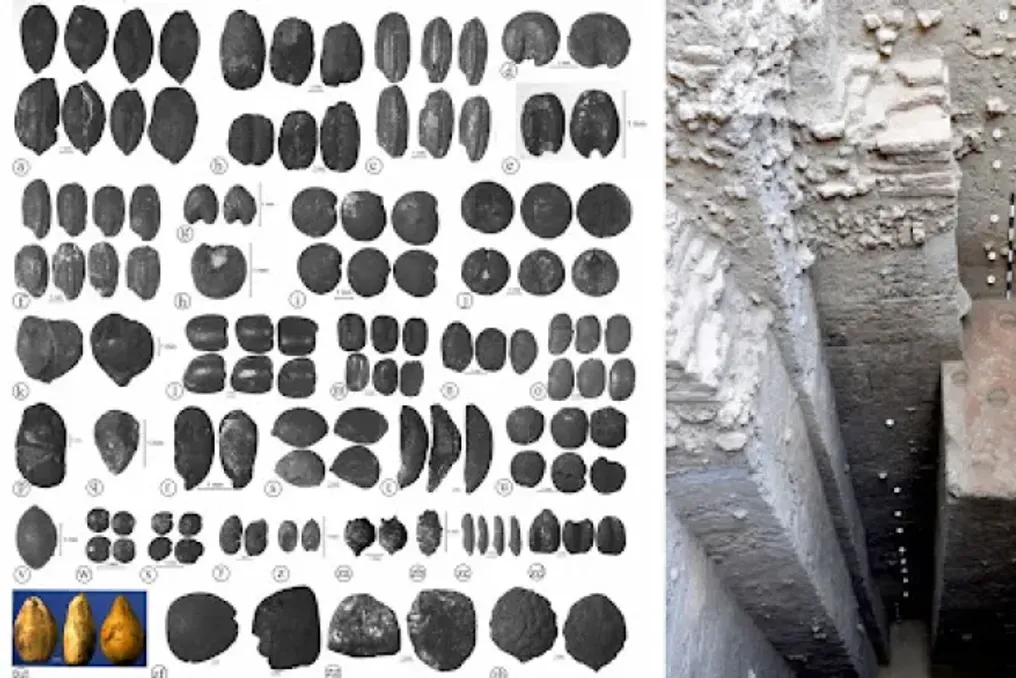
The study, conducted by scientists from the Birbal Sahni Institute of Palaeontology and the Archaeological Survey of India, analyzed charred plant remains at a site named Uren, located in Bihar. By examining these microscopic traces of history, the team was able to map a continuous agricultural history spanning from the Iron Age in 1300 BCE to the early medieval period in 1200 CE.
This discovery provides the most detailed insight into how early farmers in the Gangetic plain developed intensive rice cultivation systems that still feed millions of people in the region today.
Researchers found that the ancient inhabitants of Uren practiced polycropping, growing various crops in summer and winter to ensure a constant food supply. In the earliest layers of the site, dating back 3000 years, the community relied on a balanced mix of winter crops, such as barley, wheat, and lentils, alongside summer crops, including rice and millet.
However, as centuries passed and large Indian empires like the Mauryas and Guptas grew in power, researchers recorded a sharp shift towards rice cultivation. By the Sungas-Kushans period around 200 BCE, rice had become the dominant staple crop, making up the vast majority of the seeds found. This shift indicates that ancient societies deliberately intensified their agriculture, investing in irrigation and improved tools to produce more food for growing urban centers.
To trace the ancient remains, the team employed archaeobotanical methods. When ancient people cooked or cleaned grains near a fire, some seeds accidentally fell into the flames. Instead of turning to ash, these seeds carbonized or became charcoal, allowing them to survive in the soil for thousands of years without rotting.
To extract these tiny charred fragments, scientists used the flotation method: soil from the excavations was mixed in a tank with water. Since the charred seeds are lighter than the dirt, they float to the surface, from where they can be collected and examined under a microscope. Researchers then applied morphometry—the precise measurement of seed shape and size—to distinguish wild plants from cultivated ones. Furthermore, they used radiocarbon dating, which measures the decay of carbon atoms, to accurately determine the deposition time of each seed layer.
While many well-known archaeological sites have been studied in the Indus Valley or the upper Gangetic plain, the eastern region of the Gangetic plain often received insufficient attention. Most previous studies in this area provided only snapshots of a few hundred years. The Uren site is unique because it represents a single, continuous sequence over 3000 years in one location. This allowed the team to see exactly how agriculture changed step by step as the climate became wetter or drier.
Scientists were able to observe how farmers introduced exotic plants from afar, such as garlic from Central Asia and tamarind from Africa, proving that these ancient settlements were connected to extensive international trade networks long before the modern era.
The research highlights the resilience and ingenuity of ancient farmers. About 1300 years ago, the region faced a significantly drier climate due to weakened monsoon rains. Instead of abandoning their farms, the inhabitants of Uren adapted by restructuring their planting systems and relying on a wider range of drought-resistant plants. They also constructed irrigation ponds and reservoirs to store water for their summer rice crops. This ability to cope with worsening climate demonstrates that ancient people refused to be victims of the environment but instead acted as active innovators, finding ways to survive through engineering solutions and crop diversity.