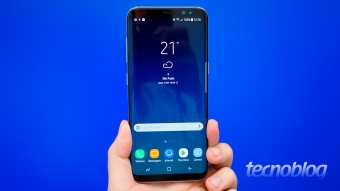
Samsung has made an unexpected software update available for the Galaxy S8 and Galaxy Note 8 smartphones, devices that were launched nine years ago. This initiative aims to apply specific corrections related to stability and connectivity, even after the South Korean company officially discontinued support for these devices five years ago.
This news caused surprise, given that the prevailing update policy at the time did not foresee such an extended lifespan for these models. Launched in 2017, this pair of devices represented crucial moments for the company: the S8 introduced the concept of minimal bezel screens, while the Note 8 aimed to restore the reputation of the productivity-focused line.
The changelogs provided by the manufacturer detail general improvements in system reliability and stability. However, the official support document for the Brazilian version of the Galaxy Note 8 indicates that the correction also covers GPS performance.
In Brazil, smartphones not tied to carriers (with code ZTO) will receive the new packages using firmware versions G950FXXUCDZEG for the Galaxy S8 and N950FXXUGDVGC for the Galaxy Note 8. In contrast, in global markets, the corresponding numbers are G950FXXUCDZE7 and N950FXXUGDZEA.
Although the update requires a download of 420.37 MB, according to screenshots shared by users, the level of the system security patch remains unchanged. The Galaxy S8 maintains the April 2021 protection, while the Note 8 is fixed on the August 2021 patch.
Both the Galaxy S8 and Note 8 have been updated to Android 9.0 Pie, running under the One UI 1.0 interface, which constitutes the last major system update offered by the brand for this generation. Official software support ended in 2021.
The South Korean manufacturer removed the S8 from the security update list in May of that year. A few months later, in October 2021, the Galaxy Note 8 also reached its end of life. The new package arrived to international and Brazilian users with some delay, as the same update had already been released for devices located in the United States almost two months prior. To date, Samsung has not issued an official statement to explain the disparity in the timeline.