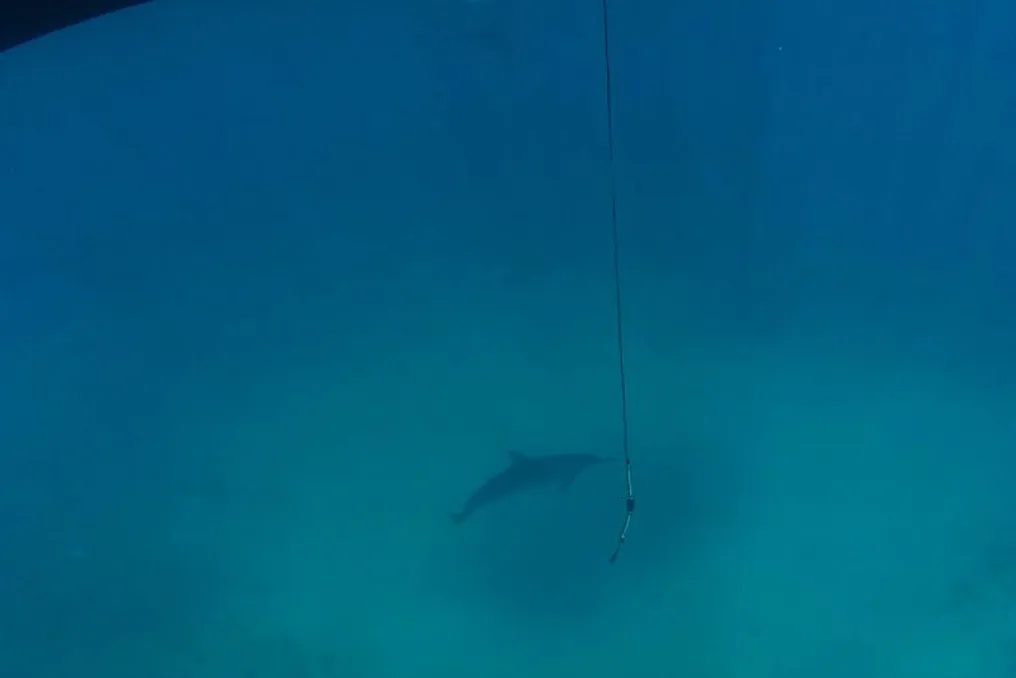
The sounds emitted by dolphins can be transformed into a crucial tool for the protection and monitoring of marine biodiversity. Researchers from the Oceanographic Institute (IO), affiliated with the University of São Paulo (USP), created an artificial intelligence (AI) algorithm capable of differentiating six species of South-West Atlantic dolphins based on their whistles.
This study, published in the journal Ocean and Coastal Research, marks a significant advance in tracking marine life. The developed technology also has the potential to improve the surveillance of aquatic mammal populations in hard-to-reach areas.
To build this model, scientists examined approximately 1,800 sound recordings captured in the coastal areas of São Paulo, the Fernando de Noronha Archipelago, and the Cananéia estuary, located on the southern coast of São Paulo state.
The recordings included sounds from various species, such as common dolphins (Delphinus delphis), orcas (Orcinus orca), Atlantic spotted dolphins (Stenella frontalis), bottlenose dolphins (Tursiops truncatus), spinner dolphins (Stenella longirostris), and grey dolphins (Sotalia guianensis).
The algorithm achieved an accuracy of 55% in identifying the species. Researchers consider this result very promising, as it represents an initial step toward automating the acoustic recognition of these animals.
The highest success rate was observed in common dolphins, at 73.6%, followed by grey dolphins at 65%, and Atlantic spotted dolphins at 55%.
Perspectives and Challenges of Acoustic Recognition
According to biologist Diogo D. Barcellos, the article's first author, the system's accuracy can be increased by increasing the amount of samples and records used in the training process. He explained to Jornal da USP that the more data available for each species, the greater will be the system's ability to distinguish between different sound patterns.
Barcellos emphasized that these acoustic variations may be linked to adaptations to different environments, such as food availability, predator presence, and impacts caused by human activities. In some locations, coexisting species may even absorb each other's sounds, which makes purely acoustic identification more complicated.
For this reason, it is essential that the algorithm be trained with recordings collected in multiple regions. Thus, the acoustic library becomes a vital tool for raising monitoring accuracy and expanding knowledge about the cetaceans of the South-West Atlantic.
The team used data gathered in the acoustic library to train an AI model based on the Random Forest algorithm. This system operates as a set of 'decision trees'; each tree evaluates distinct characteristics of the vocalizations, such as duration, frequency, modulation, and whistle variation, using this information to classify the species. Subsequently, the algorithm consolidates the responses of all trees, selecting the most recurrent classification. In this way, the model learns to recognize the specific acoustic patterns of each species and can automatically identify the cetaceans just by listening to the sounds they produce.
Professor Marcos Santos, coordinator of the IO's Laboratory of Aquatic Mammal Conservation Biology and the work's second author, mentioned that he began collaborations with researchers from the United States after taking up the position of faculty member at USP. This partnership enabled the importation of specialized equipment and the securing of funds from the State Research Foundation of São Paulo (Fapesp) to conduct an innovative study on the acoustics of whales and dolphins off the coast of São Paulo.
The project also culminated in the creation of an acoustic library of cetaceans from the coast of São Paulo. Barcellos was the first researcher in the laboratory to develop academic research in this area, contributing to the progress of marine biodiversity acoustic monitoring.
The Fundamental Role of Bioacoustics
Santos emphasized that bioacoustics plays a central role in monitoring these species. He predicted that in the future, it will no longer be necessary to use vessels to monitor the presence of these mammals along the coast; only acoustics will allow for the identification of species and the counting of individuals in a specific area. However, for this to materialize, it is essential to expand the existing acoustic library.
The professor added: 'However, for this, we will need to further develop the acoustic library we have already built, with the aim of consolidating this monitoring method, which is already used in some countries.' He concluded: 'We have taken the first step. If we do not advance, this effort will have been in vain. We need to continue applying the same methods for at least five more years.'
One of the great advantages of the system created by USP is its ability to perform continuous monitoring without interfering with the natural behavior of the animals. Unlike visual observations, which depend on good weather and light conditions, AI-equipped acoustic sensors can operate uninterruptedly, even at night or in poorly visible waters.
This constant monitoring helps locate vital zones for feeding, reproduction, and movement of cetaceans, as well as allowing for the assessment of how environmental changes and human activities impact these populations. Since dolphins and whales are at the top of the food chain, they are considered important indicators of the health of marine ecosystems.
For Barcellos, the results prove the potential of AI as a tool for monitoring marine fauna, particularly in regions of the South-West Atlantic, where there is a scarcity of data on the occurrence and behavior of these species. The system can also assist Conservation Unit managers by providing constant data on species presence, most frequented areas, and the seasonality of their appearance.
He stated that 'this monitoring can help us better understand how cetaceans use the environment and generate information to support public policies, conservation measures, and regulations aimed at reducing the impacts of human activities on marine ecosystems.' Acoustic monitoring also serves to evaluate the effects of human action on animals. Changes in vocalization frequency, occupation of certain locations, or species behavior can signal impacts generated by maritime traffic, fishing, and other interventions in the marine environment.
The next stage of the research will involve testing the algorithm in areas of the northern coast of the State of São Paulo, including the São Sebastião Channel and the waters near Anchieta Island, aiming to refine the system and expand its use in marine biodiversity conservation programs.