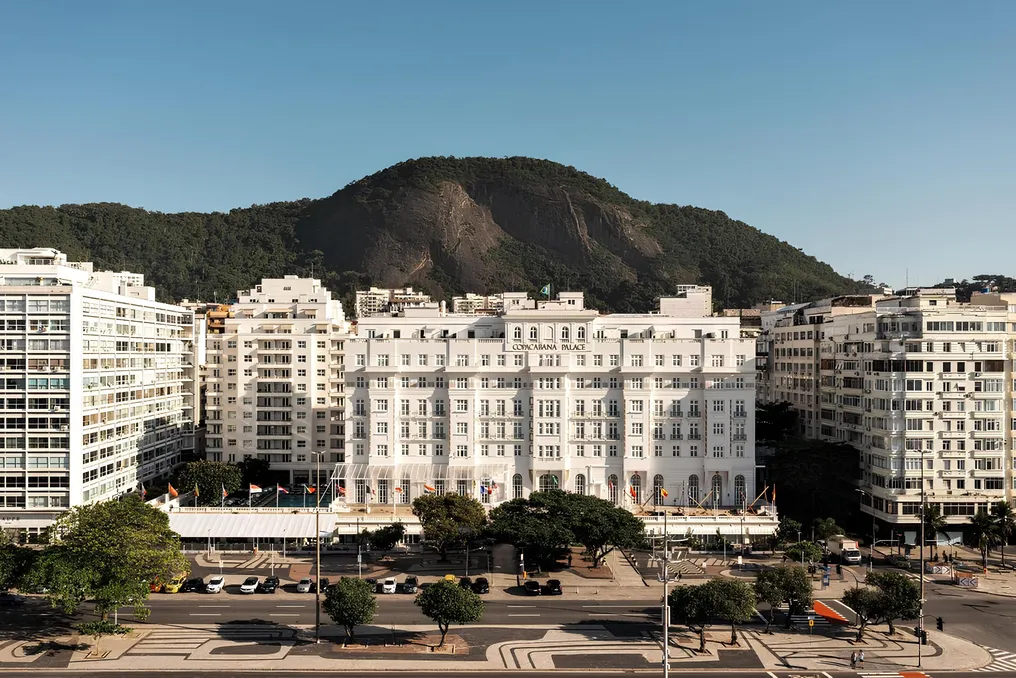
The Copacabana Palace, part of the Belmond chain, located in Rio de Janeiro, is scheduled to reopen the Pool Building in November. This building, originally constructed in 1948 and closed for 19 months for a comprehensive renovation, will feature 68 suites.
The renovation of the building introduces several new facilities, including a modernized pool area, the hotel's first exclusive bar, a contemporary Italian restaurant, a boutique focused on Brazilian craftsmanship, and five floors dedicated to wellness.
Historically, the Copacabana Palace is recognized as a major winner of the Best Travel and Tourism Award, having won the Best Hotel title 17 times in its 21 years of awards.
The Pool Building was initially conceived to accommodate guests staying in Rio de Janeiro for extended periods and, for many years, was referred to merely as an 'annex.' The decision to renovate the building was announced in 2023, shortly after the hotel's centenary.
With the reopening, the hotel totals 208 rooms and suites: 68 in the Pool Building and 140 in the main body. Most of the new accommodations will offer views of the pool or Copacabana Beach. Daily rates are expected to start from around R$ 6,500, plus taxes.
The 68 suites are sized to accommodate two to five people, and most of them feature a separate living room. Some units can also be interconnected, which facilitates stays for larger groups or extended families.
The reopening brings six new accommodation categories, highlighted by the Carioca Suite, a two-bedroom penthouse located on the 11th floor, offering views of Christ the Redeemer and Sugarloaf Mountain. There is also the option of 165 sq m suites with two bedrooms and sea and pool views.
The project's aesthetic reflects inspiration from Brazilian artists and materials. Architect Ivan Rezende, who also participated in the restoration of the Copacabana Palace Theater in 2021, used reclaimed wood from Amazon riverbeds, stones from various regions of the country, marquetry, and furniture aligned with Brazilian modernism.
Xylography artist Ciro Fernandes contributed works for the living rooms, inspired by Brazilian flora and fauna. The carpets also follow this theme, representing the patterns of the Juruá River and the colors of the Acre vegetation.
The pool underwent a redesign of its bottom, adopting more fluid and organic shapes inspired by the Atlantic waters, replacing the old geometric pattern.
Next to the pool, the Copa Bar will open, the hotel's first exclusive bar. Its counter will be nearly ten meters long, and the cocktail menu will focus on Brazilian mixology, featuring options such as caipirinha and Rabo de Galo.
In the pool area, the hotel already has the Pérgula restaurants, serving typical Brazilian dishes, and MEE, specializing in Pan-Asian cuisine. With the renovation, a third restaurant will be added, offering contemporary Italian cuisine. This new establishment will be managed by executive chef Nello Cassese, inspired by Southern Italian traditions, although its name has not yet been revealed.
The hotel's wellness infrastructure has also been expanded, now featuring five floors dedicated to this segment, which will include a spa, gym, health bar, infrared saunas, ice baths, steam rooms, and beauty salon.
Another addition is the Copacabana Palace Boutique, a shop dedicated to national craftsmanship. It will gather pieces from various techniques and regions of Brazil, including works by artists involved in the interior design of the new building.
To understand the trajectory of the Pool Building, one must revisit the foundation of the Copacabana Palace itself. The hotel was established in 1923 through the initiative of then-president Epitácio Pessoa and was financed by Octávio Guinle. The architectural design was handled by French architect Joseph Gire, who drew inspiration from the Negresco hotels in Nice and the Carlton in Cannes.
Twenty-five years later, in 1948, a new wing was built. Designed by Wladimir Alves de Souza, the Pool Building followed a modernist line with Art Deco references. Its creation occurred during a period when outdoor socializing was gaining prominence in Carioca customs, designed to welcome guests with long stays in the city.