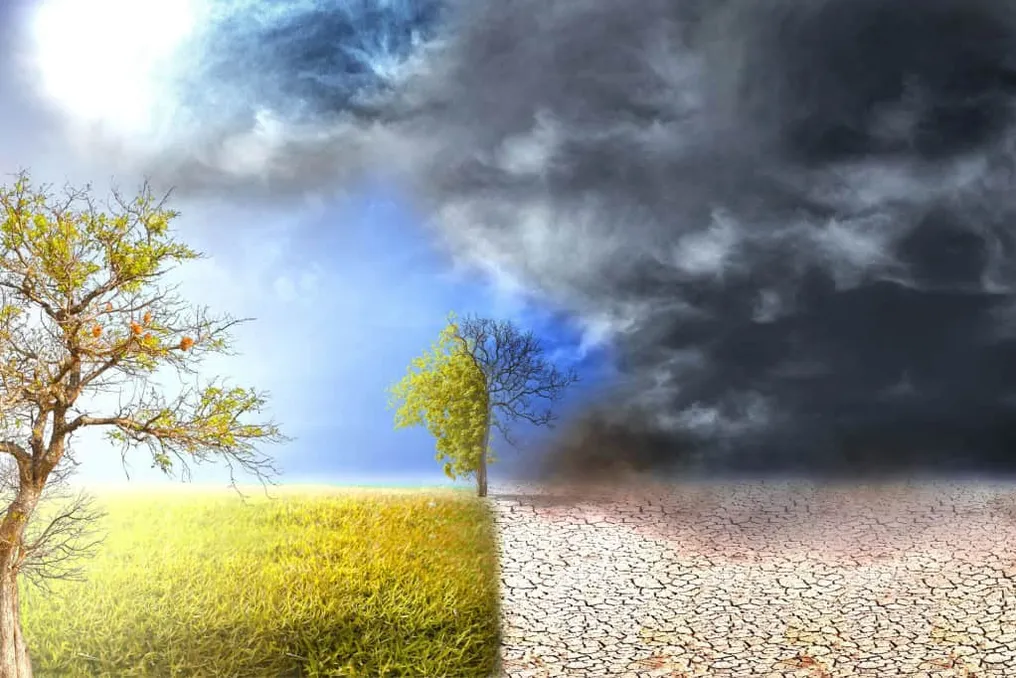
The El Niño predicted for 2026 is heading towards being the most intense ever recorded, showing potential to trigger extreme weather events in various parts of the globe and possibly make 2027 the hottest year in history. Experts consulted by AFP indicate that this phenomenon should reach an unprecedented magnitude in over a hundred years.
El Niño is a natural event linked to the warming of tropical Pacific waters and is part of the cycle known as the El Niño-Southern Oscillation (ENSO). It manifests when the trade winds, which normally blow from east to west, temporarily weaken. Consequently, warm water accumulated in the western part of the Pacific migrates eastward and rises to the surface.
When sea surface temperatures remain above average for several months, this favors the formation of more storms and clouds in the region, generating changes that affect different parts of the world's atmosphere. Michelle L’Heureux, leader of the ENSO team at the U.S. National Oceanic and Atmospheric Administration's (NOAA) Climate Prediction Center, warned AFP that stronger events imply a higher probability of these impacts, although she emphasized that no effect is guaranteed.
This phenomenon has the potential to cause hotter and drier conditions in some regions and colder and wetter conditions in others. Some impacts are already notable, such as in Indonesia, where a prolonged and severe drought season contributed to forest fires affecting hundreds of thousands of hectares.
Calculations made by climate scientists Zeke Hausfather and Andrew Dessler suggest that El Niño could temporarily add 0.3 °C to the long-term global warming trend. Thus, the global average temperature in 2027 could reach 1.76 °C above pre-industrial levels. Dessler, a professor at Texas A&M University, told AFP that this increase would concentrate in a single year the warming that, without the temporary influence of El Niño, would only be expected in 2037, classifying it as a 'preview of the future.'
Mike McPhaden, senior scientist at NOAA's Pacific Marine Environmental Laboratory, presented a similar estimate, stating to AFP that it would not be unlikely for 2027 to reach 1.7 °C above pre-industrial levels if model projections are confirmed.
Details on intensity measurement
There is no universally accepted method to measure the intensity of El Niño episodes. In February, NOAA implemented the Niño Relative Ocean Index (RONI). This indicator compares the warming of the Niño 3.4 area with the warming of the entire tropical ocean band, aiming to represent more accurately the ocean-atmosphere interaction system responsible for ENSO effects.
Although the values obtained by RONI are lower, the forecast classification for the phenomenon remains unchanged. According to NOAA, there is a 69% chance that the 2026 El Niño will be the strongest in its historical series, which began in 1950.
Impact of climate change on El Niño events
Scientists agree that climate change intensifies the effects caused by El Niño. A warmer atmosphere due to greenhouse gases can retain more moisture, which can lead to more intense rainfall associated with the phenomenon. Simultaneously, the soil tends to dry out more, worsening drought conditions in areas where El Niño already promotes decreased precipitation.
There is still less consensus on whether climate change itself is inducing more potent El Niños. However, evidence in this direction is emerging. McPhaden stated that 'climate change may be amplifying the El Niño cycle itself.'
According to the scientist, the warming of tropical seas causes the winds responsible for the phenomenon to react more vigorously to oceanic conditions. This restricts the feedback mechanism between the atmosphere and the ocean, allowing episodes to develop more rapidly. McPhaden based this statement on paleoclimate data, such as coral skeletons, as well as instrumental measurements from the 19th century and climate models, which indicate that the amplitude of El Niño episodes may have grown by about 10% over the last century.