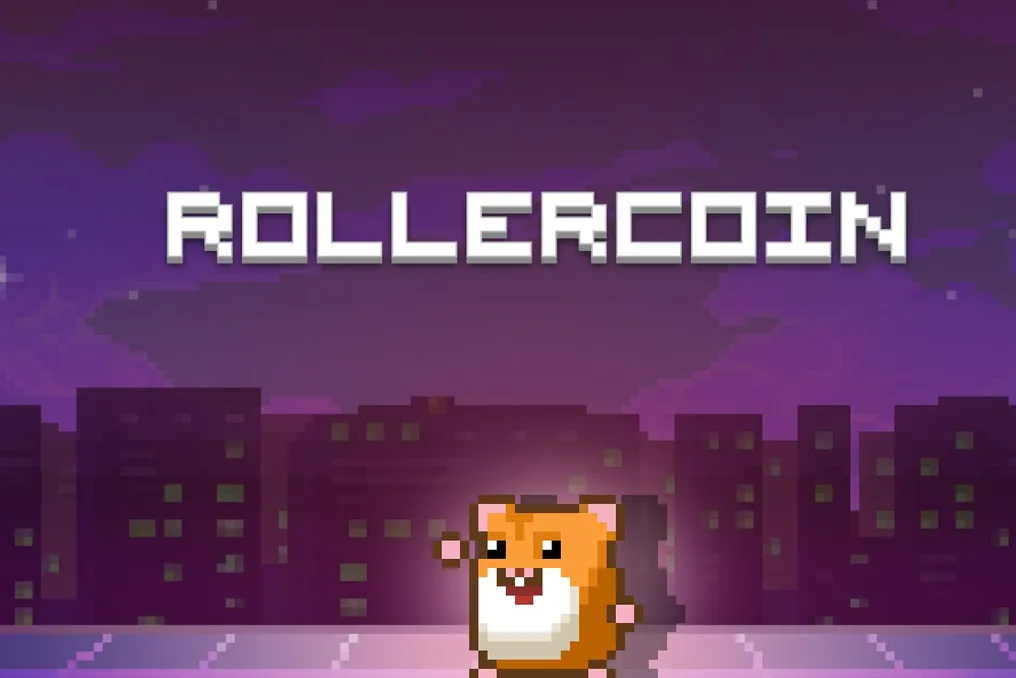
RollerCoin is a cryptocurrency mining simulator accessible via browser that combines elements of arcade games and virtual mining. Users engage in creating and managing a mining farm, increasing its hash power through gameplay and equipment purchases, after which they receive a share of real cryptocurrency rewards.
The game was launched in 2018 and has attracted about 5.5 million registered players. In total, players have mined 92.21 BTC, and RollerCoin reports paying out over $10 million in cryptocurrency since its launch. New users can start playing without needing mining hardware, making a deposit, using a credit card, or connecting a crypto wallet; however, a wallet is necessary for withdrawing cryptocurrency.
The main platform for the game is the browser, but an Android application is also available. In 2025, RollerCoin received 'Game of the Year' and 'Best Browser Game' awards at the Blockchain Game Awards.
To gain mining power, players participate in short arcade games. RollerCoin measures this power as hash rate, using terminology and proportional reward mechanisms similar to real mining, but without the requirement for physical hardware. The power determines the player's share in the overall pool of available cryptocurrency rewards. For example, Bitcoin rewards are calculated approximately every 10 minutes. The amount allocated to a specific player depends on their power relative to the total competing power in that pool.
The system supports multi-mining, allowing power to be distributed across several cryptocurrencies instead of being limited to one token. The platform supports over 16 reward tokens, including BTC, ETH, DOGE, SOL, BNB, TRX, and LTC. Players can change their distribution based on strategy changes. The in-game token for RollerCoin is called RLT and is used for miners, equipment, passes, and other elements of the game economy.
Each farm consists of rooms containing racks and virtual miners. Miners placed on racks provide constant mining power and continue to operate even when the player is inactive. Arcade games, on the other hand, provide temporary power, allowing players to increase their share in the reward pool before purchasing equipment.
As the farm develops, players gain access to additional rooms, miners, quests, and other progression systems. In the early stages, regular gameplay plays a major role, whereas as the account grows, the importance of equipment selection and farm configuration increases.
Players are also divided into leagues based on their progress. Each league has its own cryptocurrency reward pool, so new accounts compete in a different pool than more developed farms.
RollerCoin includes features that go beyond basic mining. The marketplace allows users to buy, sell, and trade miners, racks, and components. The ability to craft and merge allows existing equipment to be transformed into more powerful units.
Furthermore, the game features quests, expeditions, events, and seasonal content. Seasons introduce thematic progression tracks, new characters, collections, and limited-time activities. Some rewards are available through free progression, while paid passes and equipment purchases offer additional opportunities.
These systems add layers of resource management to the cryptocurrency mining game: players make decisions about what equipment to purchase, what to merge, how to configure the farm, and where to direct their mining power.
The entry model in RollerCoin differs from many other cryptocurrency mining games in that players can create an account and start playing without an initial deposit, mining hardware, starting NFT, or wallet connection. They can build up temporary power through games before deciding whether to buy miners or other in-game items.
RollerCoin has been operating since 2018 and holds a service rating of 4.6 out of 5 on Feefo, based on 589 reviews over the last year. Feefo indicates that reviews on the platform are collected from customers whose transactions can be verified.
As mentioned earlier, the game also received 'Game of the Year' and 'Best Browser Game' awards at the Blockchain Game Awards in 2025. Unlike physical mining, progress in this simulator depends on the player's gameplay and management decisions, not on computational hardware. Players themselves choose which games to play, which miners to acquire or merge, how to configure their rooms, and how to distribute their mining power. Cryptocurrency rewards then depend on the player's share in the corresponding reward pool.