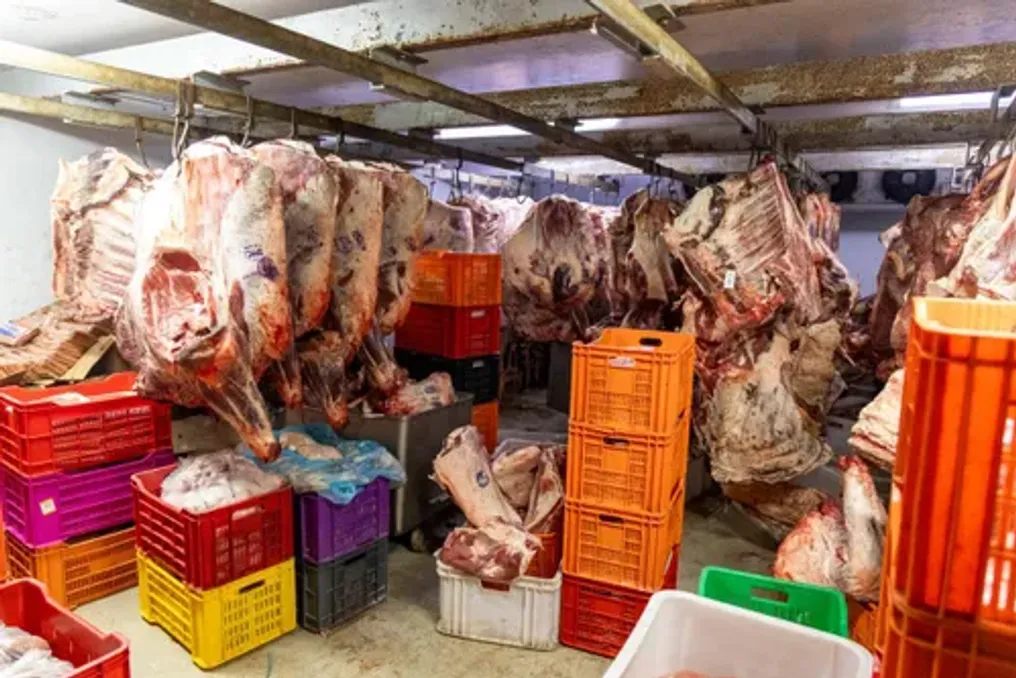
A meat shop in central Johannesburg was shut down following a joint government inspection that uncovered numerous violations concerning labor, health, and safety. Among the identified issues were workers being paid below the established national minimum wage, unsafe working conditions, and food safety concerns.
The Minister of Employment and Labour, Nomakhosazana Mthethwa, accompanied by the Mayor of Johannesburg, Dada Morelo, led a multi-disciplinary operation to check compliance with regulations in the city center on Friday. This action is part of a broader government campaign to curb the activities of businesses that disregard labor laws and municipal bylaws.
Serious violations found at Siesta MTN store
The team of inspectors discovered significant breaches at the Siesta MTN Butchery, prompting labor inspectors to issue several prohibition notices under the Occupational Health and Safety Act. Blocked passageways, exposed electrical distribution boards, insufficient changing facilities, and lack of proper seating were identified; furthermore, cashiers were reportedly using crates while working.
Inspectors also determined that employees were being paid less than the minimum wage, and the employer was not contributing to the Unemployment Insurance Fund (UIF), placing the business in violation of labor legislation. Additionally, health and safety issues were found, including staff working without necessary Personal Protective Equipment (PPE), thawing meat products on the floor, and keeping pets, including cats, inside the building.
As a result of these findings and additional environmental health violations, the City of Johannesburg ordered the immediate closure of the meat shop.
Approach to compliance
During the operation, Mthethwa emphasized that adherence to South African labor law is mandatory. She stated: 'The Republic's laws are not an optional condition. We all bear responsibility for obeying the law. We want businesses to continue operating and contributing to the economy, but they must comply with the Republic's laws.'
Mthethwa clarified that the department's inspections aim both to ensure compliance and to educate, helping employers understand their legal obligations while simultaneously protecting workers' rights. She described the approach as a 'carrot and stick approach': 'We empower and train businesses, identify areas needing improvement, and issue notices where necessary.'
The inspection team also visited the Boxer Superstore supermarket, where officials interacted with management and staff, assessing compliance with labor laws, including the Basic Conditions of Employment Act.
Addressing issues related to foreign employment, Mthethwa urged businesses to utilize the available South African workforce more actively, noting that the department maintains a database of over seven million registered job seekers. She stressed: 'We tell businesses: make space for South Africans. But we are not xenophobic. Foreigners legally present in South Africa have the right to work. However, people who are legally in South Africa as visitors or students cannot simply take up a job without the necessary legal permit.'
City officials also checked whether businesses complied with building codes and whether they had approved construction plans. Morelo stated that the city will continue to work with non-compliant businesses while assisting those willing to meet legal requirements. He added: 'This joint operation with the Department of Employment and Labour is part of our ongoing commitment to restoring order in the Johannesburg CBD. We will not turn a blind eye to businesses that endanger the safety and dignity of workers or operate illegally.'