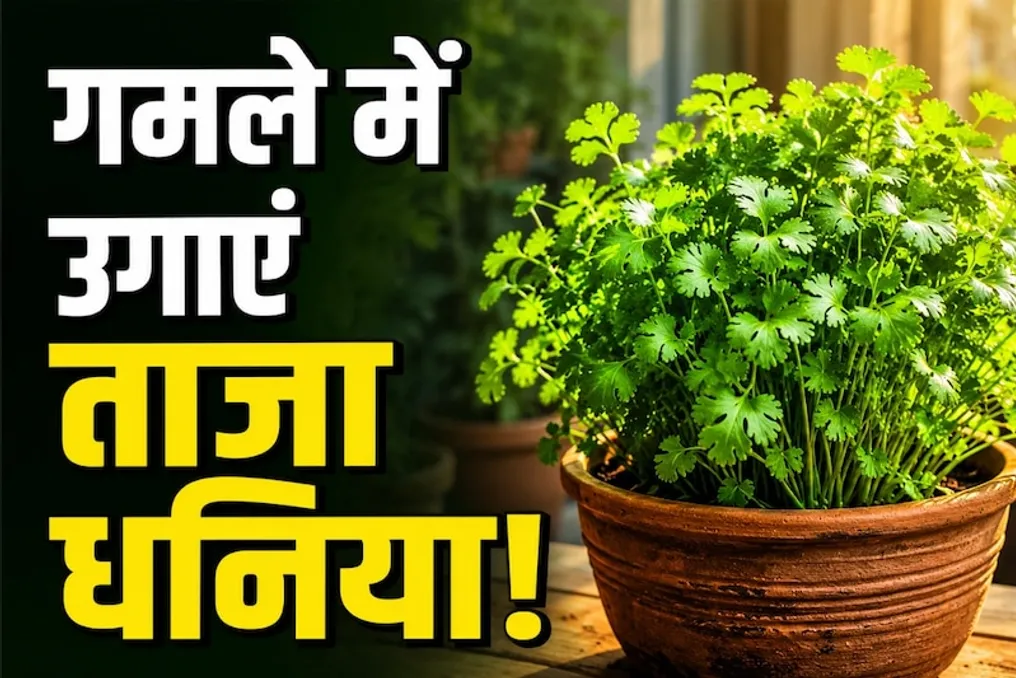
Fresh cilantro is indispensable both on the plate and as part of various dishes such as curries, sauces, or vegetable side dishes, as it significantly enhances the taste and appearance of food. Because of this, having cilantro in the kitchen is considered necessary in many homes. Although vegetable sellers often give it away for free, during the rainy season, the price can increase sharply, which creates problems. Therefore, instead of constant purchases at the market, you can try growing cilantro in a small pot at home.
Some people try to grow cilantro in containers, but the plant quickly wilts or starts flowering instead of forming leaves. In fact, growing cilantro is not a difficult task; it is enough to observe several important conditions. With suitable timing, watering regime, and location, cilantro can remain lush even in a small pot. Below are recommendations for caring for cilantro.
Tips for Growing Cilantro in Pots
Firstly, it is extremely important to sow cilantro at the right time. The plant poorly tolerates intense heat; at high temperatures, seeds may not germinate properly, and the shoot itself may start flowering too early. An optimal temperature is considered to be within 17–27 degrees Celsius. In most regions of India, it is easiest to grow cilantro from October to February. If the climate in your area is cooler, sowing during the monsoon period might be possible, but very intense heat should be avoided.
Secondly, some preparation is necessary before sowing. Cilantro seeds look identical externally, but inside each seed there are two connected grains. Therefore, it is recommended to gently separate them into two parts by rubbing with the palm or applying slight pressure. It is important not to crush the seeds into powder. After separation, the seeds should be soaked in water for several hours or overnight to soften the outer layer and promote germination.
Thirdly, the seeds should be sown directly into the pot where they will grow. Transplanting young plants is undesirable because their roots are quite sensitive. Instead of first growing the seeds in a small tray and then transplanting, it is better to sow them directly into the main pot. Before planting, the soil in the pot must be thoroughly loosened. Then, the seeds are buried approximately 1–2 centimeters deep and covered with a thin layer of soil. When watering, it is strictly forbidden to use a strong jet of water, otherwise, the seeds may shift.
Fourthly, the plant needs light, but it should be protected from intense sun. Although cilantro likes light and sun, constant exposure to bright sunlight can harm it, especially when the temperature rises. It is best to protect the plant from midday heat. The pot can be placed where it receives soft morning sun, but shade is provided during the day. A balcony or a spot near a window that receives sunlight in the morning would be suitable for cilantro.
Fifthly, daily watering is not mandatory. The balance of soil moisture is critically important: the soil should not dry out completely, but it should also not stagnate with water in the pot. Water should be given when the top layer of the soil feels dry. Overwatering leads to root rot, and frequent dryness causes stress to the plant, which can trigger premature flowering. Therefore, it is preferable to water moderately, as needed.
Sixthly, caution should be exercised when harvesting. When cilantro is growing well in the pot, one should not pull out the entire plant. Large, ready leaves should be regularly cut off as needed using scissors, leaving new central shoots to grow. If you want to have fresh cilantro for a long time, instead of sowing all the seeds at once, you can sow small portions every two or three weeks. This will ensure a continuous appearance of new plants and a steady supply of fresh greens.