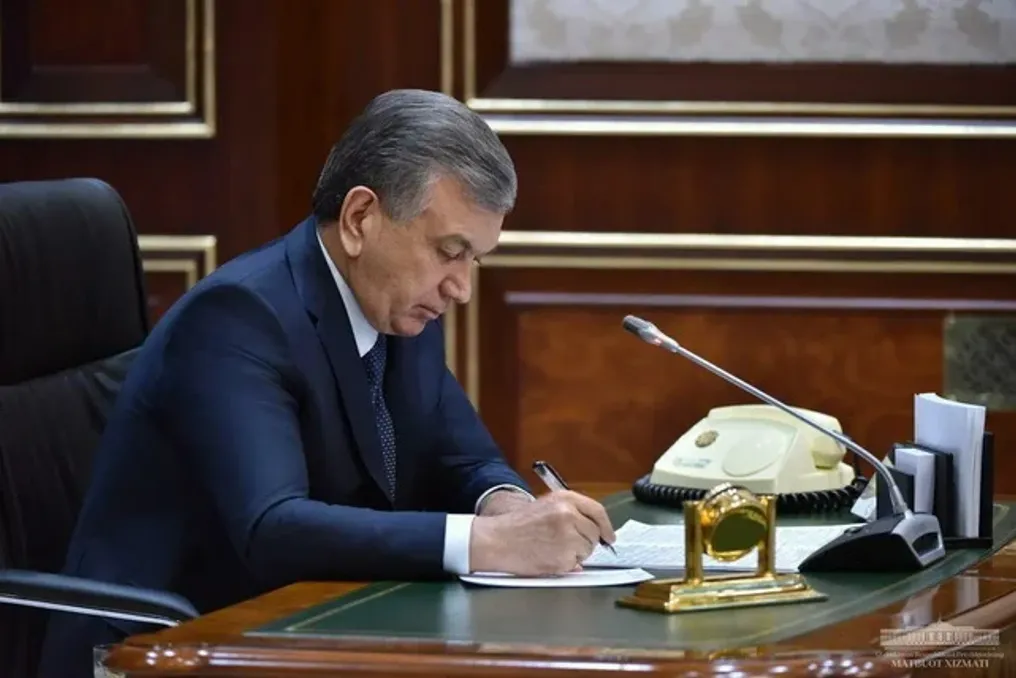
Uzbekistan to establish Institute of Cryptology and Cybersecurity at Tashkent University
Read more
UzDaily
uzdaily.uz

Uzbekistan to establish Institute of Cryptology and Cybersecurity at Tashkent University

Uzbekistan plans to create the Institute of Cryptology, Information Security, and Innovative Technologies. This institute will be located at the Center for Radioelectronic Systems and Information Technologies of Muhammad al-Khwarizmi Tashkent University of Information Technologies, according to a decision signed by President Shavkat Mirziyoyev.

The main task of the institute is to improve the qualifications and retrain specialists in the fields of cryptology, information protection, information security, and cybersecurity. Additionally, it will train personnel in artificial intelligence, big data processing, digital forensics, and other digital technologies.

The institute will engage in scientific research activities, participating in fundamental, applied, and innovative projects. Its responsibilities also include developing national standards, regulatory acts, and regulatory documentation in relevant areas.

After receiving approval from the authorized cybersecurity body, the institute will be able to develop, produce, sell, and certify technical and cryptographic information protection systems intended for limited access use.

Institute specialists will also assess the information resources and systems of state bodies and organizations, including critical information infrastructure objects. The institute will be granted the right to evaluate the protection level of these objects and certify those where limited access information is processed.

Institute employees, as well as invited lecturers and specialists, will be eligible for mortgage loans to purchase housing in new facilities in the Tashkent region. The initial down payment must be at least 15% of the property value. Commercial banks are ready to provide such loans for up to 20 years at an interest rate established by legislation.

A non-budgetary Development Fund will also be established at the institute. The fund's income will come from certification and other services, sales of developed technical equipment, sponsorship donations, and other sources. The fund's funds will be directed towards strengthening the material and technical base of the institute, developing the library, financing educational, research, and production activities, implementing projects, and providing material incentives to employees.


Similar stories

Institute of Cryptology and Cybersecurity Established in Uzbekistan
Read more
podrobno.uz

Institute of Cryptology and Cybersecurity Established in Uzbekistan

The President of Uzbekistan, Shavkat Mirziyoyev, signed an official decree providing for the creation of the Institute of Cryptology, Information Security, and Innovative Technologies.

This new institute will operate based on the Center for Radio Electronic Systems and Information Technologies, which is part of Muhammad al-Khwarizmi Tashkent University of Information Technologies.

According to the approved document, the Institute's activities will cover retraining personnel in areas such as cryptology, data protection, cybersecurity, artificial intelligence, and digital forensics. Furthermore, it will be involved in conducting scientific research, as well as developing relevant standards and regulatory acts.

The Institute will be granted the ability to create, produce, and certify technical and cryptographic information protection tools intended for a limited circle of users. It will also be able to conduct accreditation of restricted-access objects and check state information resources for compliance with cybersecurity requirements.

Social support is provided for employees of the new institute: they will have access to mortgage loans for purchasing housing in the Tashkent region with a down payment of at least 15% and a repayment period of up to 20 years.

A non-budgetary Development Fund will also be established at the institute. Funds from this Fund will be directed towards improving the material and technical base, supporting scientific projects, and motivating personnel. The formation of the Fund is planned through sponsorship contributions, sales of developments, and certification services.

Previously, it was announced that the president had signed a decree concerning additional measures for the development of education and science in the field of cryptology in the Republic of Uzbekistan. Within this document, a plan of measures for the development of this sphere for the period 2024–2025 was approved.

JICA hands over equipment to Uzbekistan for digitizing cultural heritage
Read more
uzdaily.uz

JICA hands over equipment to Uzbekistan for digitizing cultural heritage

The Japan International Cooperation Agency (JICA), in collaboration with the Agency for Cultural Heritage of Uzbekistan, held a ceremony on August 18, 2026. As part of the project, equipment was transferred for the preservation of Silk Road cultural heritage through the creation of digital archives.

The equipment was provided to the Agency for Cultural Heritage, the State Museum of History of Uzbekistan, and the Termez Archaeological Museum. The goal of this project is to strengthen Uzbekistan's capacity to protect and preserve its cultural heritage by providing resources for archiving valuable cultural and archaeological collections, as well as supporting regional revival and cultural development.

The State Museum of History of Uzbekistan houses approximately 340,000 exhibits, including finds from archaeological sites related to the history of Buddhism, as well as materials reflecting the civilization of Central Asia since the Stone Age.

The Termez Archaeological Museum stores about 110,000 items discovered at archaeological sites in the Sunikandary region, including artifacts from the Greco-Bactrian and Kushan periods. The museum also has an exhibition hall dedicated to the Japanese scholar Kato Kyuzo, who made significant contributions to archaeological excavations and site preservation in the Termez area.

The total cost of the project is 55.9 million yen under Japanese grant aid. It includes the provision of computer equipment, scanners, cameras, and presentation equipment, as well as consulting services.

It is expected that the digitization will ensure the long-term preservation of cultural and historical heritage and expand access to materials for users both in Uzbekistan and abroad through a dedicated website.

The Japanese Ambassador to Uzbekistan, Kenji Hirata, stated at the ceremony that Uzbekistan's cultural heritage is of great importance to Japan, as Buddhism reached Japan from ancient India via the territory of modern Bactria-Khorasan along the Great Silk Road.

He emphasized that it is a great honor for Japan to contribute to the preservation of this heritage, noting that the project combines two important areas—cultural heritage preservation and knowledge transfer—by creating digital copies of significant objects for further research.

The chief representative of JICA in Uzbekistan, Mamoru Sakai, called the ceremony a landmark event and noted that in addition to traditional areas of cooperation such as infrastructure, healthcare, and agriculture, the agency also supports the restoration of the country's cultural heritage, which he described as the foundation of Uzbekistan's national pride.

According to Sakai, this equipment will allow for three-dimensional digital scanning of heritage objects whose physical condition inevitably deteriorates over time, whereas digital data can be stored much longer. Sakai added that providing data through a website will give researchers worldwide access to the materials and may help attract foreign tourists, thereby creating an economic effect.

Popular