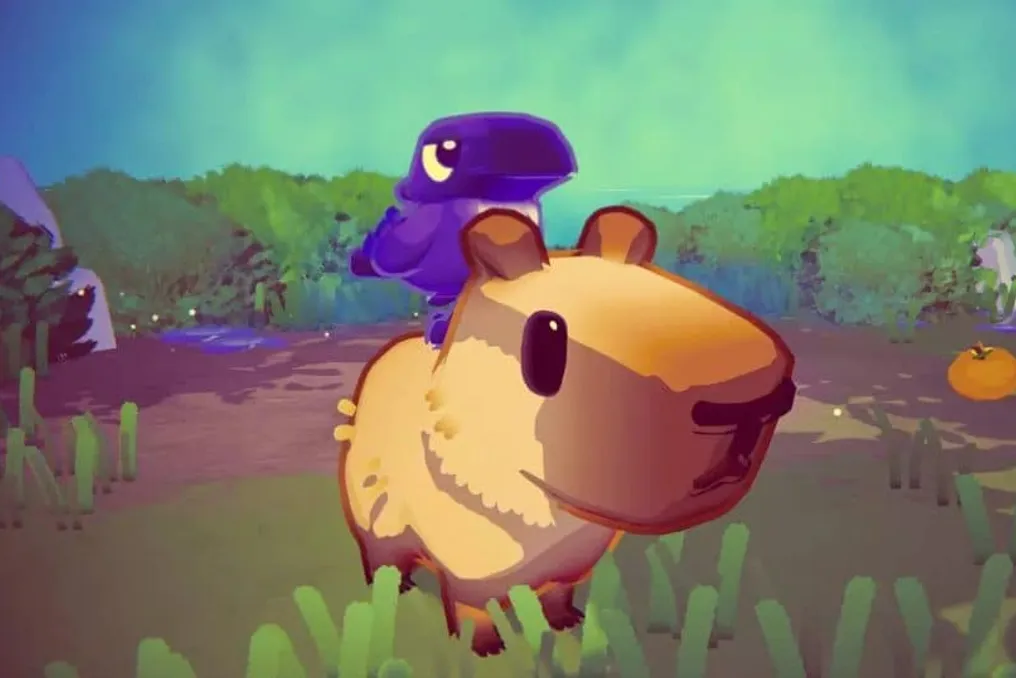
Capy Castaway is a charming cozy adventure distinguished by its delightful art, flawless soundtrack, and touching story. The game was developed by the independent Canadian studio Kitten Cup Studio.
In the game, the player controls a baby capybara named Capy and a chatty raven named Corvi. They explore a mysterious island after a flood separates them from home. The pair helps other animals, solves small puzzles, and makes decisions that lead to multiple endings.
Those familiar with games like A Short Hike or Unpacking will appreciate the atmosphere of Capy Castaway: light exploration without pressure and a focus on the feeling of attachment. The game's soundtrack is composed by Mark Sparling, composer of A Short Hike, which reinforces its image as a sanctuary.
The main strength of Capy Castaway is its tone. The gameplay is relaxing and fun, designed for those who want to slow down rather than overcome difficult challenges. Capy can sniff out tracks, dig for hidden items, swim, and place things on its head, while Corvi flies where the capybara cannot reach. Switching between characters opens new paths and solves puzzles at a pace that never punishes the player.
Moreover, the game evokes emotion. The journey of a baby trying to return home after a natural disaster carries an emotional weight that permeates the entire gaming experience. It is calming in the literal sense: the game encourages you to feel better.
Visually, Capy Castaway emphasizes cute characters and a bright, cheerful color palette. The beauty is not accidental; the colors serve a function, giving each corner of the island its individuality, and the meticulously drawn cast of exiled animals is memorable due to its masterful style. The result is a dynamic visual experience where exploring new locations is a reward in itself.
If visuals set the face, the soundtrack gives it soul. Mark Sparling's composition is calm and relaxing, almost perfectly matching the casual experience of life on the island offered by the game. It is the kind of music that makes the player unconsciously relax. One cannot say that most of the game's calming effect comes from it, and for music lovers, the soundtrack is sold separately on Steam.
The biggest hurdle for the Brazilian audience is the language. The full version of the game is only available in English, without Portuguese subtitles. In a game where the experience is built on narrative and dialogue, the absence of Portuguese deprives the player of half the special charm.
This situation is compounded by the fact that the game's demo version offered subtitles in Brazilian Portuguese. There was localization, which raised hopes for Portuguese returning in an update, but at the time of release, players who do not speak English are facing difficulties.
The second drawback is related to the first. Dialogues with NPCs are sometimes too long. In a game positioned as light and effortless, the need to read extensive blocks of conversation slightly disrupts the relaxing rhythm so carefully built into the rest of the experience.
For those who understand English and enjoy narratives, these dialogues are part of the appeal. However, the excess can test even genre fans' patience, especially when one just wants to keep exploring the island.
At the time of release, Capy Castaway had some polishing flaws. Visual bugs appeared during exploration that contrasted with the overall meticulousness. For instance, fish sometimes swam around Capy while the capybara was on land, as if the water were still there. This did not impede progress, but in a game that relies on atmosphere, every such error undermined immersion.
The good news is that the studio is already addressing this issue. On August 14, 2026, Kitten Cup Studio released the first game patch (version 1.0.2), which included quality-of-life improvements and several bug fixes. This is an example of post-launch support often lacking in small projects, and a good sign that polishing issues will decrease in the coming weeks.
Capy Castaway is a gentle recommendation for those seeking a sanctuary: gamers who like cozy titles like A Short Hike, desiring an adventure without commitment, and willing to play in English. Thanks to its charming art, flawless soundtrack, and touching story, the game fully justifies the expectations of this audience, especially in local co-op, where one can explore the island together with someone, provided only the host has the game.
Those who do not speak English should refrain from purchasing for now. In a game so focused on text and dialogue, the lack of Portuguese is a serious barrier, and it is worth waiting until the demo version's localization appears in the full version. Otherwise, it is one of the most charming cozy games of the year, and given that the studio is already fixing initial errors, it is likely to become even more refined.