Uzbekistan and Kazakhstan hold working meetings on nuclear power plant safety issues
Read more
UzDaily
uzdaily.uz

Uzbekistan and Kazakhstan hold working meetings on nuclear power plant safety issues

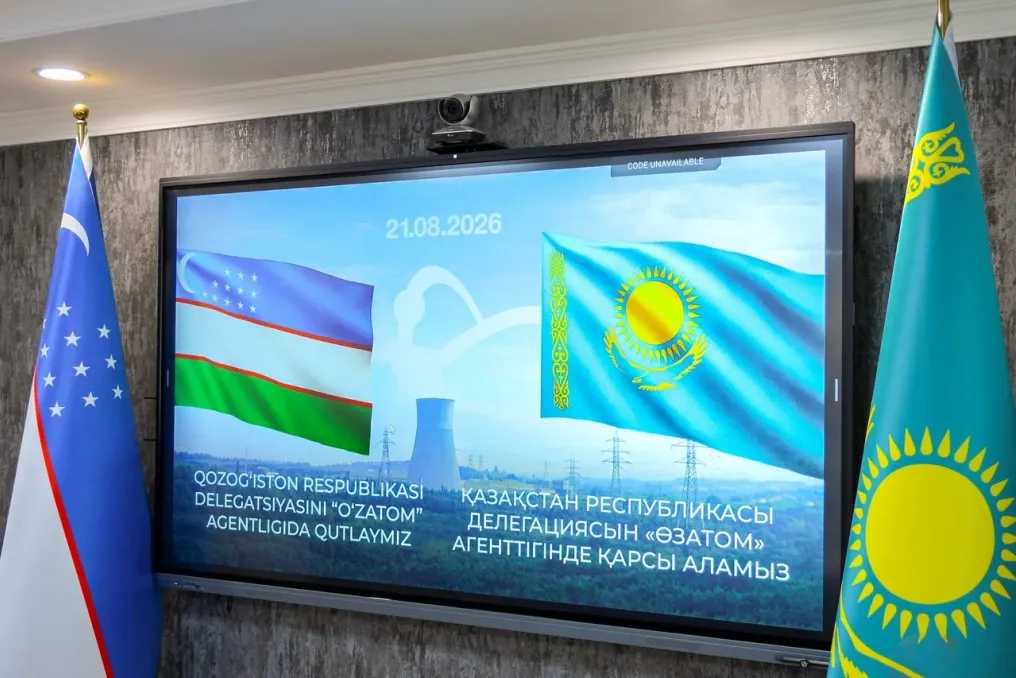
Uzbekistan and Kazakhstan conducted working negotiations focused on nuclear, radiation, and environmental safety issues related to the construction and future operation of the nuclear power plant in Uzbekistan.

The meeting took place on August 21 at the Uzatom Agency. The delegation from Kazakhstan was headed by Mansur Oshurbayev, Deputy Minister of Ecology and Natural Resources, according to Uzatom.

Representatives from relevant ministries and agencies of both countries discussed the technical and environmental aspects of this nuclear project. Before the start of the working session, participants listened to presentations from Uzbek organizations involved in the project.

Azim Akhmedkhadzhayev, Director of the Uzatom Agency, emphasized that safety is a priority for Uzbekistan's national nuclear program. He noted that the country is building a system of nuclear, radiation, and environmental safety taking into account both national legislation and international standards.

The Kazakh side expressed interest in the safe and sustainable development of nuclear energy in the region. Oshurbayev highlighted the importance of experience exchange, maintaining transparent approaches, and joint work on environmental protection.

During the presentation session, the State Institution Directorate for Nuclear Power Plant Construction, the O‘zGASHKLITI Institute, and UzLITI Engineering company presented information on the progress of design work, surveys, and preparatory measures. The parties also discussed methods for ensuring safety and environmental monitoring.

Kazakh representatives asked questions regarding the presented materials, while officials from the Ministries of Energy and Ecology of Uzbekistan, as well as the Ministry of Emergency Situations, provided additional comments and clarifications.

Following the negotiations, the parties agreed on key directions for further cooperation, including the development of a roadmap and subsequent steps. Special attention was paid to personnel training and the development of expert potential in Central Asia.

The Uzbek side presented a concept for a specialized center that will provide educational and practical training for specialists, simulation training using modern laboratories, and expert consultations on the development of national nuclear infrastructure. The concept also includes a unified platform for academic mobility and a knowledge base based on Uzbekistan's experience in the construction and operation of NPPs.

The center's priorities will be strengthening the culture of nuclear and radiation safety, improving the regulatory framework, and increasing public acceptance of peaceful nuclear energy. To exchange knowledge and develop relevant expertise, the use of the digital platforms 'Nuclear Knowledge Platform' and 'Nuclear Energy Modelling Hub' is planned. The parties confirmed their readiness to continue regular expert dialogue and develop cooperation in the field of safe and responsible use of nuclear energy in Central Asia.
Similar stories

Regulation on actions during a nuclear power plant radiation accident approved in Uzbekistan
Read more
podrobno.uz

Regulation on actions during a nuclear power plant radiation accident approved in Uzbekistan

The Ministry of Justice of Uzbekistan has officially registered a document establishing the procedure for actions in the event of a radiation accident at a nuclear power plant. This regulation details procedures for implementing emergency modes, rules for informing relevant services, and algorithms for providing assistance during an emergency.

The regulation provides for two main levels of response: 'emergency readiness' mode and 'emergency state' mode. The first mode is activated when there is a threat of an incident or when established radiation norms are exceeded, while the second is introduced in case of an actual emergency or the risk of developing a serious design accident. Responsibility for decision-making lies with the management of the operating organization, and in their absence, with the shift supervisor of the NPP.

Specific numerical limits for radiation exposure have been defined to assess potential threats. Readiness mode is declared in the station's territory and in the sanitary protection zone upon reaching a dose rate of 2.5 microsieverts per hour. Emergency state is introduced at a reading of 200 microsieverts per hour. In the observation zone, these thresholds are 0.1 and 20 microsieverts per hour, and for personnel in the controlled zone, they are 10 and 600 microsieverts per hour, respectively.

Upon detection of an emergency, state structures for emergency response and monitoring systems are immediately notified. Throughout the entire liquidation period, regulators—the Committee for Industrial, Radiation, and Nuclear Safety and the Atomic Energy Agency—are required to receive reports every twelve hours, and station personnel must receive briefings at least once a day.

In addition to the functioning of the internal headquarters, an external emergency management headquarters has been organized at a safe distance from the NPP. All necessary protective equipment, emergency brigades, and warning systems must be fully prepared and equipped even before the first batch of nuclear fuel arrives at the site. Furthermore, facility drills must be conducted annually.

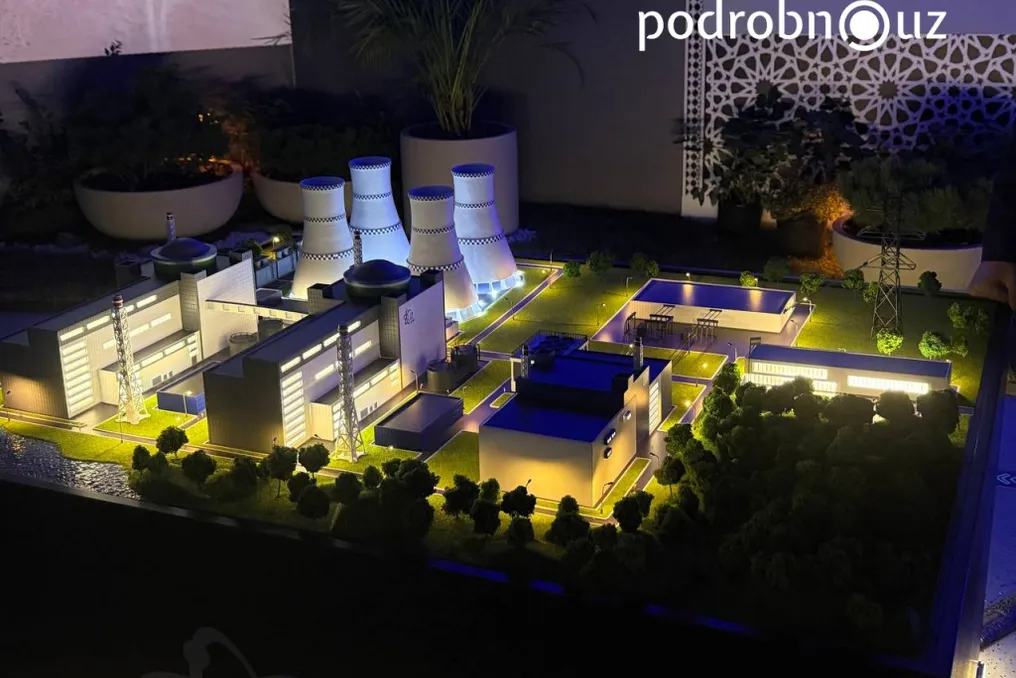
Previously, President Shavkat Mirziyoyev announced the start of preparatory work for the project to build a second NPP in Uzbekistan. Currently, the country's first atomic project is being implemented in the Farish district of Jizzakh region. On June 4, the presidents of Uzbekistan and Russia, Shavkat Mirziyoyev and Vladimir Putin, began the construction of the first unit of the integrated NPP via video conference; the foundation for the future station was poured at the site.

This project includes two VVER-1000 type units and two RITM-200N reactors. After reaching design capacity, the station is expected to generate about 15.4 billion kWh of electricity annually, which will cover more than 15% of the country's energy needs.

Uzbekistan and Turkey Discuss Cooperation in Nuclear Medicine
Read more
uzdaily.uz

Uzbekistan and Turkey Discuss Cooperation in Nuclear Medicine

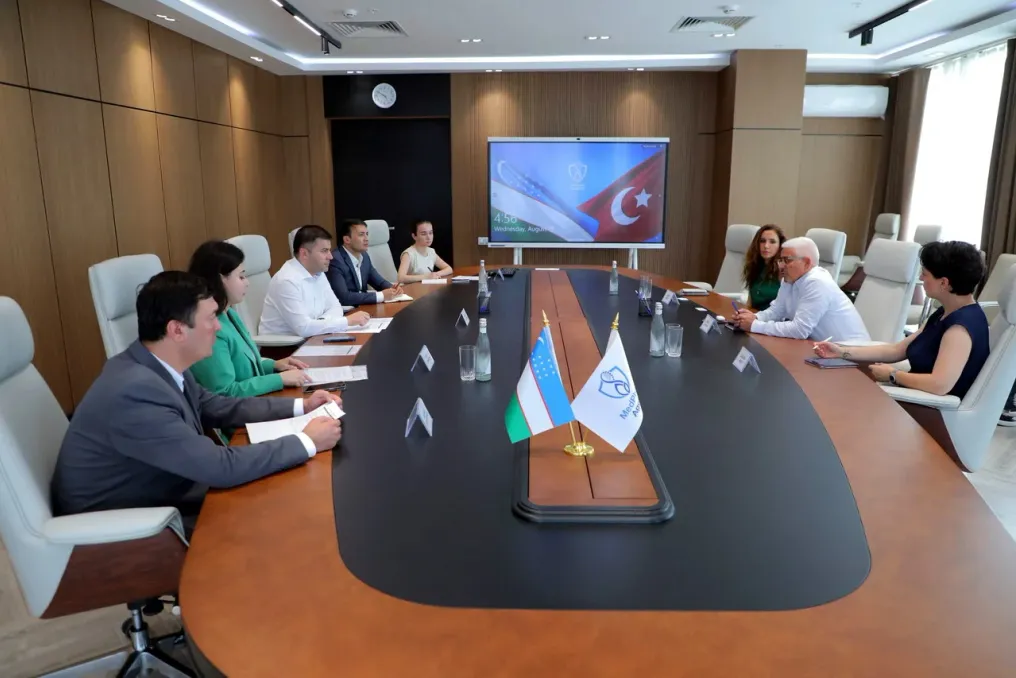
A meeting took place in Tashkent, Uzbekistan, between Abdulla Azizov, Director of the Agency of Uzbekistan for the Development of Medical and Pharmaceutical Industry, and Ismail Dernek, CEO of the Turkish company MNT Sağlık Hizmetleri ve Ticaret A.Ş. The purpose of the meeting was to discuss bilateral cooperation.

The parties discussed the possibility of expanding interaction in the fields of oncology, nuclear medicine, and radiopharmaceuticals, as well as implementing potential joint projects in Uzbekistan.

Particular attention was paid to creating a local production base for radiopharmaceutical drugs in Uzbekistan and building the necessary production infrastructure. Furthermore, the participants reviewed the current progress of the public-private partnership project aimed at establishing outpatient radiotherapy centers.

As a result of the negotiations, an agreement was reached to maintain practical dialogue and continue joint work on promising projects in Uzbekistan.

Popular