New Maharashtra History Textbook Changes View of Vedic Period: Excludes Meat-Eating and Social Stratification
Read more
Aaj Tak
www.aajtak.in

New Maharashtra History Textbook Changes View of Vedic Period: Excludes Meat-Eating and Social Stratification

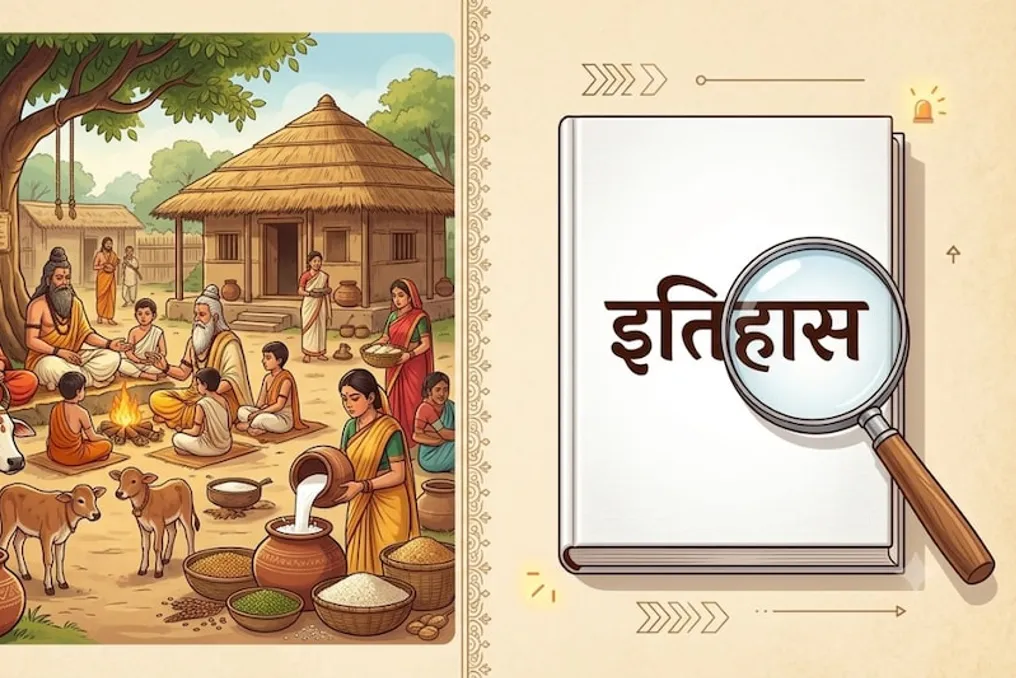
A new controversy has arisen among historians and scholars regarding the depiction of the Vedic period in the new sixth-grade history textbook published by the Maharashtra State Textbook Bureau and Curriculum Revision Board (Balbharati). The new edition presents the diet of people from the Vedic period entirely as 'plant-based' (vegetarian), and mentions of meat consumption have been excluded.

Furthermore, an important passage from the old book, which explained how the Varna system later transformed into a hereditary caste system leading to social inequality, was removed. Historians and researchers of ancient India have criticized these changes, arguing that the new curriculum presents an overly positive and harmonious picture of Vedic society, ignoring complex socio-cultural historical evidence.

The old sixth-grade history textbook clearly stated that people of the Vedic period consumed both plant-based food and meat. In contrast, the new edition names grains, milk, yogurt, ghee, honey, and vegetables as the main components of the diet, concluding a predominantly plant-based diet. Historians, citing numerous sources from ancient Indian literature, assert that meat consumption was common during that era.

Evidence from Vedic Literature: Professor Bahulkar, a specialist in Sanskrit sciences, documented written evidence of the preparation and consumption of various types of meat in Vedic literature in his study of food history in ancient and medieval India. His research includes mentions of using beef, goat, sheep, buffalo, and horse meat, as well as fish consumption.

View from Savitribai Phule University: Professor Shraddha Kumbhgodkar, head of the university's history department, stated that Vedic texts contain explicit references to the consumption of various types of meat both during rituals (Yajna) and in daily life.

Balbharati's Arguments: Shubhangana Atre, chairperson of the Balbharati history committee for classes 6 to 8 and an archaeologist, acknowledged that meat was indeed part of the Vedic diet. However, she argued that agricultural development made plant-based food the primary element of the people's diet. According to Atre, the authors decided to focus on cultural development rather than a detailed description of nutrition. She also clarified that the topic of meat is discussed in the chapter dedicated to the Harappan civilization.

The most significant and serious change is the depiction of the Varna system. The old book explained that the four varnas—Brahmin, Kshatriya, Vaishya, and Shudra—were initially linked to professions and livelihoods but gradually became based on birth. This very change subsequently gave rise to the caste system and social inequality. In the new edition, this connection is completely eliminated. It now states that Vedic society is divided into four varnas, assigned specific duties and social positions, and that societal relationships are depicted as filled with 'cooperation and affection.'

Professor Shraddha Kumbhgodkar noted that removing the transition from varna to hereditary caste and the associated inequality deprives the historical discourse of a very important part. She cited examples from the Rigveda describing conflicts between different groups. Kumbhgodkar countered that portraying Vedic society as entirely 'harmonious' contradicts historical evidence, pointing to battles over cattle and the 'Dasharajya Yuga' (war of ten kings) as proof that Vedic society was not free from conflict.

Shubhangana Atre, chairperson of the Balbharati history committee, defended the decision to simplify the educational material for younger students. Her argument is that introducing the concept of hereditary caste to children at such an early age might affect their psyche before they can grasp the broader historical context. She added that students will study this complex social structure in higher grades.

Professor Kumbhgodkar emphasized that school history textbooks play a crucial role in shaping students' understanding of the past, so inconvenient or contradictory evidence cannot be selectively removed from them. She insisted that the interpretation of history must be based on evidence, not on attempts to glorify or denigrate a particular period.

Will changes occur in other books: This sixth-grade textbook is part of a larger process of implementing the revised curriculum based on NCERT in the Maharashtra school education system. New books were introduced this year for classes 2, 3, 4, and 6, while the first-grade book was implemented last year. Updated textbooks for the remaining classes will be rolled out in phases over the next three years.

Similar stories

Pakistan President Asif Ali Zardari makes statement about Hindu minorities in Pakistan
Read more
www.aajtak.in

Pakistan President Asif Ali Zardari makes statement about Hindu minorities in Pakistan

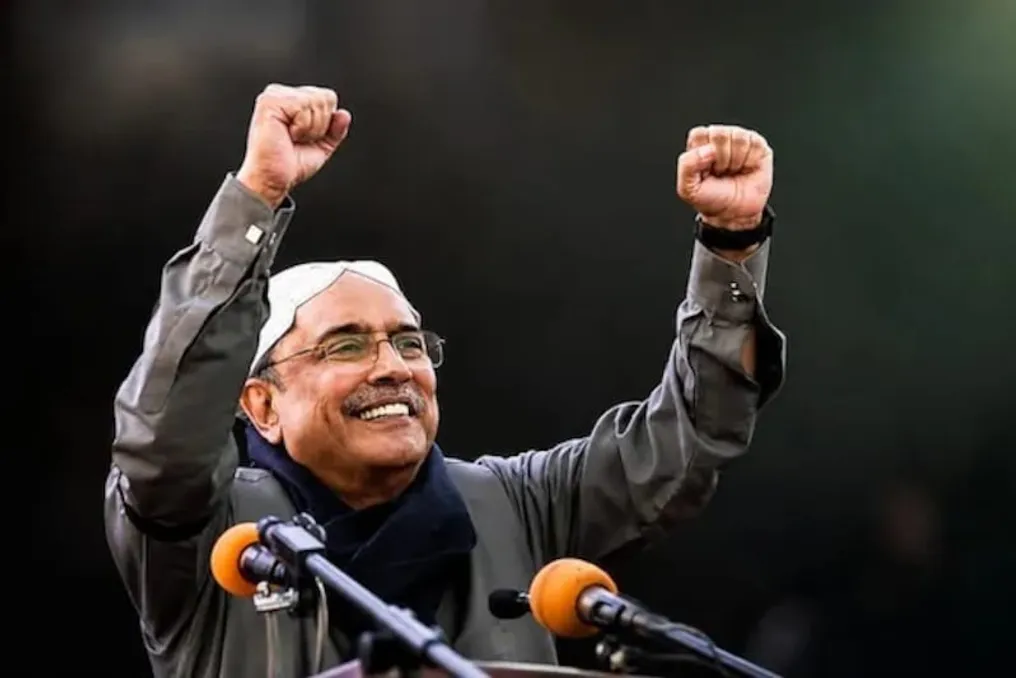
Pakistan President Asif Ali Zardari made a statement regarding the Hindu minority during the celebration of Pakistan's Independence Day, which caused public resonance. Zardari stated that Pakistan and its Muslim population are ready to 'tolerate' 3-4 percent of the Hindu population.

He also mentioned the concept of 'Akhand Bharat' (Undivided India), emphasizing that India has its own perspective and agenda. However, according to the 2023 Pakistan census, the proportion of Hindus in the country is 520 thousand people, which corresponds to 2.17 percent of the total population, and this is less than the 3-4 percent mentioned by Zardari.

Zardari clarified: 'We are Muslims, they are not. But our opinion is that we tolerate 3-4 percent of the Hindu population.' He also asserted that Hindus in Pakistan are completely free and prefer to live in this country.

This statement was made by Zardari on August 14 at a ceremony at the Vijay Mark-e-Fatah memorial in Islamabad. This memorial was erected by Pakistan to commemorate the victory in the conflict with India, which occurred in 2025 and was named 'Mark-e-Haq'.

India also followed up with sharp criticism of his remarks. Advocate Rohit Madasseril from Kerala, as well as researcher Amit Krishnakanth Paul from the 'Observer Research' Foundation, criticized Zardari's comments. Paul noted that the President of Pakistan is trying to sow discord by mentioning India after 80 years on Independence Day.

Zardari's use of the word 'tolerate' also raised questions, as the Constitution of Pakistan guarantees the rights of religious minorities and freedom of religion, despite Islam holding a special position and being the state religion. One report indicated that Hindus and other religious minorities in Pakistan face forced religious conversion, kidnappings, discrimination, and mass riots. In light of this, the application of the word 'tolerate' to the Hindu minority by the country's president became a subject of wide discussion.

Ten Indian Women Who Fought Against the Raj Whose Names Are Missing from History Textbooks
Read more
yourstory.com

Ten Indian Women Who Fought Against the Raj Whose Names Are Missing from History Textbooks

When studying standard Indian history textbooks, it is easy to assume that the fight for freedom was exclusively the domain of men, with the exception of a few well-known figures such as Sarojini Naidu or Annie Besant. However, this is not the case.

Behind major political negotiations and famous speeches were teenage girls managing underground radio stations; grandmothers who walked directly into police fire; and young women secretly smuggling revolutionaries past colonial intelligence. They did not just participate—they led, plotted, threw bombs, and held the tricolor until their last breath.

Nevertheless, history has quietly erased them from memory. Below are ten women who gave everything for India's liberation, and the reasons why it is important to remember their names today.

Age does not matter when facing colonial rifles.

Imagine a 73-year-old woman leading a massive, defiant procession to a police station in Tamluk during the peak of the Quit India Movement in 1942. The British police shouted at the crowd to stop and opened fire. Matangini Hazra did not flinch. A local resident, known as Gandhi Puri (Old Gandhianka), continued walking forward, holding the national flag high and chanting 'Vande Mataram.' She was wounded several times, but she did not let the flag touch the ground until she fell.

A 17-year-old leader who knew exactly what she was dying for.

Kanaklata Barua had barely left childhood when she took charge of the Mitri Bahini (Death Squad) in Assam. On September 20, 1942, the 17-year-old girl led an unarmed group to hoist the tricolor at the Gohpur police station. When the police warned her that they were about to shoot, she did not turn around. She kept moving, holding the flag, until colonial bullets felled her.

A teacher who attacked a white supremacist club.

Pritilata was a brilliant student and school principal who chose revolutionary violence over passive submission. Joining the Surya Sena revolutionary cell in Chittagong, the 21-year-old Pritilata led an armed attack on the Pahartali European Club—a place notorious for the sign outside reading: 'Dogs and Indians are not allowed.' The raid was successful, but Pritilata came under crossfire. Refusing to allow the Raj to capture, interrogate, or parade her as a trophy, she took cyanide and died on her own terms.

The mastermind behind Bhagat Singh's disguise operation.

History books like to call Durga Bhabhi a 'helper' to male revolutionaries, but clarification is needed: she was an operative herself. After Bhagat Singh and Shivaram Rajguru killed the British officer J.P. Saunders in Lahore, Raj began a massive manhunt. This is where Durga Bhabhi appeared. Disguising herself as Bhagat Singh's stylish, affluent wife—with a child in tow—she calmly guided him past colonial guards and onto a train to Calcutta. She managed secret hideouts, financed revolutionary networks, and was one of the most ardent members of HSRA.

A bomb-thrower who refused to stay in the kitchen.

Another legendary figure from the Surya Sena network in Chittagong, Kalpana Datta, did not just support the uprising—she created it. She specialized in making explosives and disguised herself in men's clothing to transport ammunition through British checkpoints. She was arrested after an armed confrontation in 1933 and sentenced to life imprisonment. While Surya Sen was executed, Kalpana survived him and told the story of a generation of young women who traded pens and paper for dynamite.

She bandaged her husband's bullet wound and completed the march.

During the Quit India protests in 1942, Tara Rani and her husband Phulendu were marching to the Sivan police station when the police opened fire. Phulendu was instantly killed. Tara Rani did not scream or retreat. She tore a strip from her sari, bandaged his bleeding body, ordered him to stay put, and returned to the front line carrying the flag. When she finally returned to him after conducting the protest, he had already passed away. However, her resolve never faded.

Food safety checks intensify in India: from fake cheese to pan masala packaging rules
Read more
www.aajtak.in

Food safety checks intensify in India: from fake cheese to pan masala packaging rules

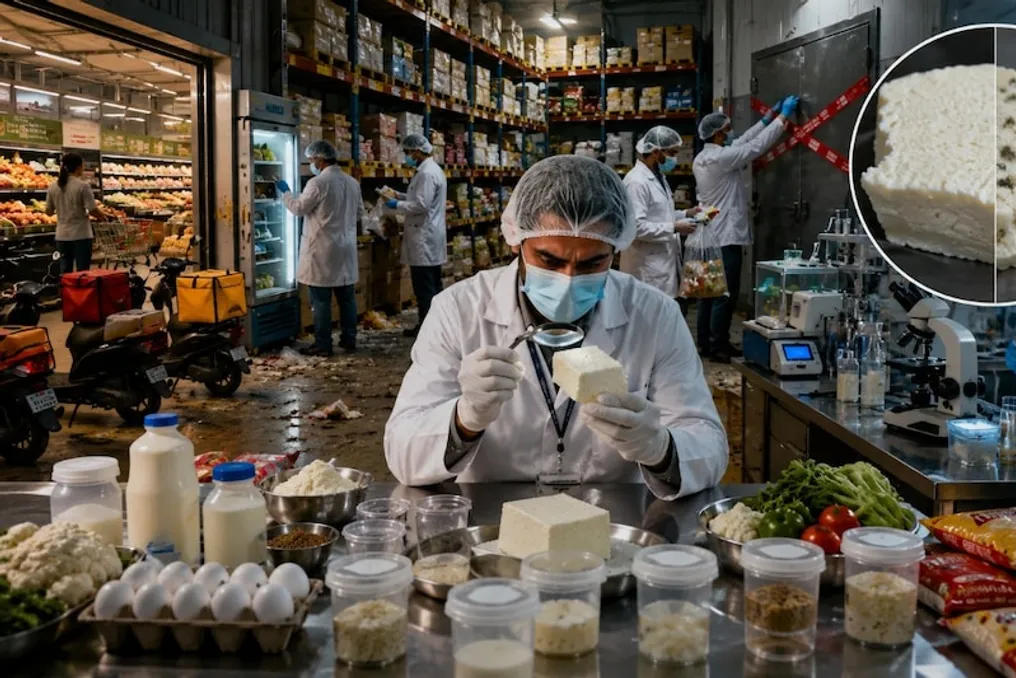
In recent days, a series of major measures aimed at ensuring food safety have been observed in India. Inspections were conducted at the warehouses of food delivery companies, and new rules for the packaging of pan masala were introduced. The Maharashtra government imposed a complete ban on analog (fake) cheese for one year, while Madhya Pradesh is preparing to adopt similar measures.

In Bangalore, a team from the health department suddenly inspected the hyper-clean warehouse of Zomato in Sakalwara village. During the inspection, goods stored in the cold storage were examined, and samples of products such as beans, spices, and eggs were taken and subsequently seized.

Previously, an inspection was also carried out at the Jepto warehouse in Hoskote. Employees found scattered garbage everywhere, open packaging materials, and chaotically arranged bottles of milk and soft drinks. Due to this condition, the warehouse was closed.

Meanwhile, in Mumbai, the Maharashtra FDA conducted an unannounced inspection of the Blinkit store in Malad West. Cockroaches were spotted on fruits and vegetables, products were stored directly on the ground, and expired goods were present in the store. As a result of this incident, the store's license was suspended.

Concerns arose not only regarding private companies but also state programs. During inspections of kitchens at the Indira cafeteria in Gottigere, Lingaradpuram, and Singasandra in Bangalore, instances of incorrect labeling and unsanitary conditions were identified; the warehouse in Gottigere was closed.

As part of similar campaigns in Karnataka, 60 hotels and restaurants were inspected, and 77 samples were sent for testing. Thus, violations are being discovered in both government and private structures, and officials are leaving no one untouched.

FSSAI has made significant changes to the packaging rules for pan masala. According to the Amendments to the Food Safety and Standards Packaging Regulations 2026, pan masala must now be packaged exclusively in non-plastic materials. The new norms prohibit the use of synthetic polymers such as polyethylene, polypropylene, and PVC in packaging. Furthermore, a ban on the use of aluminum foil or metallized layers has been introduced.

Manufacturers can now use paper, cardboard, cellulose, or glass and tin cans for packaging. This notification was issued on August 10 and came into immediate effect. It is important to note that this rule applies only to packaging and does not prohibit the sale of pan masala.

Popular