Thirty lions and tigers, which were kept for a long time in meager concrete enclosures at the former Zoo Luja in Buenos Aires, Argentina, have finally left this place. This transfer took place on August 17, 2026, after a difficult struggle that required significant logistical efforts and the involvement of veterinary specialists from the global animal protection organization FOUR PAWS.
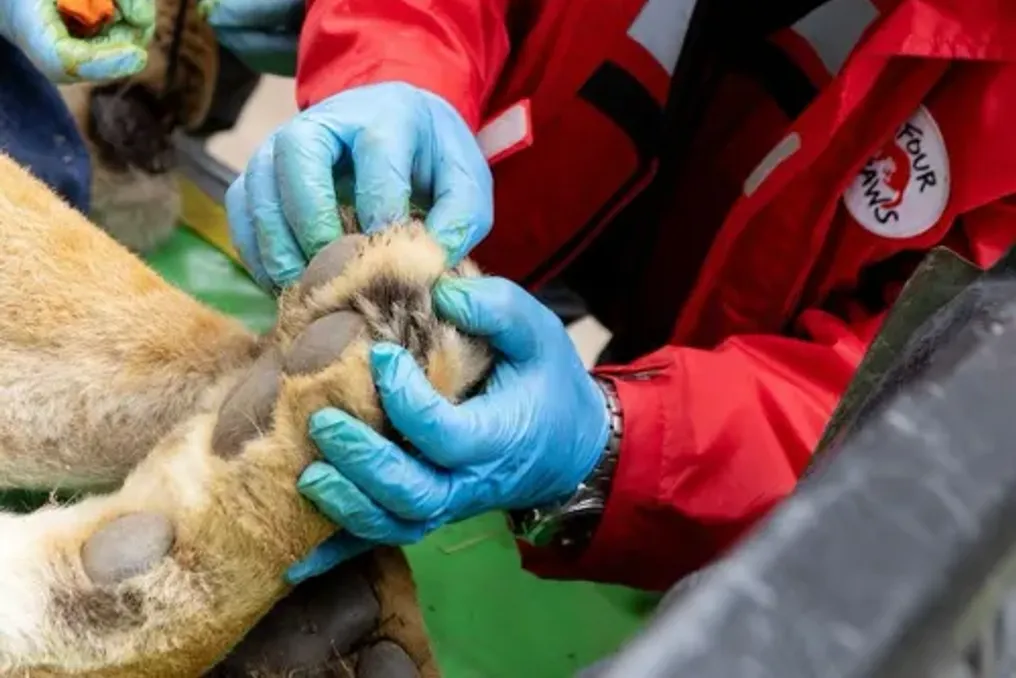
During the transportation of one of the rescued lions, which was safely sedated, the FOUR PAWS team carefully moved the animal before loading it into trucks for transport to a specialized reserve.
Origins of the Mission
Before Argentine authorities forcibly closed Zoo Luja in 2020 due to constant public and regulatory pressure regarding the zoo's controversial practices, it was already facing serious problems. However, the closure left the inhabitants in an unfavorable position, as there was no adequate veterinary infrastructure.
Five years later, in July 2025, FOUR PAWS reached an agreement with the Argentine government, establishing a joint framework to end private keeping of big cats. This legal agreement allowed the organization to take full responsibility for the daily care and medical treatment of the animals by September 2025.
Rescue specialist Pia Einheimer shared her initial impressions of the crisis, noting that the first thing that struck her upon arriving at the former Zoo Luja was the unpleasant smell. She emphasized that this was the first sign that something was wrong with the facility.
When they were able to examine the animals more closely, the truth became apparent: open wounds, signs of stress, clear neurological problems, lack of space, and general poor condition. It was a grim reality of captivity, where 30 lions and tigers were forced to live in limbo for six years after the official closure of the zoo.
Veterinary Intervention
The mission's lead veterinarian, Dr. Amir Khalil, emphasized the urgency of clinical assessments during the initial stages of intervention. He expressed serious concerns about the health, welfare, and safety of the animals, noting that some required critical attention, and it was crucial to check the condition of every animal to meet its urgent needs.
Before moving the lion from Zoo Luja, the FOUR PAWS veterinary team conducted a thorough check of the animal's health and safety while it was under sedation.
Return to South Africa
Over four days, animal care staff used special behavioral training methods to encourage the cats to voluntarily enter the transport crates. Animals requiring additional medical assistance were safely sedated by the veterinary team before being loaded into trucks.
For fifteen animals arriving at the LIONSROCK Big Cat Sanctuary, this journey marked a deep return to African grass. The sanctuary, located near Bethlehem in the Free State province, provides lions with hundreds of hectares of natural habitat.
When the transport crates were placed at the edge of the starting enclosures, the staff experienced a moment of intense anticipation when the doors opened, allowing the lions and tigers to step onto natural ground for the first time in their lives.
Dr. Khalil stressed the dedication required to achieve such a result: 'Seeing these animals begin their journey toward a better future justifies all the effort. After many years of inadequate conditions, they are finally getting a chance to receive specialized care and an environment appropriate to the species they deserve.'
The Future of Big Cats
While the safe relocation of these animals is a huge victory for global animal protection groups, the rescue remains a testament to the dedicated work of the team still in Buenos Aires caring for the remaining big cats at the zoo.
FOUR PAWS Chief Program Officer, Luciana D'Abramo, described the ongoing commitments needed to fully resolve the crisis. She noted that today marked a wonderful milestone for these lions and tigers, as well as for animal protection in Argentina. Their focus is now on finding sustainable long-term solutions for the remaining big cats at the former Zoo Luja. D'Abramo added that they continue to work with the Argentine government to strengthen the legal protection of big cats and prevent similar suffering in the future.
Fifteen big cats are currently adapting to vast habitats at The Wild Animal Sanctuary in Colorado, while the remaining fifteen, consisting of nine tigers and six lions, have arrived in South Africa to begin rehabilitation at LIONSROCK Big Cat Sanctuary.