The increasing activity of leopards in the rural areas of Muradabad, Uttar Pradesh, has caused serious concern among the local population following a series of attacks. In response to these incidents, the district administration is preparing to use advanced technologies to ensure residents' safety.
As part of the project, an intelligent protection system will be created, covering an area of about 200 hectares across five vulnerable villages. The total cost of this project is estimated at approximately 3.945 million rupees.
A key feature of this system will be 24/7 monitoring of leopard movements using AI-based cameras. Twenty such cameras, equipped with night vision and automatic recognition features, will be installed in five sensitive rice fields. This will allow for observation both day and night.
According to the administration's plan, these 20 cameras will be placed on five large and fifteen medium poles. To ensure continuous operation of the systems, considering power supply issues, solar batteries and panels will be attached to each camera.
The intelligent defense complex includes not only cameras but also a specialized reconnaissance drone. It will be used to track the movements and location of leopards. If necessary, the drone will help locate the animal's appearance zone, accelerating the deployment of the forest service rescue team.
Additionally, 10 modern animal rescue traps will be provided. To improve search and rescue operations at night, the forest department will receive 100 powerful flashlights. All these resources will work together to speed up leopard monitoring and rescue campaigns.
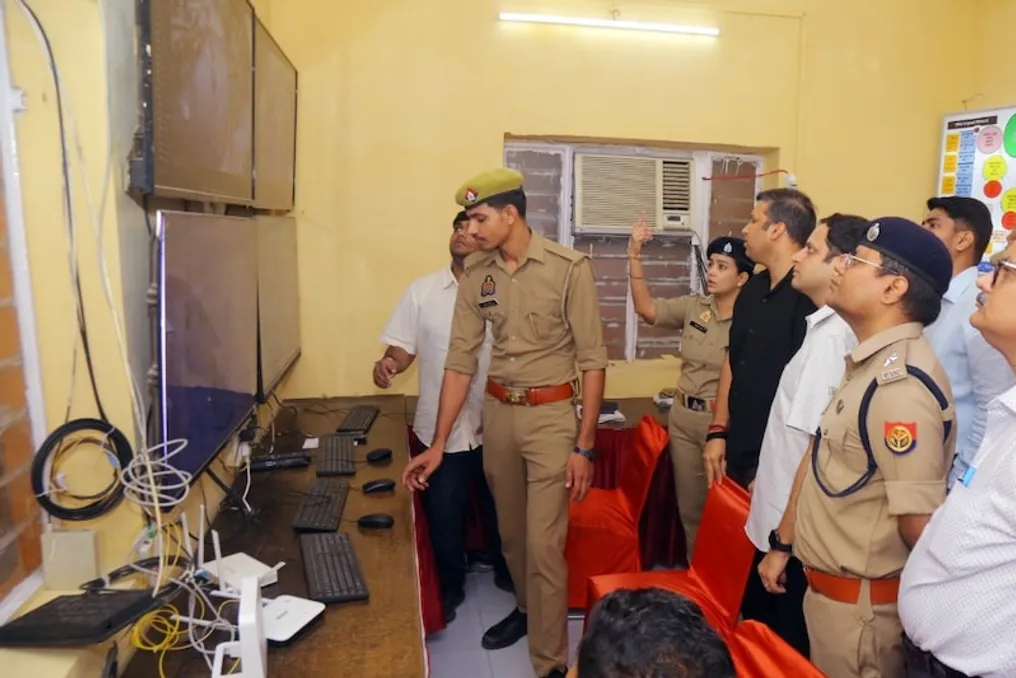
The entire system will be integrated with a centralized control room. It is from here that constant monitoring of sensitive areas will be carried out via cameras and the alarm system. As soon as the system detects leopard activity, it will notify the control room, which will then relay the information to the relevant villages and rescue teams through the alert system.
The goal of this installation is not only to detect leopards but also to timely inform residents and relevant teams about their movements. The administration believes that early warning of a leopard's presence will allow people to be warned and enable the forest department to immediately initiate a rescue operation.
Currently, this intelligent defense complex will be tested in five villages covering an area of about 200 hectares. The administration is closely monitoring the results of this experiment. If the project proves successful in the initial phase, its scope will be significantly expanded. According to the administration, plans are to subsequently include an area of about 50 kilometers into the system's scope, as well as connect other villages threatened by leopards.
The recent increase in leopard activity in the rural areas of Muradabad has resulted in the death of two people and injuries to many others. Following this, the forest department conducted continuous campaigns during which six leopards, including a cub, were rescued. Nevertheless, the presence of leopards in the plains remains a problem for both the administration and the forest department.
In light of this, the administration is preparing to strengthen security measures by combining traditional observation methods with technology. AMD for Finance Mamta Malviya reported that in the initial phase, the system will cover 200 hectares in five villages, where intelligent sensors, traps, alarms, and other necessary equipment will be installed. The entire system will be connected to the control center, allowing interested parties to be notified upon detection of leopard movement.
Mamta Malviya emphasized that the task of this system is to quickly obtain information about leopard activities and take immediate measures to prevent human casualties. The combined use of AI monitoring, drones, alarms, and rescue equipment will help the forest department teams conduct their campaigns more effectively.
According to the administration's estimates, the total cost of the project is 3.945 million rupees, including alarm systems, powerful flashlights, drone monitoring, rescue traps, training, and AI monitoring. If this defense complex, starting with five villages, passes a successful trial, its scale will be increased to other leopard-affected areas.
Thus, an intelligent defense complex is being created in Muradabad, combining technology and the forest department's rescue capabilities to combat leopards. Attention is currently focused on testing this system. If it performs as expected, plans are to expand its coverage to 50 kilometers, creating a comprehensive security network for villages affected by leopards.