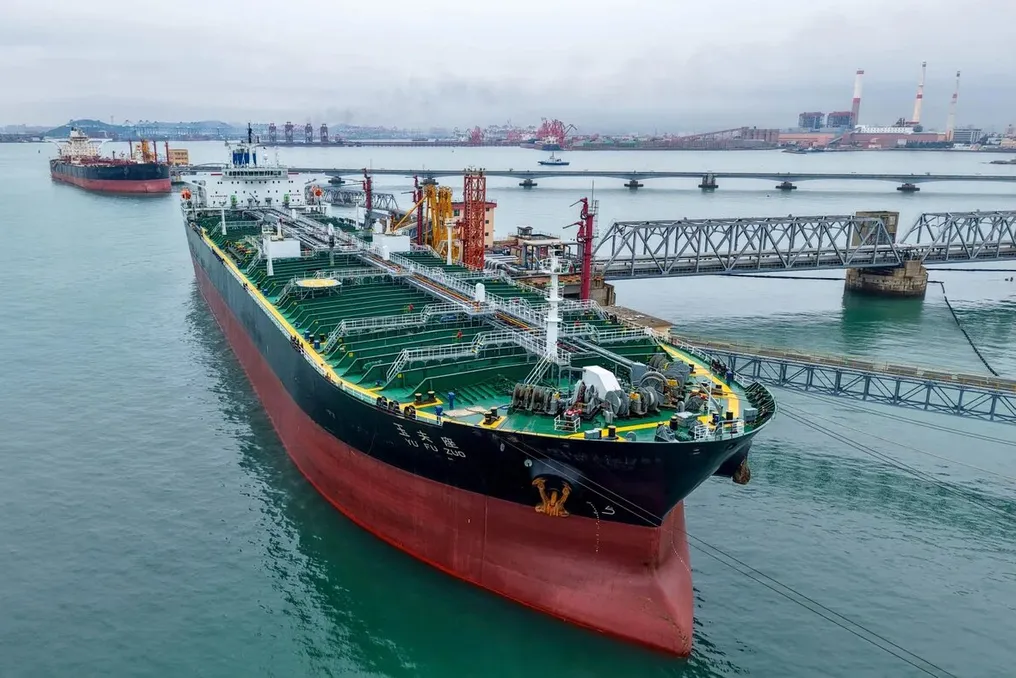
The closure of the Strait of Hormuz was supposed to cause a much bigger shock to oil markets than what actually happened. A significant part of this stabilization is attributed to China's policy, which instead of buying crude oil at inflated prices due to the war, is utilizing its strategic reserves.
Before the strait closed, about 20 million barrels per day (bpd) passed through it daily, accounting for one-fifth of global daily oil consumption. Estimates suggest that six months ago, 10–14 percent of global supply remained unavailable.
Nevertheless, the consequences of this event were less severe compared to previous crises in the Middle East. For instance, the 1973 Arab oil embargo, which led to price quadrupling, disrupted only seven percent of global supply. Similarly, the 1979 Iranian Revolution and the 1990 invasion of Kuwait more than doubled prices while blocking only six to seven percent.
In comparison, current oil prices have risen 'only' about 50 percent, with the international Brent benchmark stabilizing around $85–$90 per barrel, up from approximately $60 at the beginning of the year. This was made possible by unprecedented emergency supplies from the International Energy Agency amounting to 400 million barrels, as well as a sharp decrease in consumption in Asia.
For China, the world's largest crude oil importer, the reduction in consumption was mainly achieved thanks to its strategic oil reserves exceeding 1.2 billion barrels, which analysts believe can last for at least a year. Beijing has maintained this reserve, which has been gradually accumulating over two decades and accelerated after 2022, even despite the mass halt of seaborne crude oil imports, representing a reduction of more than three million bpd.
Instead of purchasing oil at inflated wartime prices, China reduced consumption by limiting the export of petroleum products such as diesel fuel, gasoline, and aviation fuel to prioritize the domestic market, as well as reducing its refining activity to the level necessary to meet only domestic needs.
Jack Prandelli, a commodities trader, described Beijing's strategy to Middle East Eye as 'maintaining a high buffer,' using reserves as a 'buffer instead of chasing barrels in the disrupted Persian Gulf market.' However, in recent weeks, China has partially eased some restrictions on petroleum product exports and temporarily imported crude oil from the Gulf. Economists suggest that when China begins to fully replenish its reserves, the consequences for global oil markets could be significant.