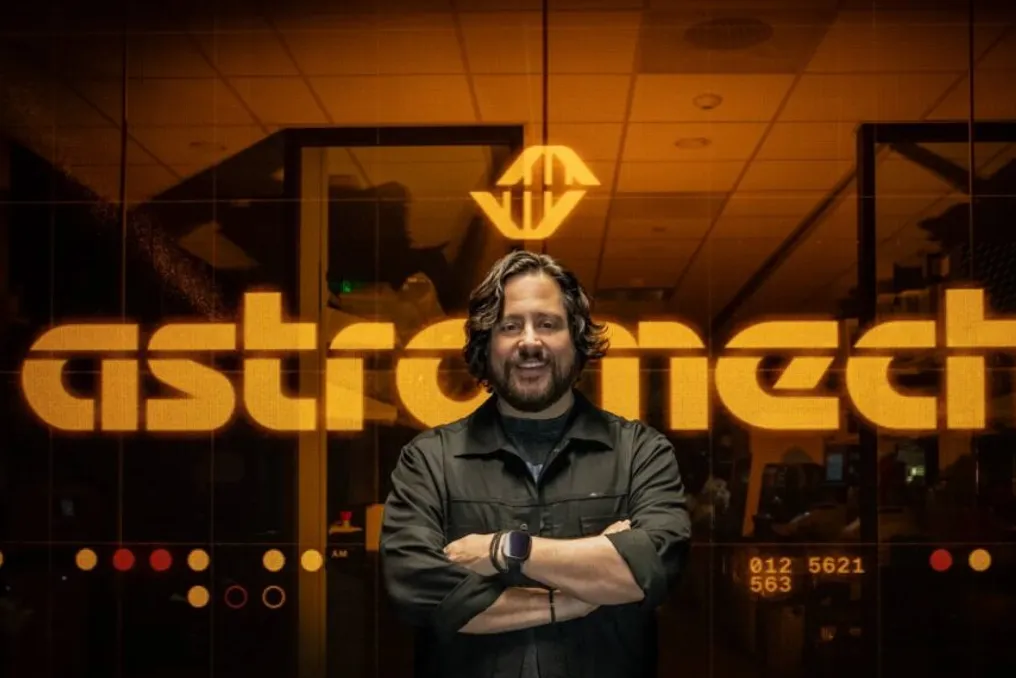
Most scientific research in biology has traditionally been reactive: a disease manifests before the genome sequence is obtained, and species extinction is only recorded after an extinction study is conducted. The company Astromech has raised $20 million to train artificial intelligence models capable of predicting changes in living systems and identifying the most vulnerable points.
The funding round was led by Bob Nielsen, co-founder and managing director of ARCH Venture Partners and early investor in Colossal. They were joined by PEAK6, NeoGenesis Capital, Builders VC, and CAZ Investments. As a result of this round, the company's valuation reached $3.8 billion.
Astromech was founded by Ben Lamb and Harvard geneticist George Church. This same pair launched Colossal Biosciences in 2021 with the goal of reviving the woolly mammoth. In January 2025, the company became the first ten-billion-dollar startup in Texas, valued at over $10 billion. In March, they presented Colossal Woolly Mouse—proof of precise gene editing. A year later, they hatched chicks in 3D-printed shells, marking a step toward restoring extinct birds.
While Colossal focuses on bringing back species, Astromech analyzes the information already contained within the DNA of these organisms. The company calls its approach 'evolutionary prediction.' The analogy here is with meteorology: meteorologists use current conditions combined with historical patterns to predict storms.
Astromech combines current genomic data with deep evolutionary history to predict biological changes. According to Lamb, 'biology runs the world, and historically we have only reacted to it.' He added that despite the ability to describe biology in exceptional detail, humanity still struggles to foresee future events.
Every genome stores a record of past changes, when they occurred, and subsequent compromises. However, much of this information is currently inaccessible for reading across the entire tree of life. This is what Astromech is creating artificial intelligence for.
Astromech's advantage lies in its data. The company uses Colossal's genomic bank, which contains data on extinct and extant species, as well as other proprietary datasets. This provides functional genomic information across thousands of lineages, not just humans and laboratory mice.
Church explains that understanding complex traits depends less on protein-coding parts of DNA and more on regulatory regions that activate or deactivate genes. This requires data from multiple species, not just one sequence. He also notes that reconstruction using AI is now cheap enough for whole-genome analysis.
By collecting this data, Astromech trains models to track how different traits have evolved. The company's first major demonstration allowed mapping 46 genes associated with longevity onto a chronologically calibrated tree of life. Instead of studying one gene in one species, researchers can trace how cancer resistance, cellular repair, and aging have changed over millions of years.
The company reports that it is in the deep R&D stage, but its platform and initial research processes are already operational. The attracted capital will be used for scaling—hiring personnel, data collection, and computing power. Importantly, Astromech is beginning pilot projects with partners in healthcare and biosecurity. The goal is to test the AI's ability to anticipate issues such as genetic bottlenecks, environmental responses, pathogen evolution, and disease progression.