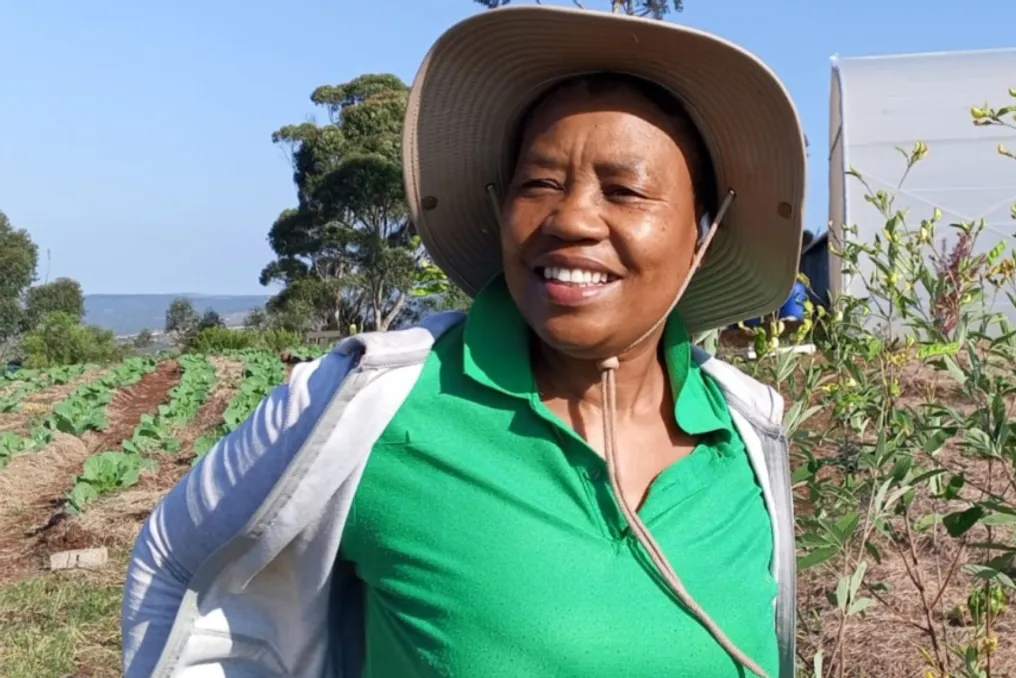
Former Nurse Xolelwa Koncoshe Leads Agroecological Revolution in Ncera Village
Read more
Food For Mzansi
foodformzansi.co.za

Former Nurse Xolelwa Koncoshe Leads Agroecological Revolution in Ncera Village

Xolelwa Koncoshe is leading a food revolution in the village of Ncera, located in the Eastern Cape. By utilizing agroecology principles, establishing a community seed library and a five-hectare food hub, she helps local farmers develop climate-resilient and self-sufficient businesses.

Koncoshe is the founder and director of the Senjenje Multipurpose Cooperative, which manages production at the food hub, and also the founder of the Ncera Information Resource Centre. Furthermore, she co-founded the Ncera Small Scale Farmers Foundation, whose members work to increase yields and strengthen their businesses.

Her journey into agroecology began with her grandmother, Nomphunzi Koncoshe, who provided most of the family's food. Born in Mdantsane in Gugompho, Koncoshe spent her early years in the village of Mthlabathi, but in 2013, her family moved to Ncera village.

Her grandparents grew vegetables, maize, and wheat. Koncoshe recalls: 'I still remember the smell of fresh bread baked by my grandmother in a charcoal oven.' She notes that her grandmother's garden was green year-round, and she never saw her grandmother buy seedlings.

The family also kept livestock—cattle, goats, chickens, and pigs, so buying meat was rare. She remembers asking her mother how such large pig farming could feed the family without a refrigerator. Her mother explained that when one family slaughtered an animal, they shared the meat with the entire extended family. Koncoshe emphasizes: 'Food was never just for one family; it was something that united the community.'

After finishing school in 1993, Koncoshe spent a year studying knitting and started a small knitting business, gaining early business experience. In 1995, she enrolled at Fort Hare University to obtain a Bachelor of Medicine degree, receiving a full Usaid scholarship. After nearly two decades working as a nurse, she took a career break in June 2018 and returned home to Ncera village, where she began farming.

Although she returned to work that year, two years later, during the Covid-19 quarantine, she made Ncera her permanent home. Koncoshe first met farmers practicing agroecology while participating in a program held at a rural school. A visit to a farmer in Quzini village in Qonce changed her view of agriculture. She recounted: 'It was about 34°C, but despite the heat, the farmer's garden was green and healthy.'

She explains how she learned that healthy soil helps the ground retain moisture and protects crops during harsh weather. Inspired by this, she returned home to experiment with raised beds. One neighbor joked that she was digging graves. Later, heavy rains washed away her first attempt. As she mastered agroecology, she did not give up and joined a WhatsApp group where farmers offered advice. During the Covid-19 quarantine, she dedicated herself fully to agroecology, and her garden began to thrive. She implemented rainwater harvesting, which the same neighbor eventually adopted.

Koncoshe volunteered with the Isithembiso Multipurpose Organization, handling administrative work and compliance. In 2021, the organization received funding to set up a five-hectare plot. The abandoned farmstead was transformed into the Ncera Information Resource Centre, equipped with a community seed library. The plot features a solar borehole, fencing, a greenhouse, and a biogas digester.

'The biogas digester produces clean cooking gas and nutrient-rich liquid fertilizer, while vermicompost and grasses grown for green manure are part of the agroecological system.' Today, the food hub grows tomatoes, spinach, carrots, cucumbers, cauliflower, broccoli, peppers, cucumbers, radishes, lettuce, beans, maize, beets, sweet potatoes, onions, pumpkins, and watermelons, as well as herbs. The site includes a fruit forest with over 200 fruit and indigenous trees, including banana, peach, lemon, and mangosteen, which supply produce to the Boxer store in Duncan village.

'Diversification is intentional,' she explains, stating that they grow different crops for both consumption and the local market, and others are used as traps for natural pest control.

One of Koncoshe's most significant achievements was the recognition of her prior learning through a program offered by Tardi College in collaboration with AgriSETA. She encouraged farmers in her network to apply, resulting in 13 producers receiving official agricultural qualifications.

In 2025, she participated in a farmer exchange program in Zimbabwe organized by the Agroecology Action Collective. She spent a week in Shashe village, a center of excellence. She noted: 'What can I say, farmers practicing agroecology in Zimbabwe are well-organized; they save seeds, grow food, and process it.'

Her plot practices agroecology through seed banks, food banks, aquaculture, and livestock, allowing them to produce most of their necessary products independently. Koncoshe plans to expand the food hub's capacity for product processing and reducing post-harvest losses. She believes success will come when the food hub can provide horticultural farms with agro-processing opportunities to reduce household-level losses. For Koncoshe, success means a self-sufficient farm whose fertilization program is internal, producing compost and liquid fertilizer, and contributes to soil health for production.
Similar stories

Lindiwe Nkuna-Kgopa heads sanitary pad production, becoming the first major women-owned enterprise in Africa
Read more
iol.co.za

Lindiwe Nkuna-Kgopa heads sanitary pad production, becoming the first major women-owned enterprise in Africa

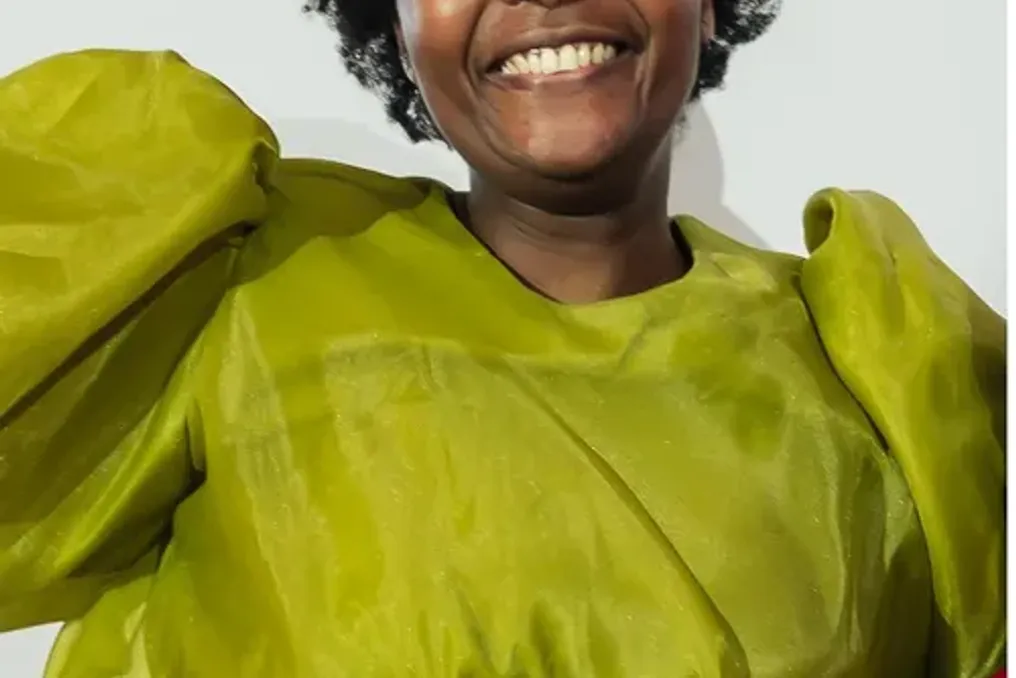
Lindiwe Nkuna-Kgopa turned rejection into one of the most inspiring entrepreneurial success stories in South Africa by creating a business that has changed the landscape of female manufacturing in Africa. She founded and leads Lindiwe Sanitary Pads (LSP), which is the first large-scale sanitary pad production in Africa entirely owned and managed by women.

First in Africa

More than ten years ago, a comment at a women's event fundamentally changed Nkuna-Kgopa's life. Today, the founder and CEO of LSP received the Veuve Clicquot Bold Woman Award 2026 for reimagining the achievements of women in African manufacturing. She recalled that the speaker at the event noted that there had never been a female president in South Africa, nor had any woman owned a sanitary pad factory on an industrial scale. Despite the audience continuing the movement, Nkuna-Kgopa remained determined to change this situation.

She emphasized: 'The entire industry, built on women's bodies, supported by women's needs and bought with women's money, has never belonged to a woman on an industrial scale.' It was this gap between who the industry served and who owned it that prompted her to start LSP. Today, LSP, founded in 2018 in a home kitchen, has grown into a 4000 square meter factory in Centurion, Gauteng, capable of producing 800 pads meeting South African Bureau of Standards standards every minute.

The business now exports products to 11 African countries and employs women from previously underserved communities. Through partnerships and donation programs, the company provided free sanitary products to over 100,000 schoolgirls in South Africa this year.

Building a Business Against Adversity

Nkuna-Kgopa was born and raised in Limpopo and became a mother while studying at university in Pretoria. Instead of letting circumstances dictate her future, she focused on creating a business that she felt Africa needed. However, winning over investors proved much harder than developing the vision itself.

She recalls how banking experts told her that she simply did not fit the profile of someone who could succeed in manufacturing. 'I remember telling them I would succeed, and that the real question was whether they would be part of this success story or not,' she said. 'I also asked what exactly this profile entailed, and instead of giving up because I didn't meet the requirements, I built myself and my business until I met the profile.'

Access to funding became one of the biggest hurdles for the nascent company. As the first producer entering a traditionally male-dominated industry, Nkuna-Kgopa struggled to convince lenders and investors to support her venture. Instead, she relied on business development programs, disciplined financial management, and relentless perseverance. 'Every failure—a delayed delivery, a difficult overdraft period, or stalled negotiations—was treated as a problem to be solved, not a reason to stop.'

One defining moment occurred during one of the company's toughest periods. With little money, suppliers demanding payment and the business's future hanging in the balance, Nkuna-Kgopa invited potential sponsors to visit her factory instead of relying solely on presentations and documents. This decision changed the company's future. She secured R27 million in funding, allowing the business to transition from home operations to a modern production facility capable of supplying retailers, wholesalers, and the National Dignity Programme in South Africa.

'Beyond the numbers, it was confirmation that women's business in this sector could be entrusted with serious capital and could secure it,' she noted.

Purpose-Driven Production

Today, Lindiwe Sanitary Pads has 36 permanent employees and another 93 workers during peak production periods, most of whom are women from previously underserved communities. For Nkuna-Kgopa, the greatest success of the factory lies not just in what it produces, but in the opportunities it creates. Through a partnership with Young Women of Africa, the company has expanded to 11 African countries, helping women entrepreneurs launch and own their own sanitary pad brands, creating new pathways to economic independence.

The partnership also supports programs that help save girls from child marriage and gender-based violence, allowing them to return to school and build independent futures. Closer to home, government partnerships and the company's 'Buy to Give' initiative allowed over 100,000 schoolgirls in South Africa to receive free sanitary products this year, helping to reduce menstruation-related poverty and school absenteeism.

'The sanitary pad industry exists because of women's needs; however, for decades, the side of production has been predominantly male,' she said. 'Creating an enterprise owned and run by women was about closing that gap, ensuring that the value created by an industry serving women is also captured by them as owners, decision-makers, and industrialists.'

Redefining the Profile

As South Africa celebrates Women's Month, Nkuna-Kgopa hopes her journey will inspire more women to enter industries where they have traditionally been overlooked. 'I would say: don't wait for someone to tell you that you fit the profile—build a track record that redefines what that profile looks like,' she stated. 'Expect to be underestimated, and let that be fuel, not a demotivating factor. Deeply study the technical and financial foundations of your industry because competence is the strongest answer to doubt.'

At 43, Nkuna-Kgopa stated that her ambitions extend far beyond expanding one company. She wants to leave behind an industry transformed by female leadership, where ownership ceases to be the exception and becomes the norm. 'I want to leave behind an industry that is fundamentally different from the one I entered—an industry where African women are owners and industrialists in the menstrual economy, not just consumers,' she said. 'I want the LSP model of production, mentorship, and market access for other women-owned brands to be replicated across the continent long after I am gone.'

If she succeeds, Nkuna-Kgopa's greatest legacy will not just be the factory she built, but the women who follow in her footsteps. It will be proof that industries built around women's needs can also belong to, be run by, and be transformed by them.

Women's cooperative in East Cape transforms communal lands into successful retail business
Read more
foodformzansi.co.za

Women's cooperative in East Cape transforms communal lands into successful retail business

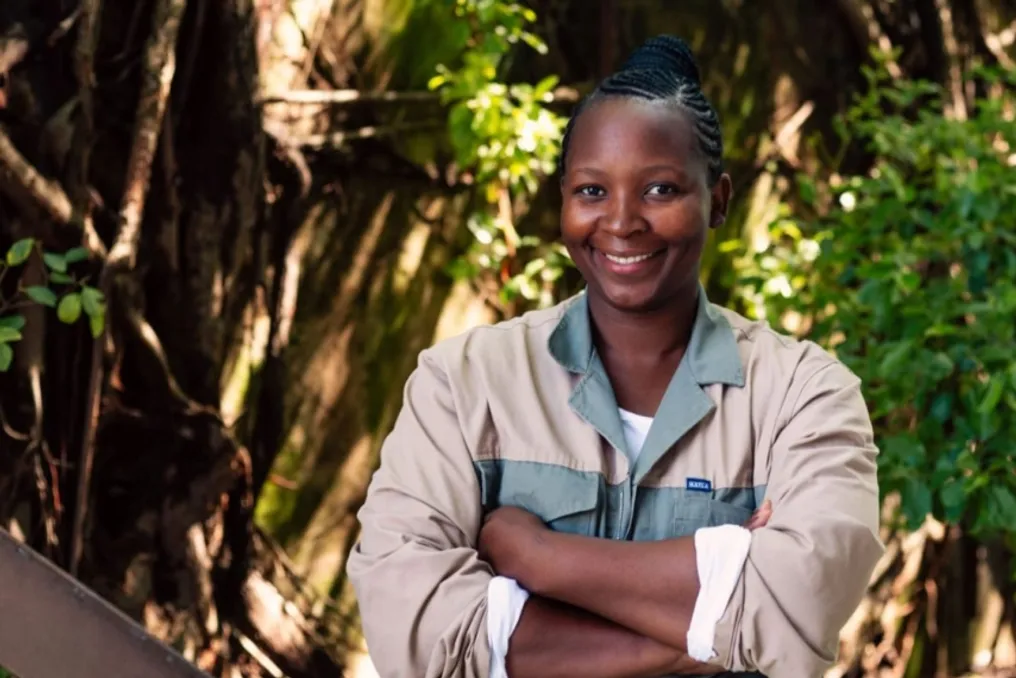
A women-led cooperative is transforming communal lands into a profitable retail business. Bukeka Bukwana and four other women in Sterkspruit, East Cape, are turning communal land into a growing enterprise through their primary cooperative, Zakhe Youth Development.

Using crops such as spinach, cabbage, ready-to-cook vegetables, and sorghum products, they find various ways to increase crop efficiency despite constant challenges from drought.

Like many South Africans seeking entry into the job market, Bukwana spent two years looking for work after qualifying as an electrician at Ekurhuleni East College in 2008. Having grown up in Johannesburg, she decided to return home to Sterkspruit. Initially, she started a home garden to feed her family, but when neighbors showed interest in her produce, she began selling the surplus.

In 2022, Bukwana founded Zakhe Youth Development Primary Co-operative with four other women: Ntombikize Mabuyahulu, who oversees financial oversight; Nomawethu Mhithika, who handles human resources, research, and innovation; Nokusiza Mtshazo, who manages marketing and business development; and Nompiliso Bukwana, who supervises agro-processing, value addition, and risk management. Bukwana manages administration, strategic leadership, and agricultural production. She notes: 'Our goal has always been to create opportunities for rural communities while proving that communal lands can be commercially productive.'

The cooperative applied for communal land and was granted use of 139 hectares for a 20-year term. As demand grew, the women sought ways to make their products more convenient for buyers, especially households preparing for traditional ceremonies and funerals. They began washing, slicing, and packaging spinach and cabbage into ready-to-cook vegetable kits. These products are now sold in Boxer supermarkets and to local residents.

In the face of recurring droughts threatening production, the collective adopted climate-smart agriculture. They invested in producing shade nets, drilled a borehole, and installed drip irrigation to improve water use efficiency. Furthermore, they collaborated with the Agricultural Research Council (ARC) to study local and drought-resistant crops, including their nutritional value.

The cooperative received funding from the Department of Social Development, the National Development Agency (NDA), the Eastern Cape Department of Agriculture, and the Eastern Cape Development Corporation (ECDC). Currently, 63 hectares are cultivated on the 139-hectare farm: 10 hectares for cabbage, spinach, and potatoes, 50 hectares for sorghum, one hectare for research and trials, and two hectares for indigenous maize varieties. However, limited irrigation remains a serious obstacle, leaving a significant portion of the land unused.

Bukwana reports that they are working with the Department of Water and Sanitation to obtain a water use license. This process requires compliance with environmental and technical standards before approval.

The cooperative also practices crop rotation according to seasons. In winter, they focus on cabbage, spinach, and potatoes, while summer production includes pumpkin and beans. Bukwana emphasizes: 'Crop rotation is one of the most important practices on our farm. It helps improve soil health, reduces the buildup of pests and diseases, and ensures better nutrient utilization in the soil.'

For Bukwana, access to water remains central to the future of the cooperative. She believes that as farmers, they all depend on water, so there must be a system that balances agricultural production with the protection of rivers and groundwater for future generations.

Bukwana told Food For Mzansi that funding remains one of the biggest challenges faced by emerging farmers, but she realized that building a successful farming business depends not only on attracting funds. She notes that every organization that invested in Zakhe Youth Development helped solve a different problem, which collectively contributed to transforming the cooperative from a small community garden into a commercial farming enterprise.

The Department of Social Development provided seed capital for drilling the borehole and purchasing agricultural resources, laying the foundation for more sustainable production. ECDC, through the Imvaba Cooperative Fund, supported the cooperative's transition to mechanization, while the Department of Agriculture provided a tractor and agricultural equipment. As production grew, NDA provided funding for scaling up the cooperative and moving towards commercialization.

Another crucial step was joining the Boxer Supplier Development Programme. Boxer helped the cooperative enter the formal market by providing access to LGAP training, agricultural resources, and mentorship regarding retailers' expectations of commercial suppliers. Bukwana stresses: 'This support gave us the confidence and knowledge to prepare for supplying the retail sector.'

Nevertheless, the transition from serving the local community to the formal retail market took three years. Bukwana emphasizes: 'It was not an instant success. We had to scale up production capacity, improve farming methods, and prove that we could consistently produce quality crops.'

Bukwana's plans include transforming Zakhe Youth Development into one of Mzansi's leading rural agro-processing cooperatives while demonstrating that communal lands can support commercially viable farming. The cooperative's plans involve establishing a fully operational agro-processing complex, completing the construction of a packing house, obtaining a Global G.A.P. certificate, and expanding the range of sorghum-based products.

Popular