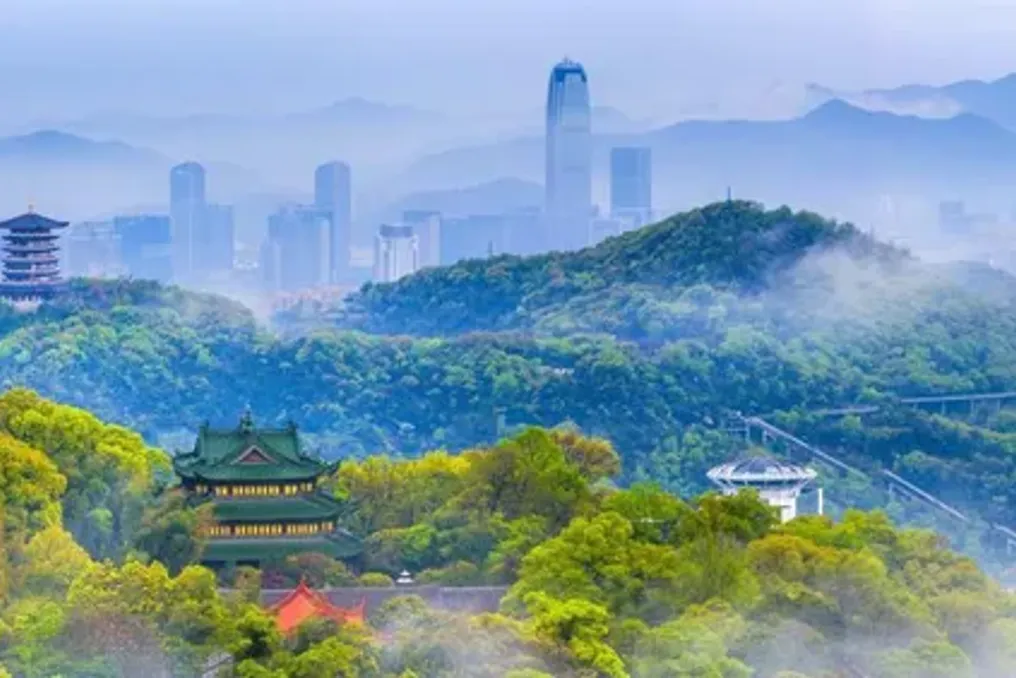
Taizhou City, located in the eastern part of Zhejiang Province, China, is a settlement shaped by mountains and nourished by the sea. Its unique geography has fostered a culture of openness and hospitality. In recent years, Taizhou has been actively developing its high-level open policy, improving the business environment, and enhancing the quality of public services. As a result, more foreigners are coming to the city for work, starting businesses, settling down, and realizing personal aspirations, aligning their goals with the city's development.
Argentine designer Rodrigo Alvarez works as the chief designer at Jinlang Science & Technology Co., Ltd., which manufactures motorcycles. By collaborating with the company's R&D team, he adapted motorcycle designs to suit the tastes, riding habits, and usage scenarios of Latin American consumers. Through targeted improvements to characteristics such as appearance and body proportions, his efforts helped the company better meet market demand and gradually create a differentiated competitive advantage.
Alvarez noted that he witnessed the company transition from exporting products to creating its own overseas brands. He emphasized: 'More than ten years ago, Chinese products mainly reached the Latin American market due to price advantages. Today, Chinese brands pay much more attention to design and quality.'
In recent years, Taizhou is transforming from a 'manufacturing center' into an 'intelligent manufacturing hub.' Highly qualified technical specialists from both China and abroad have concentrated in the city. Foreign experts, possessing advanced knowledge and practical experience in international projects, have settled in local industries, bringing new energy to the modernization of Taizhou's manufacturing sector.
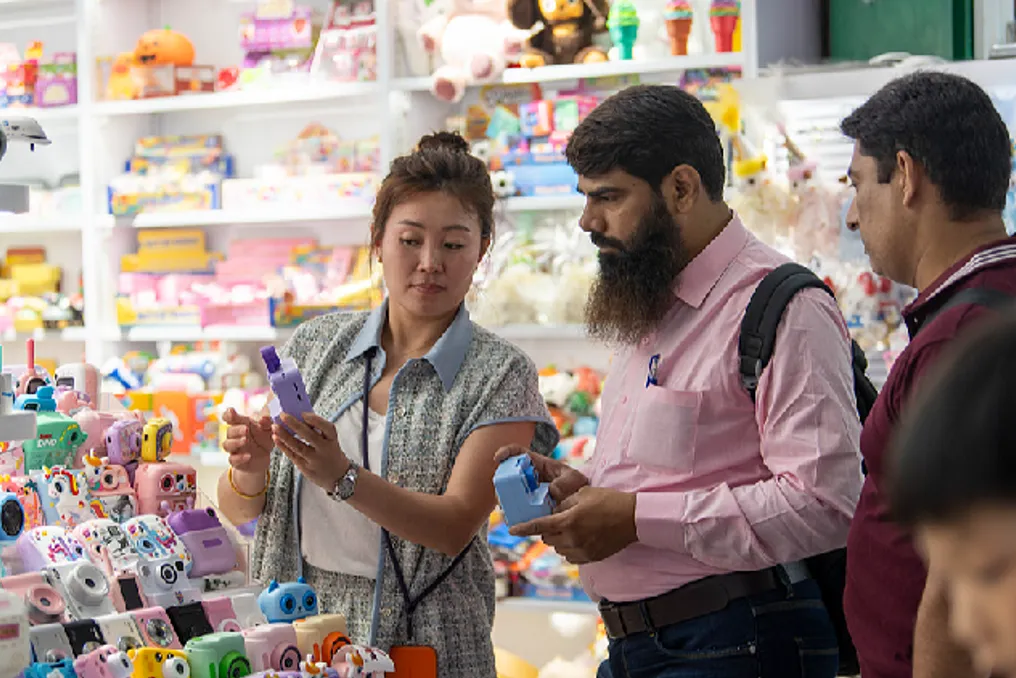
In Jiaoxiang District, at Taizhou Tailleur Sewing Equipment Co. Ltd., industrial sewing machines are neatly lined up. Khaled Abdultaf Ahmed, the company's head, was setting up a new model ahead of an upcoming international sewing equipment exhibition. Ahmed, whose family has long traditions in the sewing machine business, came to China at the age of seventeen to study this technology. After visiting cities such as Shanghai, Wuhan, and Yiwu, he began forming the idea of creating his own brand of sewing machines in China.
He chose Taizhou because of the presence of complete industrial and raw material supply chains here. Over 400 manufacturers of sewing equipment operate in this industry, covering almost all stages of industrial sewing machine production—from manufacturing entire machines and components to servo motors and electronic control systems.
Ahmed was also deeply impressed by the support and healthy competition among local enterprises. Early in his entrepreneurial journey, he secured a large order but lacked the funds to make a full deposit on the necessary components. The general manager of another local sewing company acted as a guarantor, helping him overcome this difficulty. When problems arise in R&D, production, supply, market expansion, or applying for political support, local industry associations and business colleagues in Taizhou are ready to provide assistance.
The local government continues to improve the business environment by strengthening market regulation, legal services, and public services to support business growth. Today, over 3,000 enterprises with foreign investment, four provincial scientific research centers with foreign capital, and the Zhejiang-Germany Industrial Cooperative Park (Taizhou) operate in Taizhou.
Pan Moli, Taizhou's Consul for Overseas Communication, is filming a promotional video at a match in Baixuiyang Village, Linhai City, a county-level city under Taizhou, Zhejiang Province. Many years ago, a young German woman, whose Chinese name is Pan Moli, came to Linhai, a county-level city under Taizhou, and married in Baixuiyang Village. In her opinion, Baixuiyang is a clean and pleasant place to live, boasting well-developed public infrastructure and a rich spectrum of cultural and sporting events. She particularly remembers the basketball tournament in the village.
She shared: 'Men and women, young and old, all come to watch because everyone likes games. I have never seen anything like it in Germany.' Villagers who socialize and work during the day become rivals on the court at night. They compete fiercely during the games, but afterward, they continue to laugh and socialize. 'I think this reflects the culture of harmony in Taizhou,' she said.
Currently, Pan Moli serves as Taizhou's Consul for Overseas Communication. She uses her phone to film village basketball games and document traditions of the Dragon Boat Festival, such as making *cunzai* (sticky rice cakes), crafting aromatic sachets, and hanging wormwood. She then shares these videos on social media, allowing subscribers abroad to see daily life in Taizhou's rural communities through her lens.
In recent years, Taizhou has made significant progress in the coordinated development of urban and rural areas. In 2025, the income ratio between urban and rural populations in Taizhou decreased to 1.79, which is 0.03 less than the previous year, thus maintaining a relatively low income gap.
The City Public Security Bureau's Outbound and Inbound Administration Department, together with the City Expert Service Center, has established a special service center in the municipal administrative center. This center processes five frequently requested services, including issuing work permits, registering employers, extending visas, issuing residence permits, and replacing or reissuing documents. Thanks to single-window processing with parallel approval, the overall processing time has been reduced by more than 60%.
Strolling through the streets of Taizhou, one can encounter people from all over the world. Some came here for the city's industry, while others stayed because of the quality of life. Here, they have built both careers and lives. For them, Taizhou is no longer just a name on a map, but a city where they can put down roots, realize their dreams, and grow with the community.