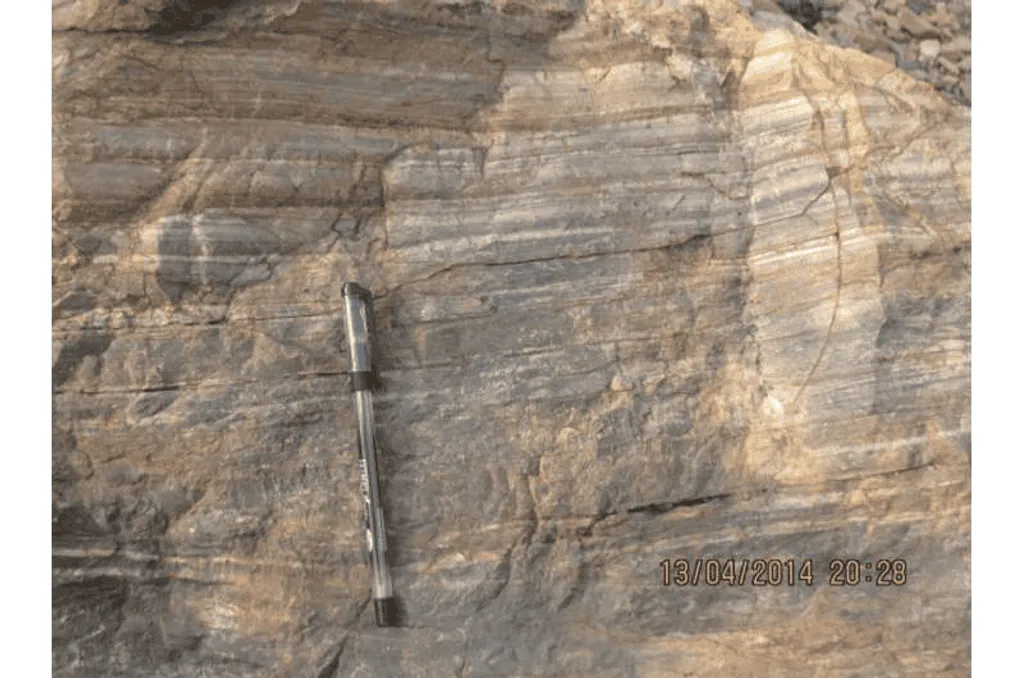
A team of scientists has located a rock in India that may contain evidence of some of the most primitive life forms ever detected on Earth. This material is approximately 3.5 billion years old and exhibits layers of silica and carbon, which, according to specialists, could be vestiges of microbial communities that existed on the planet during the Paleoarchean, as reported by Phys.org.
The discovery was made in the Singhbhum Craton, located in eastern India. The examined rock is a type of formation called chert, characterized by being rich in carbon and presenting thin, repetitive layers. Researchers speculate that this structure might have been formed by microbial mats, which are communities predominantly composed of bacteria and archaea.
Identifying evidence of such remote life is a complex process, given that the oldest rocks on the planet have undergone intense processes of heating, deformation, and chemical modification that can alter their original characteristics. For this reason, scientists must distinguish potential biological signals from structures generated exclusively by geological phenomena.
Detailed analysis of the rock
The team mapped and collected samples from a carbon-rich chert layer. Within this rock, microscopic structures consisting of alternating layers of carbonaceous and siliceous material were observed. The pattern visualized is similar to that produced by microbial mats, which create multilayered arrangements of microscopic organisms.
To establish the age of the material, researchers analyzed zircon crystals present in the rock. Dating performed using uranium and lead indicated an approximate age of 3.497 billion years. According to the team, this time interval corresponds to the moment of deposition of the sediments that originated the structure under investigation.
Furthermore, scientists investigated the carbon contained in the chert to verify whether it remained since the rock's formation or was introduced by subsequent changes. Isotopic analysis of the carbon revealed a proportion compatible with biologically derived materials. Additionally, Raman spectroscopy was employed, which confirmed the existence of poorly organized kerogen, a solid compound found in sedimentary rocks.
The convergence of these various pieces of evidence led the team to conclude that the carbon originates from biological activity. The microscopic layers of siliceous and carbonaceous material, along with the isotopic data, strengthen the hypothesis that the structure preserved ancient microbial mats.
Despite the findings, researchers emphasize the need for additional studies to confirm whether the rock truly constitutes the oldest evidence of a bio-signature yet identified. Other teams may validate whether the zircon crystals correctly record the rock's deposition age and test the biological interpretation of the carbon.
Future research steps
Future studies may focus on analyzing adjacent layers in search of chemical, mineral, or other microscopic structures that can be dated directly. Such research will help clarify whether the indicators found in India genuinely represent one of the earliest manifestations of life on the planet. The original article was initially published in Olhar Digital.