Developers working on open models often create memes, and one of the popular concepts in recent months is the 'kill line'—a gaming term denoting the moment a match is effectively over. Applied to models, this term was previously used to describe DeepSeek: a new model was compared to DeepSeek in terms of capabilities and price; if performance did not meet expectations and the price did not decrease, the model was considered lacking in discussion value. However, this boundary is now changing.
On August 14th, Qwen3.8-27B was released, which gained a million downloads in just two days and topped the global trends list on Hugging Face. Among developers of the Cline code agent, it became the most sought-after local model in four days. Artificial Analysis gave it a score of 52, the same as GPT-5.6 Luna and DeepSeek V4 Flash, and developers dubbed it the local Opus 4.6. This model is constantly evolving and excels particularly well at reasoning, generating significantly more reasoning tokens than its competitors. Simon Wilson discovered that by default, its level required 21 minutes to generate an image of a pelican on a bicycle in SVG format.
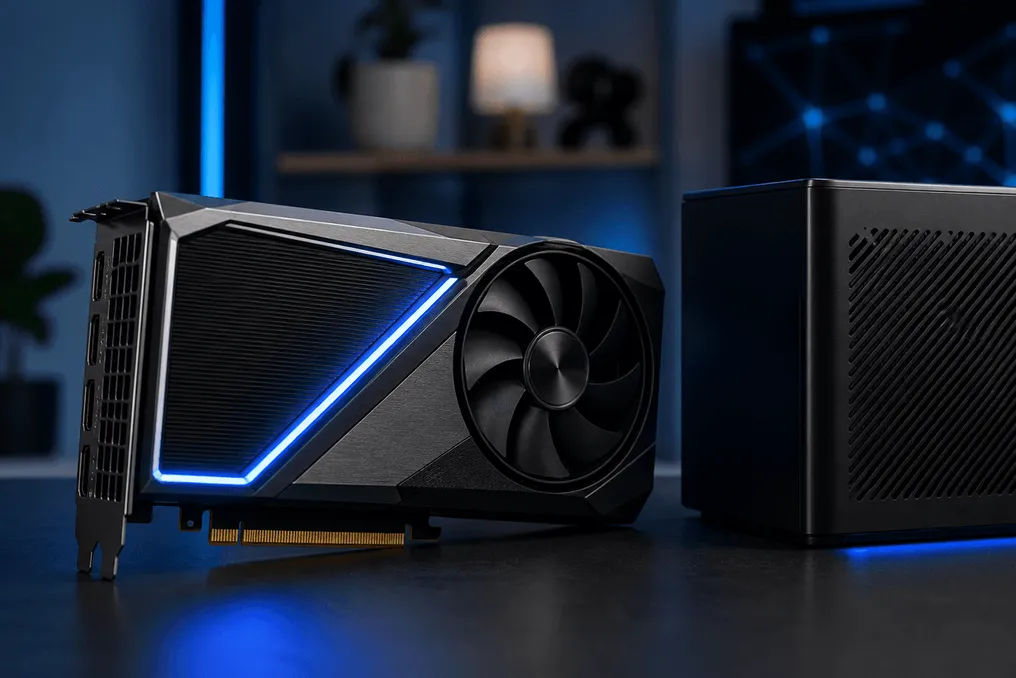
It is important to understand, however, that the model only has 27 billion parameters. Capabilities that required hundreds of billions just a few months ago can now fit into a size manageable by consumer hardware. After 4-bit quantization, the weights are reduced to approximately 17 GB, which is accessible with a 24 GB graphics card or an Apple Silicon device with ample memory. The old dilemma was whether the running model was not smart enough, or the smart model could not run; Qwen3.8-27B allows these two conditions to coincide at a practical size.
Any new model will now be evaluated against Qwen3.8-27B. The previous DeepSeek 'kill line' was based on the price-to-performance ratio, but that still required cloud resources. A code agent can consume hundreds of thousands of tokens, and in mid-August, DeepSeek raised its price, setting the maximum cost for V4-Pro output from 6 to 27 yuan per million tokens. The last two years have been dedicated to the question: whose tokens are cheaper at the same level of intelligence? Qwen3.8-27B goes further, asking: how large does the model need to be? A 27-billion-parameter model performing most of the frontier model's work is changing the physical boundaries of deployment.
This breakthrough also has technical roots. The industrial path to cost reduction has long been based on MoE (Mixture of Experts), which increases capacity by activating only a portion of experts. However, MoE has a problem invisible in the cloud but painful on devices: inactive experts still exist, so the overall weights must be stored. Thus, MoE is suitable for data centers, whereas PCs, robots, and edge devices worry about whether the model will fit at all. Qwen3.8-27B is a dense model, so efficiency is achieved through architecture: it uses a hybrid approach with 48 out of 64 layers, applying linear attention and full attention to the rest, which prevents the KV cache with long context from expanding proportionally to the sequence length.