Dubai, a city in the United Arab Emirates and the administrative center of the eponymous emirate, is located on the coast of the Persian Gulf. It has transformed into a major financial and trade hub not only for the country but for the entire Middle East, becoming one of the key destinations for global tourism.
This metropolis demonstrates rapid growth and is characterized by an exceptional multinational composition, with a population from over 200 nationalities residing there. Dubai is attractive to both travelers and those considering permanent relocation, offering diverse outdoor family activities. Numerous events are held annually in the emirate, including sporting competitions and cultural festivals.
The uniqueness of Dubai lies in its ability to harmoniously combine opposites: traditional souks coexist with ultra-modern shopping complexes, sandy beaches border mountain peaks, and local cafes are situated next to Michelin-starred restaurants. This connection between past and future gives the city a unique character.
A correspondent from Podrobno.uz visited this metropolis, which has become a symbol of technological progress, luxury, and ambition, assessing its impressive architectural achievements and modern technologies that have turned a desert corner into a recognizable global landmark.
Spa, Sea, and Gastronomy: Accommodation Options in Dubai
A logical starting point for getting to know Dubai is to explore districts that highlight a high level of comfort and hospitality. The Jumeirah district stands out as a place where modern resorts are located by the sea, beaches, and iconic cityscapes.
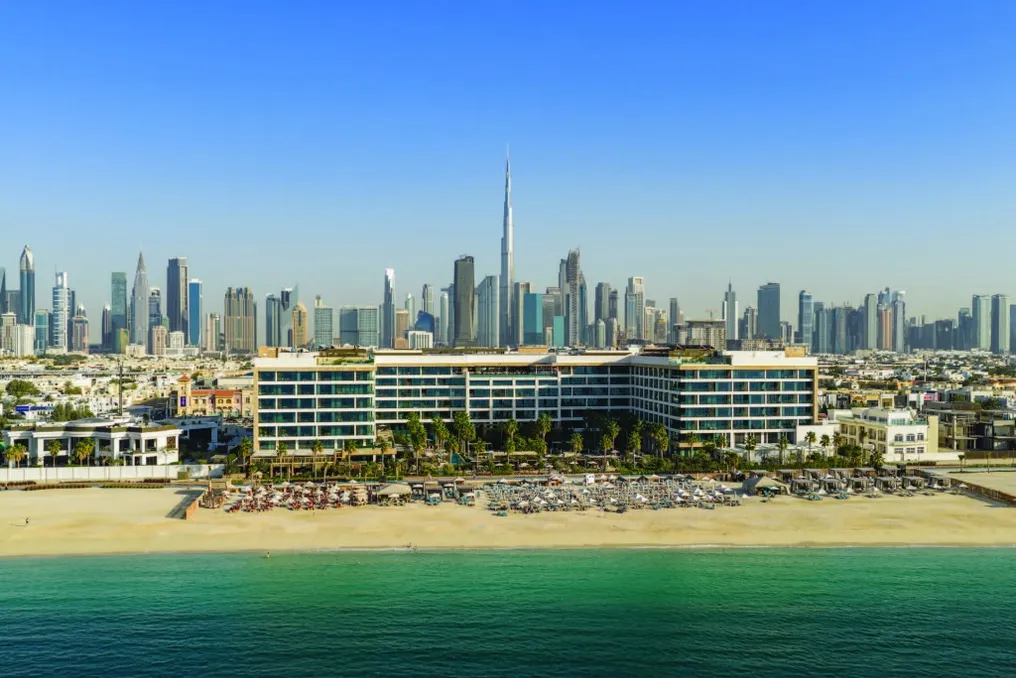
The five-star Mandarin Oriental Jumeira is situated on the Persian Gulf coast in prestigious Jumeirah. It is close to the central Downtown Dubai area, Burj Khalifa, and other important attractions. The hotel features 164 rooms and 71 suites; most of them are equipped with large balconies overlooking the sea or the city skyline. The interior design combines modern style with Eastern elements, and art inspired by the Silk Road era is used in the decor.
The rooms are equipped with spacious marble bathrooms featuring a separate bathtub and tropical shower, as well as dressing areas and modern technology, ensuring convenience for both short-term and long-term stays. The hotel's gastronomic concept includes seven restaurants and bars. Among them is Tasca by José Avillez—the first international project by a Portuguese chef holding a Michelin star. This restaurant offers a modern interpretation of traditional Lisbon hospitality with live music and signature cuisine by the sea.
Another restaurant, Netsu by Ross Shonhan, is a contemporary Japanese steakhouse where dishes are prepared using the Warayaki method, searing food on straw at temperatures exceeding 900°C. Guests also have access to the beachside restaurant Casa Amor, the Mediterranean brasserie The Bay, the Noor Lounge lobby lounge, and the Mandarin Cake Shop patisserie. For relaxation, there is a private sandy beach, five outdoor pools, a fitness center, and a children's club. The spa complex, spanning over two thousand square meters, includes a hammam, thermal zone, nine treatment rooms, and a studio for yoga and Pilates, merging Eastern traditions with modern recovery methods.
Another five-star hotel in the chain, Mandarin Oriental Downtown Dubai, is located in the Wasl Tower on Sheikh Zayed Road. It is within walking distance of Burj Khalifa, Dubai Mall, Museum of the Future, and the Dubai Opera. The hotel has 259 rooms and suites with panoramic views of the Arabian Gulf, Burj Khalifa, and the city skyline. The main focus is on gastronomy, presented by nine restaurants and bars. For example, Yù & Mí—a modern Chinese restaurant and bar on the 36th floor, inspired by 1960s Hong Kong, where classic Cantonese and Sichuan cuisines are presented in an author's interpretation against a backdrop of panoramic views. The hotel also operates a spa complex with a wellness center, fitness facilities, and personalized recovery programs.
"Billionaires' Club" and More
Dubai offers more than just a quiet seaside retreat; as evening falls, the city transforms, offering vibrant shows, music, and a lively nightlife. To experience this side of the metropolis, the authors visited a venue where luxury is integrated into the very format of leisure.
Billionaire Dubai is a restaurant with a club atmosphere and spectacular evening programming. This project by Italian entrepreneur Flavio Briatore combines gastronomy, music, and artist performances. The brand, known on the French Riviera, is also present in the Gulf countries, becoming a popular spot for glamorous evening outings. According to Briatore, the club is designed to recreate the lifestyle of billionaires, although anyone can visit it. The venue opened in 2016 in downtown Dubai and quickly gained a reputation as one of the trendiest places for social gatherings.
The Billionaire Dubai concept combines an exquisite dinner with a vibrant theatrical performance. Throughout the evening, acrobats, dancers, and musicians perform on stage, with some acts taking place very close to guests, creating a feeling of complete immersion. The menu includes haute cuisine, the presentation of which is also part of the show. This place is positioned as the most extravagant form of entertainment, where luxurious ambiance, eclecticism, and the energy of theatrical backstages are perfect for parties.
Underwater World Above Your Head
In addition to showcasing luxury and nightlife, Dubai is capable of surprising with other attractions. The next stop on the itinerary is the Dubai Mall, which is a significant attraction in itself. Inside the shopping center is an impressive underwater world.
One of the most striking features is the Dubai Aquarium and Underwater Zoo, located on the first three levels of the Dubai Mall and among the largest suspended aquariums in the world. Its water volume reaches 10 million liters, and it houses over 33 thousand marine creatures, including the largest population of tiger sharks. The central element is a tunnel 51 meters long, 20 meters wide, and 11 meters high, allowing visitors to watch sharks and rays right above their heads. The aquarium is home to 140 species of marine fauna and is very popular.
Additional activities are organized for visitors: glass-bottom boat rides, the opportunity to swim with sharks in a special cage, and trying on a mermaid costume. The main figure of the underwater zoo is a giant crocodile, unofficially nicknamed King Croc, measuring 5 meters long and weighing 750 kilograms.
Art Can Be Felt
Not far from the underwater kingdom is a space of a completely different nature—a museum where the boundaries between art and environment blur. This is the ARTE Museum Dubai immersive art museum. The museum grounds, covering 2,800 square meters, are divided into 14 art zones united by the common theme of 'Eternal Nature.'
In the museum, you can view famous works of art from a new perspective, walk on the beach under the starry sky, or meditate by the waterfall. These interactive exhibits are only a small part of what the museum offers. The power of nature is enhanced by musical accompaniment created by South Korean composer Jang Young-gyu, as well as specific scents of the forest and other natural areas, creating a full immersion effect. Relaxation and discussion of what was seen are possible in the tea lounge.
Where New Names Are Born in Art
Next, the route leads to a more traditional, yet equally modern format to assess the current state of the art scene in Dubai. The authors headed to the Jaddaf Waterfront promenade, where the Jameel Arts Centre is located.
Jameel Arts Centre is one of the leading contemporary art centers in the Middle East, founded by the organization Art Jameel. The center brings together exhibitions, educational programs, artistic residencies, and research projects, paying special attention to the art of the Middle East, North Africa, and South Asia. The space includes ten exhibition galleries, an open sculpture park, and one of the first modern art libraries in the UAE. There are also public areas for lectures, film screenings, and workshops. The architecture of the center harmoniously combines minimalism with gardens and views of the Dubai Creek, making it an important cultural venue.
Jameel Arts Centre regularly updates its program of international and regional exhibitions. The center actively supports young artists and implements interdisciplinary projects addressing themes of ecology, design, and contemporary art. Since entry is free, the center plays a significant role in Dubai's cultural life, attracting both locals and tourists.