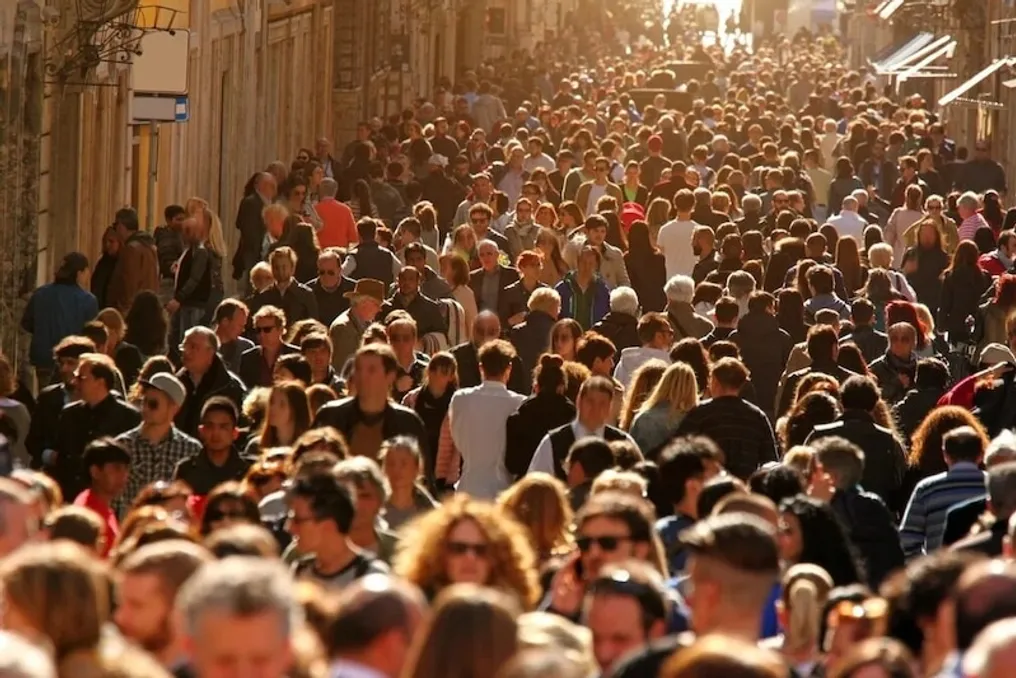
Due to the growing global population, the landscape of many large cities will completely change by 2050. According to a new report from 'Our World in Data' and the European Commission, the most populous cities in the world in the future will be located in Asia and Africa.
Dhaka, the capital of Bangladesh, and Jakarta, Indonesia, will surpass the leaders with populations over 50 million people. Meanwhile, New Delhi, the capital of India, will take the fourth spot among the world's most populous cities. Mumbai and Kolkata will also join the list of leading cities.
The data predicts that the structure of urbanization and the planet's population size will fundamentally change by 2050. These future figures indicate that the dominance of the world's largest and most densely populated cities will belong to Asia and Africa, rather than Western countries.
It is projected that Dhaka, the capital of Bangladesh, will become the world's largest city with a population of 52.1 million people. It will be followed by Jakarta, Indonesia, with a population of 51.8 million people. Shanghai in China will be in third place with a population of 34.9 million people.
Three major Indian megacities—New Delhi (33.9 million), Kolkata (23.8 million), and Mumbai (23.1 million)—will enter the top 15 megacities globally. New Delhi will occupy the fourth position. Notably, 13 of the top 15 cities will be located on the Asian continent. Rapidly growing urbanization centers will remain Shanghai and Guangzhou in China, Karachi and Lahore in Pakistan, as well as Manila in the Philippines.
Rapid population growth is also noted in African cities. This is evident in cities such as Luanda, the capital of Angola (20.3 million), and Cairo, Egypt (32.4 million), indicating an unprecedented rate of urbanization on the African continent.
Population growth places the governments of these large cities before the task of paying close attention to infrastructure and housing. It is necessary to provide basic amenities, such as housing, clean water, sewage, and electricity, for a population ranging from 2 to 50 million people. Furthermore, public transport systems will require modernization to meet increased congestion.