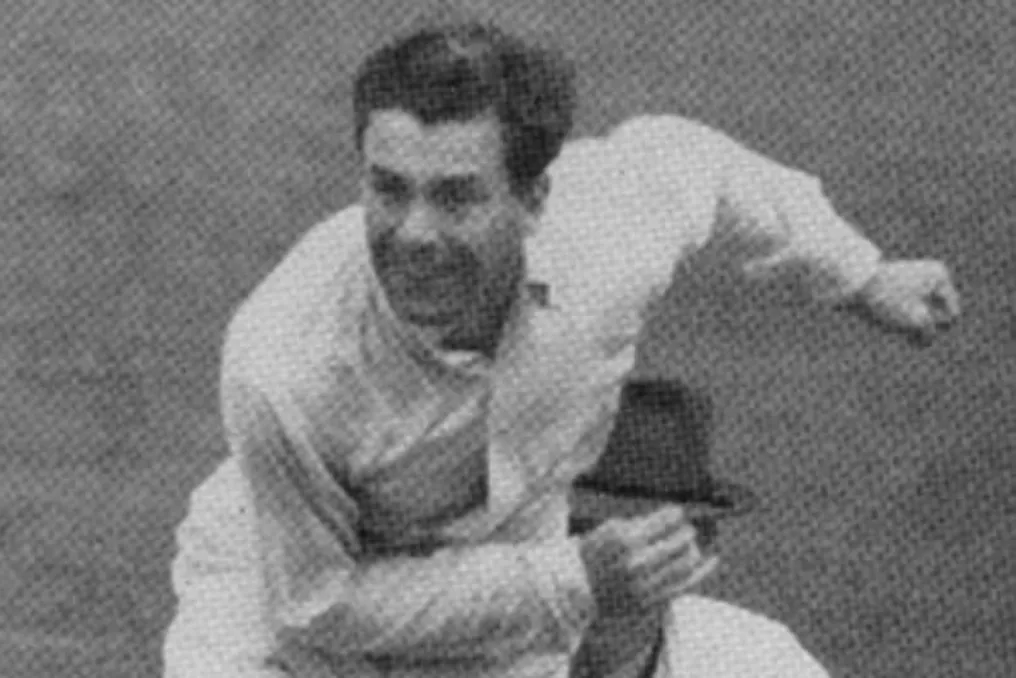
The story of cricketer Doug Wright: record 7 hat-tricks and 2056 wickets in first-class cricket
Read more
Aaj Tak
www.aajtak.in

The story of cricketer Doug Wright: record 7 hat-tricks and 2056 wickets in first-class cricket

Doug Wright, the great left-arm spinner from England, was born on August 21, 1914. At the time, he was considered the best left-arm spinner in England, and many even called him one of the most dangerous bowlers.

Doug Wright, born in Sidcipes, debuted in first-class cricket for Kent at the young age of 17 in 1932. However, he had to wait another four years to be included in the team. By 1938, he became part of the England Test squad.

Wright set a first-class cricket record that has never been broken. During his career, he took 7 hat-tricks and accumulated 2056 runs in 497 first-class matches.

Nevertheless, his performances in Test matches were not as impressive. In 34 matches for England, he took 108 wickets with an average of 39.11. His struggle was particularly noticeable in the Ashes matches against Australia, where he managed to be part of a winning team only once in 14 Ashes matches.

In one Ashes match against Australia in Leeds, Wright demonstrated outstanding play by setting a target of 105 runs for the visitors, while also dismissing stars such as Don Bradman, Bill McCabe, and Lindsay Hassett, which created serious problems for Australia.

Initially, Wright wanted to be a fast bowler and sometimes used wrist rotation for spin delivery. Later, he changed his approach and made spin his main weapon. Wright's bowling was characterized by strong lift and rotation. Great batsmen Don Bradman and Wally Hammond were admirers of his game. It was said that playing against him when he was in form was almost impossible.

During the tour of Australia in 1946–47, Wright, along with Alex Bedser, bowled about 500 overs. In 1947, at Lord's against South Africa, Wright took 10 wickets in one Test match, conceding 175 runs.

In 1954, Doug Wright became the first professional captain of Kent. However, the team's results began to steadily decline. At the age of 43, he retired from cricket, and later, in 1959, took up the position of coach at Charterhouse.

Similar stories

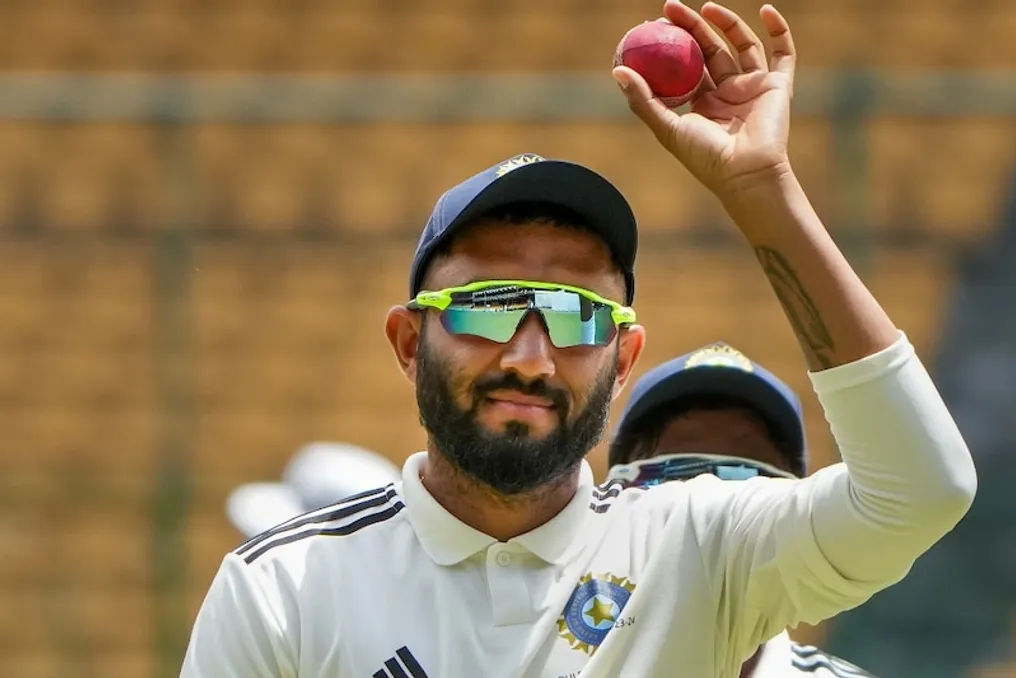
In India vs Sri Lanka Test match: Suthar delivered a serious blow, Dinusha stabilized the game, Sri Lanka collapsed for 284 runs
Read more
www.aajtak.in

In India vs Sri Lanka Test match: Suthar delivered a serious blow, Dinusha stabilized the game, Sri Lanka collapsed for 284 runs

On the third day of the Test match between India and Sri Lanka, Indian bowlers increased the pressure on the home team, but they faced unexpected resistance. Young left-arm spinner Manav Suthar completely dismantled the top order of the Sri Lankan side with his spin. By lunchtime, the home team had lost five wickets, scoring only 99 runs, and it seemed their innings would end quickly after replying to the first innings total of 462.

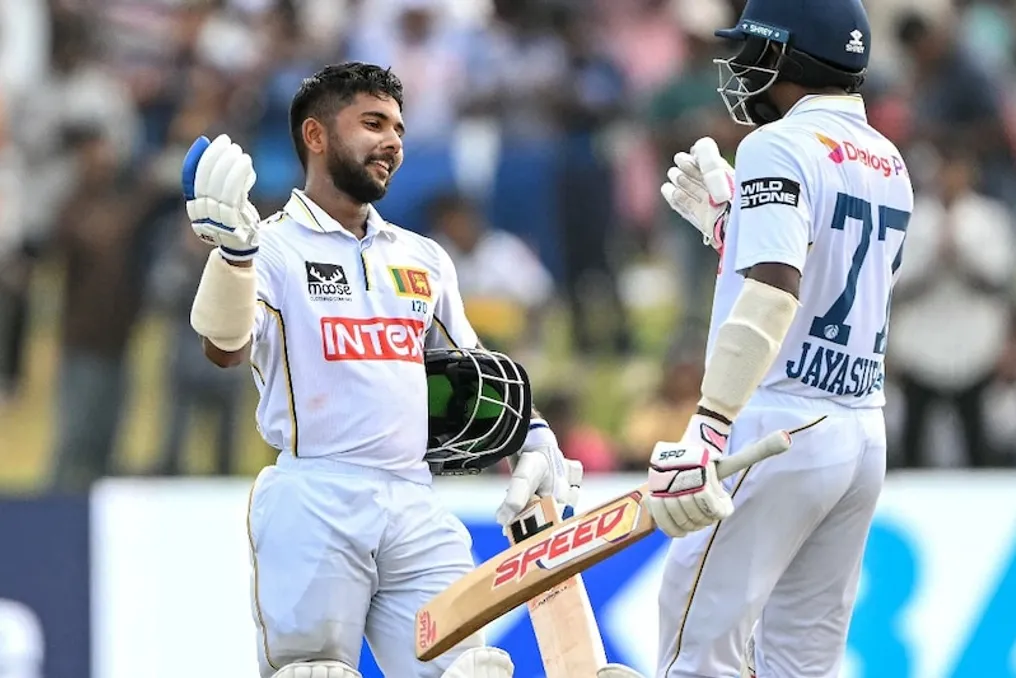
Dinusha demonstrated incredible patience against the Indian bowlers, recording his first international century. Along with experienced Niroshan Dickwella, he built a partnership of 146 runs for the sixth wicket, forcing India to wait long for the next wicket. In the end, Sri Lanka was brought to 284 runs in the first innings, but India gained a significant advantage of 178 runs.

Sri Lanka needed a strong start to post a large total in the first innings, but Mohammed Siraj dismissed Fernando on the second ball, giving India a brilliant start. Fernando's shot could not counter Siraj's delivery, which was outside off and had lift, and the ball went into the hands of Devdhadh Pathikkala. After this, Manav Suthar took charge.

From the very first ball, Dimuth Chandimal received a slight edge that went into Rishabh Pant's gloves. Then Suthar began troubling the Sri Lankan batsmen by constantly varying the line, trajectory, depth, and turn of the ball. He made the ball fly in the air at speeds exceeding 85 kilometers per hour, extracting help from the fielders.

Lahiru Udara initially countered him for some time and played several impressive pull and cut shots, but Suthar eventually found a way to dismiss him. A weak shot led to Yashwish Kaisaval catching it in the gully. Chamindu Mendis also did not last long. His lofted shot against Kuldeep Yadav's delivery became a victim of Shubman Gill's excellent catch. Captain Danjaya de Silva was caught by Kel Rahul in the slip off Ravindra Jadeja's bowling.

At 99 runs for five wickets, India's position was very solid. However, then came Dinusha's innings.

But in cricket, the competition is not just about statistics. Sri Lanka needed a batsman at that moment who could understand the situation and stabilize the innings. Sonal Dinusha did exactly that. Along with Niroshan Dickwella, he did not rush to attack the Indian spinners. Both chose their shots very cautiously. The sweep became their favorite weapon, and both effectively drove balls coming down the stumps to the boundary using their feet.

Dickwella reached a half-century off 67 balls, while Dinusha required 92 balls to reach that mark. But this slowness became their strength. They fought to preserve wickets rather than score runs. In the second session, Sri Lanka added 116 runs without losing a wicket.

Dickwella capitalized on an opportunity, getting a chance at a duck when his personal score was 20. On a Suthar ball, Kel Rahul could not reach his drive in the slip. However, in the second innings, Dickwella's fate was not kind. When he hit a ball from Krishna, it flew straight into Rishabh Pant's gloves. Dickwella was dismissed on 80 runs off 115 balls. Sri Lanka felt again that the innings was about to end, but Dinusha remained.

He did not let the pressure get over him and gradually approached his first international century. He reached a three-digit score off 167 balls. This was his first century in international cricket and extremely important for Sri Lanka's innings. But as soon as he completed the century, the story ended on the next ball.

On Ravindra Jadeja's bowling, Dinusha was given LBW. 100 runs, 168 balls—a magnificent innings that saved Sri Lanka.

Dinusha's innings stabilized Sri Lanka, but the biggest story of this innings was Manav Suthar's performance. Suthar, playing for India for the first time in Test cricket, demonstrated confidence against the top order of Sri Lanka, which is a great achievement for this Test. He took four wickets for 76 runs. His teammate Ravindra Jadeja took three wickets for 57 runs. Both left-arm spinners kept the Sri Lankan innings under constant pressure.

The method of Dinusha and Dickwella differed from the approach of other Sri Lankan batsmen. Many top-order batsmen tried to play shots away from the body and got into difficult catches. In contrast, the sixth-wicket partnership showed that facing good spin requires not only aggression but also patience and technique. India started the day with a score of 460/9 and was brought to 462 runs, adding only two runs. After this, the bowlers did their job. Sri Lanka collapsed for 284 runs. India has a lead of 178 runs. Suthar shook the top order of Sri Lanka, Dinusha temporarily stopped this storm, but in the end, India won on the third day.
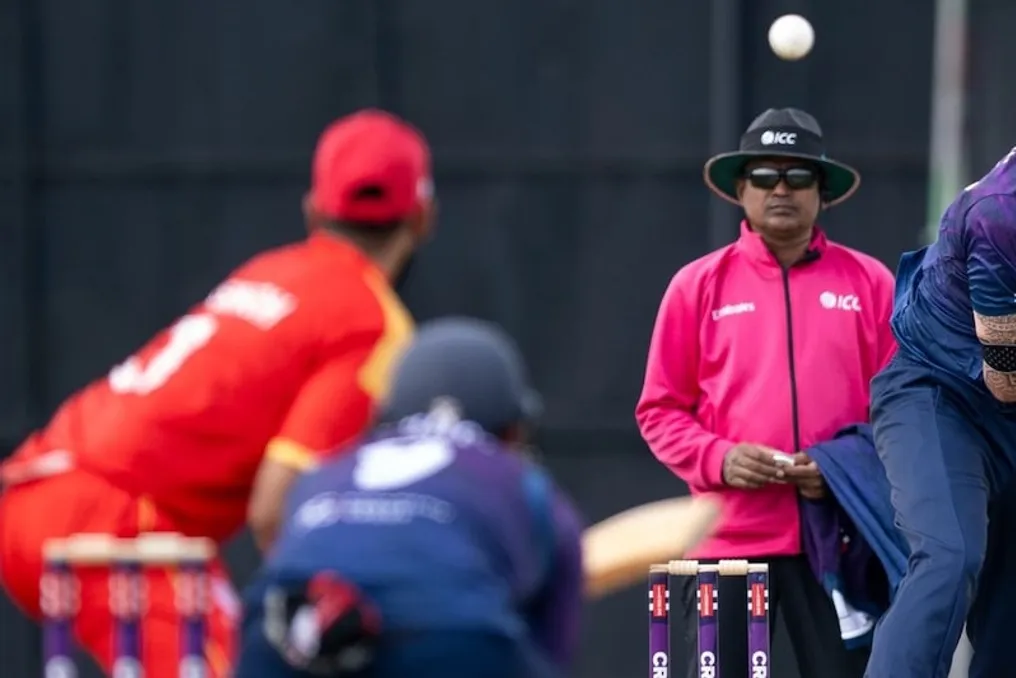
23-year-old spinner Lyle Robertson breaks world record of Pakistani bowler by taking 6 wickets on ODI debut
Read more
www.aajtak.in

23-year-old spinner Lyle Robertson breaks world record of Pakistani bowler by taking 6 wickets on ODI debut

Scottish spinner Lyle Robertson achieved a historic feat on his One Day International debut. In the match against Canada, Robertson took six wickets for just 52 runs in 10 overs. This is the best bowling performance by a spinner on an ODI debut. Due to his impressive bowling, Scotland defeated Canada by a large margin of 170 runs.

Robertson broke the record set by Arafat Minhas of Pakistan. Minhas had taken five wickets for 32 runs in his ODI debut against Australia this year. In this match on August 13th at Forthill ground in Dundee, Scotland set a massive target of 348 runs against Canada. However, the Canadian team was all out for 177 runs in just 35 overs.

Robertson got his first wicket in the 23rd over when he dismissed Harsh Thacker. Subsequently, he also sent Sad Bin Zafar and Shivam Sharma back to the pavilion. Robertson concluded his spell in a spectacular fashion; in his final over, he dismissed Shreyas Mowa and Zahid Shirzad consecutively. The next ball was a dot, and then he completed his six-wicket haul by taking the wicket of Kaleem Sana.

With this performance, Robertson became the fourth bowler in the world to take six or more wickets on an ODI debut. The world record in this category is held by Charlie Ceesell of Scotland. Ceesell took seven wickets for 21 runs on his debut against Oman at the same ground in 2024. Additionally, Kagiso Rabada of South Africa took six wickets for 16 runs in his first ODI against Bangladesh in 2015. Meanwhile, Fidel Edwards of West Indies took six wickets for 22 runs on his ODI debut against Zimbabwe in 2003.

In the match, Scotland's captain Richie Barrington decided to bat first after winning the toss. Despite the early loss of two wickets, Barrington and Brandon McCullum stabilized the innings. A crucial partnership of 140 runs was formed between these two batsmen for the third wicket. McCullum scored 64 runs off 59 balls, which included eight fours and three sixes. On the other hand, Barrington scored a brilliant century with 120 runs off 103 balls, including 15 fours and four sixes. Matthew Cross and Jack Jarvis added quick runs in the final overs. Cross remained unbeaten on 51 runs, while Jarvis contributed 30 runs off just 14 balls. Scotland posted a huge total of 347 runs losing seven wickets.

Canada's chase of the massive target did not start satisfactorily. Aaron Johnson was dismissed early, and Yuvraj Samara managed only 16 runs. Paragat Singh tried to stabilize the innings by scoring 42 runs. Anup Cheema played an explosive innings of 42 runs off just 16 balls, but Robertson dismantled the middle and lower order batsmen, ending all possibilities of a Canadian comeback. From a run-scoring perspective, this was Scotland's biggest win in ODI cricket jointly. Previously, Scotland had defeated Canada by 170 runs in 2014.

Dharmand Singh Jadeja: Despite over 600 wickets, he has not made the Indian squad yet
Read more
www.aajtak.in

Dharmand Singh Jadeja: Despite over 600 wickets, he has not made the Indian squad yet

Even consistently scoring victories in local competitions does not guarantee a spot in the Indian national team. This is the story of experienced spinner Dharmand Singh Jadeja. The 36-year-old Jadeja has taken many wickets in local tournaments but has still not had the opportunity to play for the senior Indian side. The left-arm spinner, who played in First-Class, List-A, and T20 formats, has taken 609 wickets.

His performances in the Ranji Trophy in recent years have been outstanding, yet he has failed to secure a place in the Indian starting lineup. Dharmand Singh Jadeja's name is often associated with Ravindra Jadeja. Both players are from Surat and are left-arm spinners, although they are not related. Dharmand Singh was for a long time a key element of Surat's bowling attack in local competitions, and now he is preparing to start a new phase of his career.

He has received clearance from the Surat Cricket Association (SCA) and is expected to play for Chhattisgarh in the upcoming domestic season. Ravindra Jadeja achieved recognition on the international stage, while Dharmand Singh Jadeja's career has been within domestic cricket, where he has achieved undeniable statistics.

Dharmand Singh has taken 423 wickets in 100 First-Class matches at an average of 26.25. He has taken five or more wickets in a match 26 times and 10 or more wickets in a single match seven times. His best innings performance in First-Class cricket was 7/32. These figures indicate that he was not just a long-serving player but one of Surat's main weapons, consistently taking wickets.

One of Jadeja's most significant achievements is his continuous participation in the Ranji Trophy. From the 2017-18 season to the present, Dharmand Singh Jadeja has taken 293 wickets in Ranji, which is more than any other bowler during this period. Despite this, he has failed to make it into the Indian Test team. During this period, spin options like Ravichandran Ashwin, Ravindra Jadeja, and Kuldeep Yadav were available in India, making competition for a spot in the national team extremely tough.

Dharmand Singh Jadeja's brilliant results are not limited to First-Class cricket. He has taken 121 wickets in 90 List-A matches at an average of 28.33, with his best performance in this format being 7/10. Furthermore, in 73 T20 matches, he registered 65 wickets at an average of 24.92. Dharmand Singh is also capable of scoring runs. In First-Class cricket, he scored 2123 runs, including 7 half-centuries. In List-A, he scored 566 runs, and in T20, 208 runs.

Before the start of the new domestic season, negotiations took place between the Surat Cricket Association, the team management, and the player himself regarding Dharmand Singh Jadeja's future. The main issue concerned his role in white-ball cricket. The team management wanted the experienced spinner to focus primarily on red-ball cricket, whereas Dharmand Singh wished to continue playing in ODI and T20 formats.

Dharmand Singh Jadeja was an important part of Surat's bowling attack during a period when the team achieved great success in Indian domestic cricket. Dharmand Singh was part of the Ranji Trophy winning teams in the 2019-20 and 2022-23 seasons. Now, his long journey with Surat is concluded. One SCA official commented on his decision, saying: 'We wish him all the best in the future.'

Dharmand Singh Jadeja is preparing to take on a new challenge for Chhattisgarh. However, the question remains: will the doors to the Indian national team open for him, despite 100 First-Class matches, dominance in Ranji for years, and over 600 wickets?

Popular