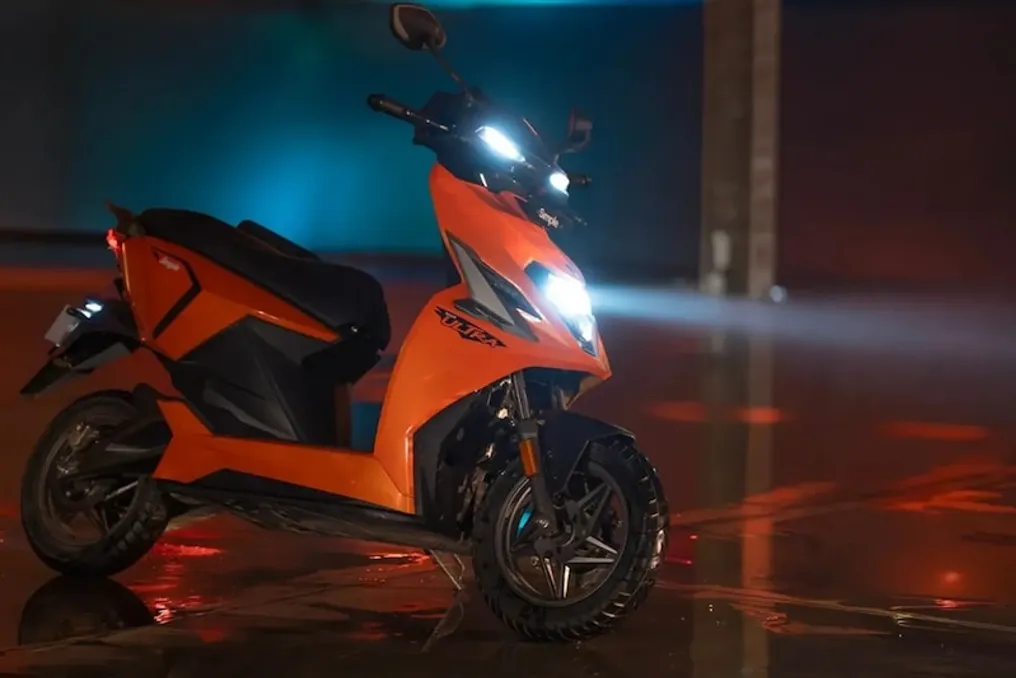
Simple Wave Scooter launching in September, set to give tough competition to iQube and Chetak
Read more
Aaj Tak
www.aajtak.in

Simple Wave Scooter launching in September, set to give tough competition to iQube and Chetak

The month of September is set to be significant for the automobile industry, as several new products are expected to enter the market during this period. Simple Energy is also planning to introduce a special scooter this month, whose name the company has officially announced. The company has declared that the Simple Wave electric scooter will be launched on September 2nd.

Previously, the company's focus was on high-performance scooters, but this Wave brand model will be its first family scooter. Through this new model, the company will enter the mainstream family scooter segment, where Bajaj Chetak and TVS iQube already have a strong dominance. Additionally, Ather will launch its most affordable scooter on August 29th, targeting a larger market.

Simple Wave is being developed by the company keeping daily usage needs in mind, with a special emphasis on comfort and practicality. This scooter will directly compete with the family scooters from Ather, TVS, and Bajaj. The Wave scooter has also been seen during multiple tests.

The upcoming scooter will feature a large seat and a floorboard with more space. Furthermore, the scooter will be equipped with telescopic front suspension and twin rear shock absorbers. Regarding the braking system, it will have a front disc and a rear drum brake. It was seen during tests with a TFT instrument display.

However, Simple Energy has not yet disclosed the final production specifications of the scooter. This scooter will prove to be an important step for the company, as it allows the company to enter the segment with the highest current demand. The company believes that this new scooter has been developed based on internal research and development and engineering capabilities.

The company will utilize its software and vehicle technology. Simple Energy claims to be the first Indian company to commercially manufacture an electric motor free of heavy rare earth magnets, highlighting its focus on internal technology. The battery, motor output, charging specifications, variants, and price of the scooter will be unveiled on September 2nd.

Currently, three scooters named Simple One, One S, and Ultra are available in the company's portfolio. The Ultra brand scooter is the most powerful, offering an estimated range of 400 kilometers. This scooter comes with a 6.5kWh battery and a top speed of 115 km/h, with an ex-showroom price of ₹2,34,999.

Charging the 6.5kWh battery at home will require approximately 7 to 8 units of electricity. If the electricity cost is assumed to be ₹8 per unit, fully charging this scooter would cost approximately ₹56 to ₹64. It is important to note that charging the scooter at a power station will be more expensive.
Similar stories

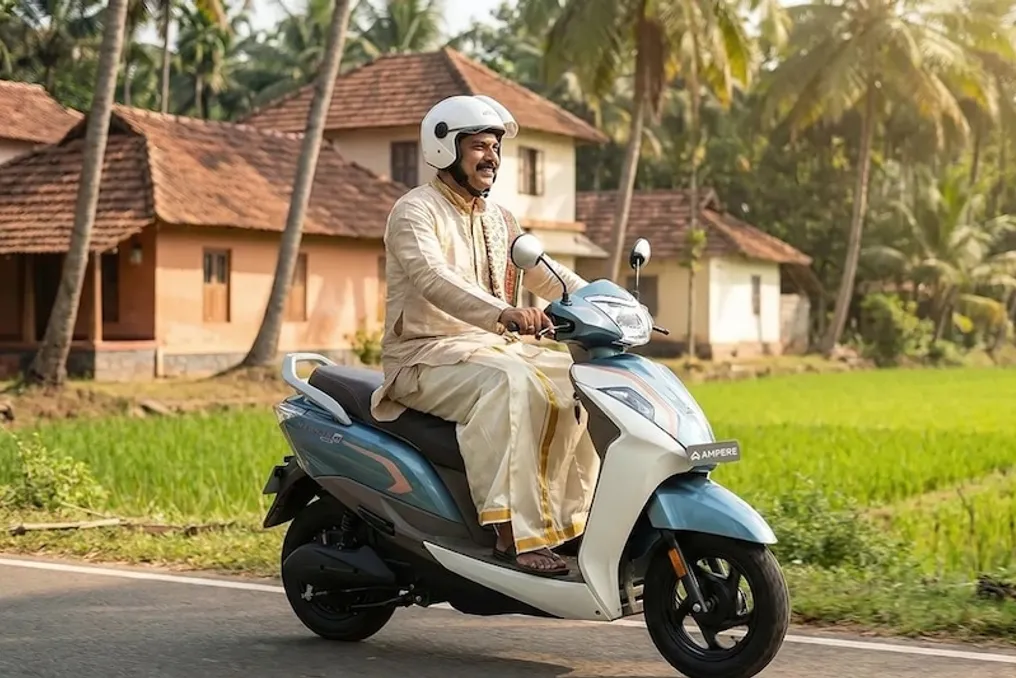
Ampere updated the Magnus G Max electric scooter with expanded functionality and increased range
Read more
www.aajtak.in

Ampere updated the Magnus G Max electric scooter with expanded functionality and increased range

Ampere has introduced updates to its popular Magnus G Max scooter, adding more features. The scooter is now equipped with enhanced connectivity capabilities as it has been updated on the NxG.io software platform.

According to the company, this update included over thirty new functions. The scooter also received a 5-inch display, and among its features are cruise control and turn-by-turn navigation.

The most significant change is the addition of cruise control and hill hold assist functions. These features help prevent rolling backward on inclines, which is a practical advantage for the rider when moving uphill. Furthermore, the 5-inch display allows for the use of turn-by-turn navigation.

There is also an option to locate the scooter using an audible signal (find or ping scooter), which can be activated via the company's mobile application. This feature simplifies finding the scooter in a parking area. Additionally, the scooter will have capabilities such as real-time charging status display, live tracking, geo-fencing, and theft and towing alerts.

The scooter will support remote diagnostics, service booking, charging history, battery status information, and Over-The-Air (OTA) updates. All connected functions of the scooter can be managed through the Ampere Connect application.

Meanwhile, the mechanical components of the scooter remain unchanged. The Magnus G Max is equipped with a 3 kWh lithium iron phosphate (LFP) battery that operates with a peak motor unit of 2.4 kW. The scooter provides a stated range of 142 kilometers according to the IDC cycle. Its maximum speed is 65 kilometers per hour, and it comes with a 5-year or 75,000-kilometer warranty. The scooter will be available in a two-tone finish, and its starting price is 102,999 rupees. The IoT version will cost 109,999 rupees, including export duties.

Charging the 3 kWh battery requires approximately 3–3.5 units of energy. If the electricity cost in your region is 8 rupees per unit, the charge will cost about 30 rupees. Thus, for an expenditure of 30 rupees, you can cover the stated distance of 142 kilometers.

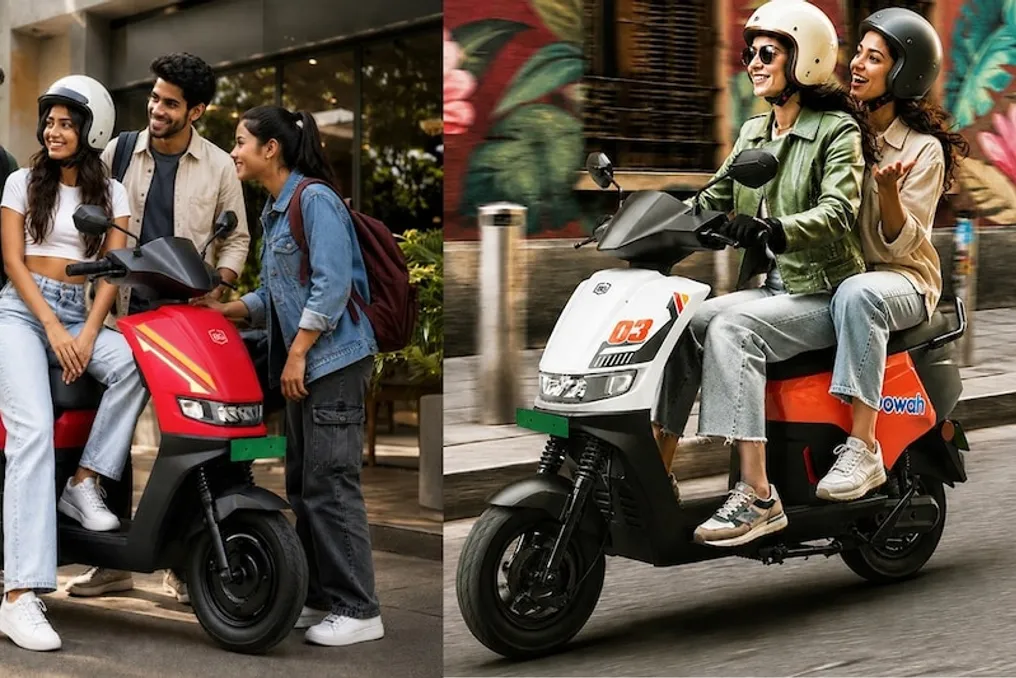
BGauss Company releases new Oowah EV Pop scooter with range up to 145 km, targeting Gen Z
Read more
www.aajtak.in

BGauss Company releases new Oowah EV Pop scooter with range up to 145 km, targeting Gen Z

BGauss Company has introduced its new line of scooters in the Indian market. The brand offers various electric scooters, and among them is the latest model—the Oowah EV Pop Range. This series includes three different scooters.

According to the company's statements, all models in this lineup are aimed at the Generation Z audience. These electric scooters are designed with the needs of first-time electric vehicle buyers in mind. Special attention was paid to combining everyday practicality with expressive design and urban riding convenience when designing this series.

The features included in this lineup include full LED lighting, USB charging, a reverse assist system, and a battery discharge indicator. The BGauss Oowah model is available in two battery options.

The base version of the scooter is equipped with a 2.3 kWh battery, which provides the stated range of 105 km. Meanwhile, the top-tier Max and Max Plus versions have a 3.0 kWh battery and can cover a distance of up to 145 kilometers. All scooter modifications allow for battery removal.

These scooters are available in five color options and reach a maximum speed of 60 kilometers per hour. The Oowah lineup also features a 21-liter under-seat storage compartment. Additionally, a side stand sensor is installed to notify the user about the stand's position.

The charging time for the scooter from 0 to 80 percent is only 1 hour and 55 minutes. The company provides a warranty of up to 36 months or 36 thousand kilometers, and also offers an extended warranty option that consumers can choose in Silver or Gold variants.

The price of the BGauss Oowah EX starts from 94,990 rupees at the showroom. The Max variant and the top-tier Max Plus cost 122,990 rupees; there is no significant price difference between Max and Max Plus. Thus, with the EV Pop Range lineup, BGauss is targeting consumers buying electric scooters for the first time.

Popular