Dispute Arises in Kakori (Lucknow) Over Alleged Insult to BJP Deputy at Shitla Temple
Read more
Aaj Tak
www.aajtak.in

Dispute Arises in Kakori (Lucknow) Over Alleged Insult to BJP Deputy at Shitla Temple

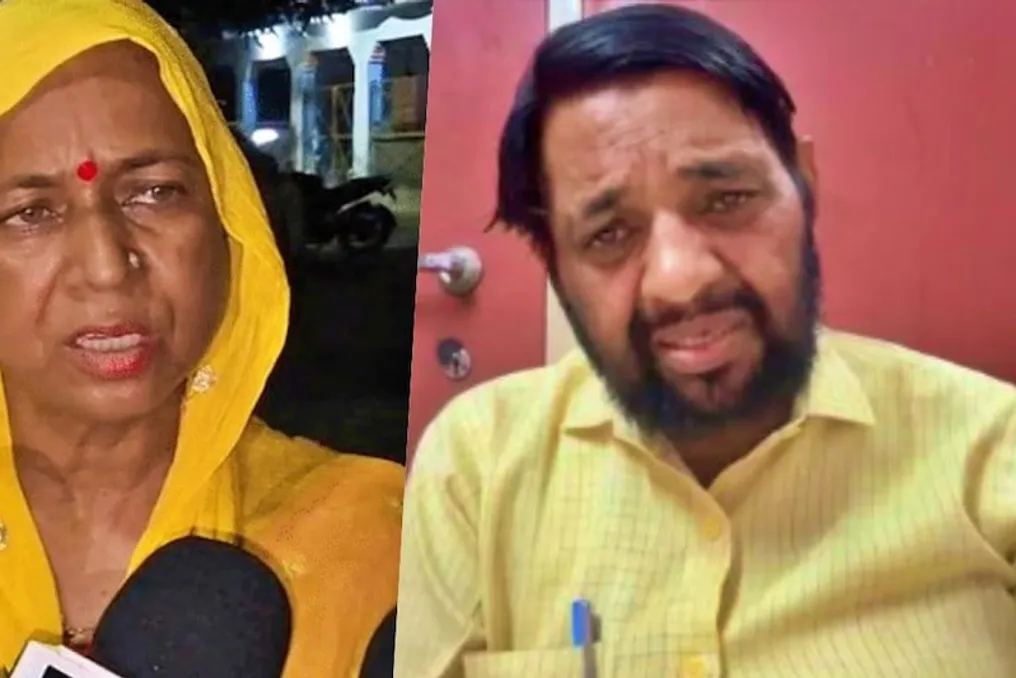
A major conflict erupted during the foundation laying ceremony for the restoration of Shitla Mandir in Kakori, Lucknow. The BJP deputy from Malihabad, Jai Devi Kaushal, accused the temple administration of humiliation and discrimination due to her affiliation with Pasi Samad, while the temple manager rejected all these allegations.

In response, the head of Lahan Army, Suraj Pasi, plans to visit the Shitla Devi temple at 11:30 AM, stating that he will check who is obstructing him from worshipping at the Shitla Devi temple. The situation has intensified because of this incident.

Reports indicate that during the Shitla Mandir restoration event in Kakori, Lucknow, an alleged insult and discrimination occurred against BJP deputy Jai Devi Kaushal from Malihabad. It is claimed that during the foundation stone laying and first stone installation ceremony on Wednesday, the deputy was not allowed to participate in the ritual and was constantly kept standing. Thanks to Jai Devi's efforts, the Tourism Department allocated 76 lakh rupees to the temple.

The deputy was allegedly prohibited from burning incense and breaking coconuts due to her belonging to Pasi Samad. In protest, the deputy, her son, and the Azad Samad party formed a front, after which the police intervened and took control of the situation.

Jai Devi, wife of former minister Kaushal Kishore, stated that despite the restoration funds being approved thanks to her efforts, she was not allowed to worship. She announced that she would file a complaint with the higher authorities. The deputy's son, Vikas Kishore, raised accusations of casteist discrimination on social media. Furthermore, former state minister Kaushal Kishore expressed strong disagreement with this situation. SPA leader Akhilesh Yadav also reacted to this issue.

When the situation got out of hand, the district president of Azad Samad, Ajay Bharti, arrived at the scene with activists and staged a protest. Seeing the deteriorating situation, Kakori Inspector Satish Rathor arrived with a large contingent of police forces and calmed the people, resolving the conflict. City council chairman Rohit Sahu and district chairman Vipin Rajput were also present.

On the other hand, the temple manager Ramakant Gupta completely refuted all these claims. He stated that the temple doors are open to all castes and sections of society, and no discrimination took place. Priest Shailendra Bajpai conducted the rituals according to tradition, while the manager recited mantras.

Similar stories

Ancient Temple in Ramgarh: They Say Mother Ganga Herself Performs the Ablution Ritual for Shiva
Read more
www.aajtak.in

Ancient Temple in Ramgarh: They Say Mother Ganga Herself Performs the Ablution Ritual for Shiva

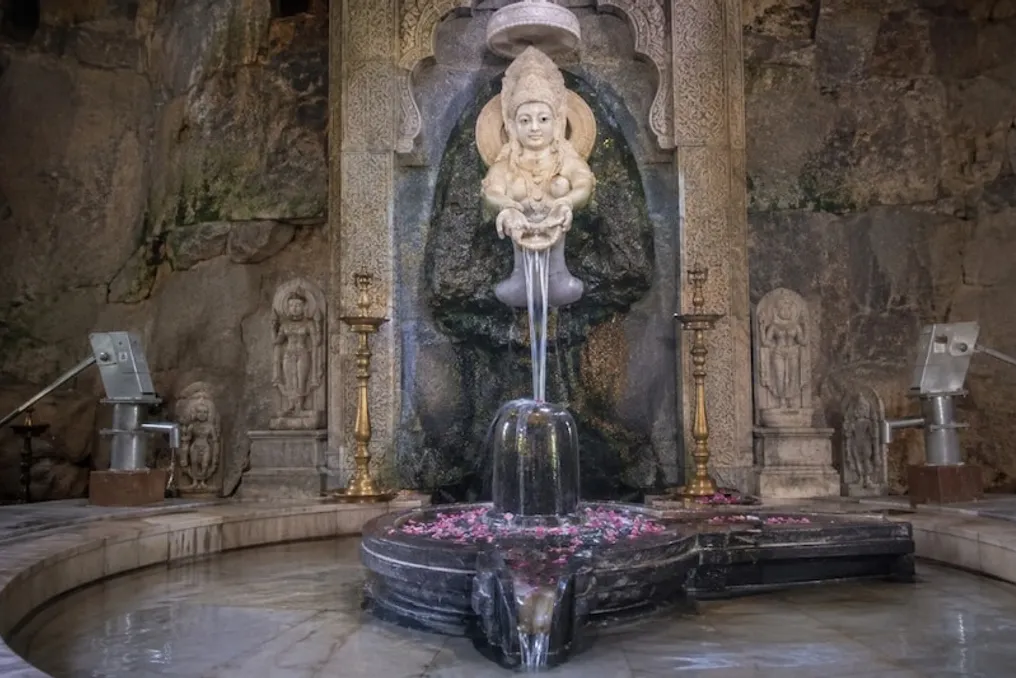
In the Ramgarh area of Jharkhand state, there is an ancient temple considered highly mysterious. The main feature of this sanctuary is that the Shivling is continuously washed for 12 months and 24 hours a day. Notably, the Shivling does not require the presence of pilgrims for watering; instead, a constant flow of water runs onto it naturally.

Discovery of the Temple During Excavations in 1925

The history of this temple dates back to 1925. At that time, during British rule, earthworks were being conducted in the area to search for water sources. During these works, a dome-shaped structure was discovered underground. After continuing the excavations, the temple buried beneath the ground was completely extracted.

Inside the temple, a Shivling was installed, and directly above it, a white statue of Mother Ganga was found. The most astonishing aspect of this statue is that a stream of water constantly flows from her navel.

Water Flowing from the Statue of Mother Ganga

According to beliefs, the water flowing from the navel of the statue of Mother Ganga passes through both her palms and lands directly on the Shivling situated below. Thus, the Shivling undergoes continuous ablution. To this day, it remains unknown when and from what natural source this stream of water originates.

It is claimed that scientific studies were conducted to determine the nature of this water flow, but the true source has not been established to date. This is why the continuous bathing in the temple remains a subject of both religious reverence and mystery for pilgrims.

Hand Pumps Operating Without Power

The mystery of this temple is not limited to the water flow onto the Shivling. Two hand pumps are installed on the temple complex grounds that continue to supply water without needing to be switched on. Despite the drying up of the nearby river and intense heat, water continues to come from these pumps.

For people connected to the temple and for pilgrims, this is a miracle in itself. Many questions remain open regarding where the source of the constantly flowing water is located and how it relates to underground water currents.

Pilgrims Consider the Water as Prasadam

The religious beliefs associated with this temple are also very significant. Pilgrims accept the water that constantly flows onto the Shivling as prasadam. There is a belief that if one appeals to the god Shiva with a sincere heart, their wish will be granted. This is why pilgrims travel from afar to visit and worship here. The natural water flow, the statue of Mother Ganga, and the power-free operating pumps make this ancient temple unique among other Shiva temples, attracting people through a combination of faith and mystery.

KathaVachak explains the significance of bathing Shiva in water during the month of Sawan at a religious gathering
Read more
www.aajtak.in

KathaVachak explains the significance of bathing Shiva in water during the month of Sawan at a religious gathering

During the 'Shiva-Khata' session at the 'AajTak Dharma Sansad' event held in Ujjain, known as the city of Mahakal, KathaVachak Mahesh Giri participated. In his address, he highlighted the importance of the month of Sawan and emphasized why bathing Shiva in water holds special significance during this period.

In his presentation, Mahesh Giri detailed the religious significance of Lord Shiva and the act of jalabhishek. He noted that according to sacred scriptures, Lord Shiva greatly favors water, making the water bath particularly important during the month of Sawan.

Mahesh Giri referenced scriptural mentions stating that 'Jaldhara Shiva Priyam' (The stream of water is beloved by Shiva). He explained that Goddess Ganga descended from the feet of Lord Vishnu and settled in the hair of Lord Shiva. This is why Shiva is considered to have a special connection with water. According to the scriptures, all water existing in the world is regarded as a form of Ganga, so pouring water on Lord Shiva is considered a very pious act.

The month of Sawan is the period within the four months of the rainy season when the highest amount of rainfall occurs. This is why this month is revered as the most beloved by Lord Shiva. According to the KathaVachak, Lord Shiva bestows special grace upon devotees who sincerely worship Shiva in Sawan.

Mentioning Chaturmas, Mahesh Giri noted that during this period, Lord Vishnu resides in a state of yoganidra in water. He added that in the tradition of Sanatana Hari and Har are considered inseparable. Consequently, the significance of water increases during Chaturmas, as it is believed that Lord Vishnu resides in it.

He also mentioned the Kavad Yatra pilgrimage procession, where devotees bring water from sacred rivers such as Ganga, Narmada, Shipra, and others to perform jalabhishek on Lord Shiva. In his opinion, when this sacred water, which is believed to contain the presence of God, is poured onto the shrine, Lord Shiva rejoices and fulfills the wishes of his devotees.

Swami Satishacharya explains the ban on women attending Bhasma Aarti within 'Dharma Sansad'
Read more
www.aajtak.in

Swami Satishacharya explains the ban on women attending Bhasma Aarti within 'Dharma Sansad'

In the city of Ujjain, known as the abode of Mahakala, a meeting took place on Tuesday as part of the special program 'Aajtak Dharma Sansad'. During the session 'The ‘Immortal’ of Ujjain', Jagadguru Ramanandacharya Swami Satishacharya Maharaj, Manoj Kumar Srivastava, an IAS officer and author of books on Devadhidev who has retired, and Pandit Shyan Manawat, a storyteller, participated. All three speakers called for an understanding of the fundamentals of Indian culture, the true meaning of religion, and acquaintance with the culture.

Jagadguru Ramanandacharya Swami Satishacharya Maharaj elaborated on the basics of Hinduism, the spiritual heritage of Ujjain, and the authentic meaning of religion. He emphasized that Hinduism is not limited to mere worship rituals but is a system guiding a person in life. He appealed to the youth to study their traditions and sacred scriptures. Swami Satishacharya Maharaj noted that the identity of Ujjain is linked not only to the Mahakaleshwar Jyotirlinga temple but also to the traditions of knowledge, practice, and asceticism.

He mentioned the religious and historical significance of Ujjain, stating that this city has served for centuries as a place of activity for saints, sages, and scholars. The city of Mahakala conveys a message about understanding the truth of time and life. When asked about the connection between religion and modern life, he stated that merely presenting rituals is insufficient to attract a new generation to faith; it is necessary to explain the underlying feelings, goals, and philosophy. He added that studying sacred texts is important not only for becoming a religious person but also for developing the ability to make sound decisions in life.

During the discussion, the question arose regarding the significance of Bhasma Aarti and who should observe it, as well as views on men and women attending it. In response, Swami Satishacharya Maharaj said, 'Bhasma Aarti has great influence. Lord Shiva says that where there is an end, infinity begins. This is the form of Paramatma. The Vedas have named bhasma as the highest element. And there is no prohibition for anyone to watch Bhasma Aarti.'

'Men and women are just names of clothing. Inside all of them is one soul. The sacred scriptures do not indicate any difference. Differences were introduced later based on a system, but systems also change. Shiva is changeable, and what is changeable is bhasma.'

Issues related to Hinduism, religious education, and the role of saints in society were also touched upon during the discussion. Swami Satishacharya Maharaj stated that the goal of religion is to unite society, not divide it. Religious conduct becomes meaningful only when it includes compassion, service, and respect for others. He stressed the urgent need to introduce the youth to their culture in the present time. At the same time, he noted that both family and educational institutions play an important role in this process. He concluded that passing on India's spiritual tradition to the next generation is the responsibility not only of the saints but of the entire society.

Popular