160 artists created the longest Mithila painting in India in Bihar
Read more
The Better India
thebetterindia.com

160 artists created the longest Mithila painting in India in Bihar

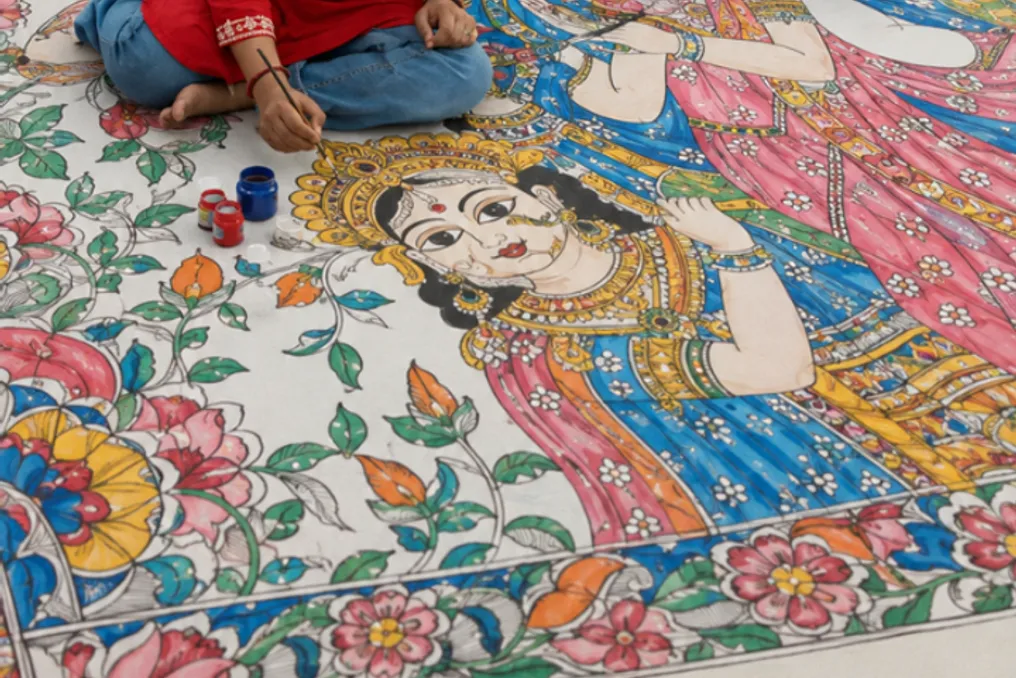
In the village of Saurat, Madhubani district, around 160 artists and students collaborated over several days to create one giant canvas. Working together, they transformed a long strip of fabric into a continuous visual narrative of the Ramayana.

The painting measures 108 meters in length and 1 meter in width, unfurled as a single strip, which allowed numerous masters to work simultaneously on different sections. Instead of individual panels, each scene became part of one continuous work of art.

To put the scale into perspective, the canvas is slightly longer than a standard football field. However, the immense length was not merely an attempt to set a record; the artists also had to ensure that dozens of scenes flowed seamlessly into one cohesive visual story.

The Mithila Chitrakala Sansthan Institute trains students in this age-old folk art tradition. Mithila painting was originally created by women on the mud walls of houses, and later gradually transitioned to handmade paper, cloth, and eventually, large canvases.

The finished piece incorporates 51 episodes taken from both Valmiki's Ramayana and Tulsidas's Ramcharitmanas. Together, they trace Rama's journey from birth and early life through exile, the war in Lanka, and his subsequent return to Ayodhya.

The trained Mithila painters worked alongside young apprentices, first sketching the intricate black outlines that define this art form. They then filled in the figures, borders, and traditional motifs with layers of color, gradually transforming the blank canvas into a detailed visual epic.

The Ramayana holds a particularly strong connection to this region. Hindu tradition considers Mithila the birthplace of Sita, making this epic deeply rooted in the local cultural memory and providing the artists with a story closely tied to the land surrounding them.

The official presentation of the painting took place around India's Independence Day in August 2026. This period united two events: the preservation of Mithila's unique artistic heritage and a broader national moment dedicated to India's culture, identity, and shared history.

Setting a record may just be the beginning. The 108-meter artwork presents its own challenges: where can it be displayed, how can such a large canvas be preserved, and how can viewers see all 51 episodes together?

More than just a record-breaking painting, this 108-meter canvas unites generations of Mithila artists around a story deeply rooted in the region. In Saurat, the ancient tradition has achieved astonishing new scales.
Similar stories

Women with intellectual disabilities created art in a Delhi shelter that was later exhibited in a gallery
Read more
thebetterindia.com

Women with intellectual disabilities created art in a Delhi shelter that was later exhibited in a gallery

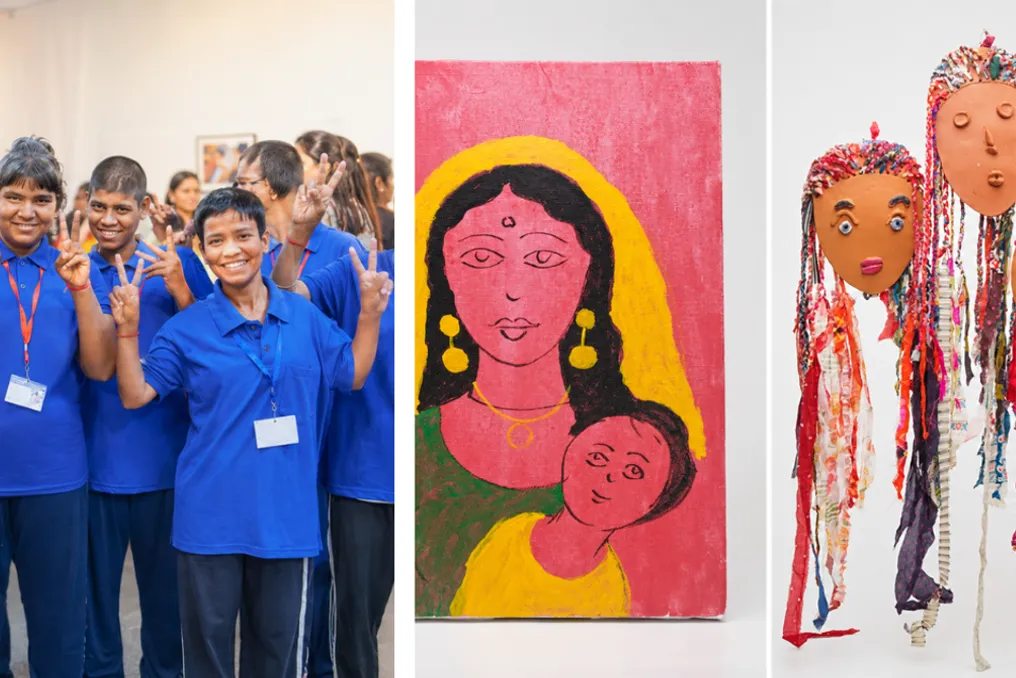
As part of the 'What Is Love?' initiative, fifteen women with intellectual disabilities residing in a state shelter for such women participated in a five-month art and healing program. This program was organized by the Society for Child Development.

During the project, the women used ceramics, textiles, and painting to explore their emotions, memories, and self-awareness. Madhumita Puri, founder of the Society for Child Development, noted that the experience began with a simple idea of individuality, stating: 'Love begins with knowing yourself, and then accepting that personality.'

Under the guidance of artists Suparna Arora (ceramics), Shalini Dutt (textiles), and Sujatha Das (painting), the participants were given space for creativity. Instead of following predetermined ideas, the artists provided materials—clay, fabric, and color—allowing the process to develop around each participant.

Initially, many women kept to themselves, not making contact. However, thanks to gentle encouragement, one of them, Guddu, once picked up a brush. The program was conceived as a pilot project involving 15 women, three artists, and institutional staff.

Madhumita Puri, who has over thirty years of experience working in the disability sector, aimed to go beyond traditional approaches, wanting artists to guide the women through creative engagement rather than correction or expectations. The program's name, 'What Is Love? A Journey to Find the Self,' reflected a belief in the deep connection between love and identity.

Shalini Dutt, who works with textiles, admitted that while the invitation was exciting, she felt nervous because she had not previously worked on a project of this nature with adult women, many of whom had experienced abandonment.

Suparna Arora, a potter with nearly thirty years of experience, also felt initial hesitation but realized that the lack of pressure—when the women were not asked to create perfect objects—allowed them to open up. The women came up with brilliant forms themselves, such as elephant figurines or images resembling shrimp based on agricultural memories.

One of the strong themes that emerged during the project was the topic of identity. Moments when the women wore bright lipstick despite short haircuts became a powerful act of adornment. This led to the idea of creating masks with hair: first, they molded clay faces, and then used fabric and yarn to imitate hair. As they were allowed to do their hair as they wished, the creativity became freer and cathartic.

The group included young women aged 18 to 20. The story of Preeti, who initially refused to weave because she thought she couldn't do it well, but later proudly displayed her finished work, became an example of transformation. Shalu, who is deaf and non-verbal, demonstrated leadership qualities by helping Guddu work on her potter's wheel.

Paravathi, one of the older participants, provided stability in the group, caring for others like an older sister. The process was not always smooth; there were arguments, for instance, because one participant was working on another's frame, but there were also moments of joy when everyone started singing Bollywood songs together.

After five months of work, the created items—ceramics, textiles, and paintings—were presented at the India Habitat Centre from March 28 to March 31, 2026. For Madhumita, this exhibition provided the women with a public space for their creativity and showed the world lives that often go unnoticed. She confirmed her initial hypothesis that there is more beneath the surface.

The team believes that the 'What Is Love?' model can be adapted for other institutions, such as community centers and other shelters. The initiative is important because it challenges the common perception of people with intellectual disabilities, suggesting that they should be seen as creators and individuals with their own taste, memory, and imagination. Art, essentially, only requires space for self-expression.

Popular