All-rounder sets world record upon return after cannabis ban
Read more
Aaj Tak
www.aajtak.in

All-rounder sets world record upon return after cannabis ban

On August 21, 1986, something unexpected happened in the world of cricket. Sir Ian Botham, one of England's greatest all-rounders, managed to return to the field after a ban imposed on him for admitting to cannabis use, and demonstrated outstanding results.

During his return at The Oval against New Zealand, Botham secured a victory on the very first ball by taking wicket of Bruce Edgar, thereby equaling the world record of 355 Test wickets. Following this, Graham Gooch uttered the famous phrase: 'Who writes your script?' By taking this wicket, he matched Dennis Lillee's world record, and immediately after that, he dismissed Jeffro Croft LBW, taking his 356th wicket.

Botham, returning from the ban, broke Dennis Lillee's record and became the best bowler in Test match history at that time. In fact, in 1986, Ian Botham admitted in a newspaper column that he used marijuana (cannabis), which led sports officials to impose a sixty-three-day ban on him. This ban forced him to miss many of England's Test and One Day International matches.

Ian Botham's story of returning after a ban due to cannabis use remains one of the most discussed comeback stories in cricket.

Test Statistics:

Matches: 102

Runs: 5,200

Seventies/Half-centuries: 14 seventies and 22 half-centuries

Highest Score: 208 runs

Average: 33.55

Wickets: 383

Best Bowling Performance (Innings): 8/34

5-wicket hauls: 27 times

One Day International Statistics:

Matches: 116

Runs: 2,113

Half-centuries: 9

Highest Score: 79 runs

Average: 23.21

Wickets: 145

Best Bowling: 4/31

Similar stories

Pakistani batsman sets awkward record: first time in 43 years this has happened
Read more
www.aajtak.in

Pakistani batsman sets awkward record: first time in 43 years this has happened

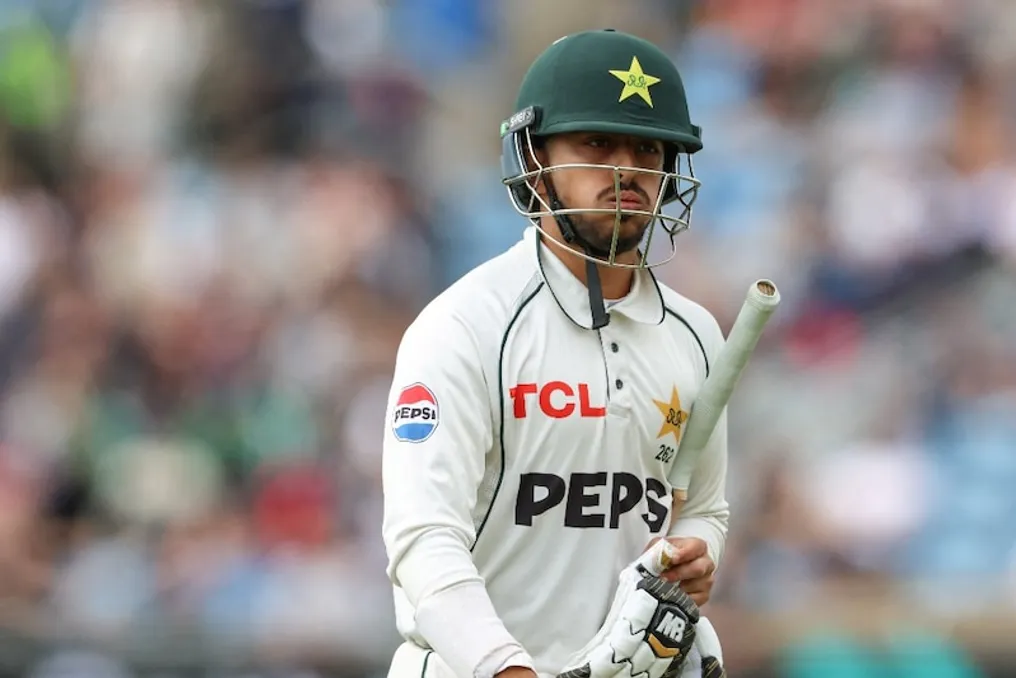
The first match of the three-match series of test games between England and Pakistan took place at Headingley in Leeds. In this game, the performance of the Pakistani batsmen in the first innings was extremely poor, and the entire team scored only 171 runs. Opener Azan Aways did not meet the hopes of Pakistani fans.

On the very first delivery, Ollie Robinson dismissed Azan Aways via LBW. Robinson bowled a wobbling seam delivery that pitched inside to left-handed batsman Azan Aways. Azan could not correctly judge the trajectory of the ball, and it hit him directly on the pad. After persistent demands from the English team, umpire Chris Gaffney declared him out.

Azan Aways disagreed with the umpire's decision and immediately requested a video review (DRS). The replay clearly showed that the ball did not hit his bat. However, after tracking the ball, which showed three radii from contact to the stumps, and analysis, the third umpire upheld Chris Gaffney's decision because the ball struck the upper part of the middle stump.

Thus, Azan Aways was forced to leave the field on the very first ball of the test series and found himself on an undesirable list. Azan is the second opening batsman for Pakistan to be dismissed on the first ball of a test match. A similar incident occurred in 1983 when Mohsin Khan was dismissed on the first ball against India in a match in Jalandhar. This means that this event has been repeated among Pakistan's opening batsmen after 43 years.

Although Azan Aways set an awkward record, Ollie Robinson achieved a significant feat. He became the fourth English bowler to take a wicket on the first ball in any Test match played in England. This phenomenon began with Maurice Tate in 1926, when he dismissed Warren Bardsley of Australia on the first ball in Leeds.

Forty-eight years later, George Arnold in 1974 sent Indian batsman Sunil Gavaskar to the pavilion on the first ball in a match in Birmingham. In 2007, Ryan Sidbottom dismissed Darren Ganguly of West Indies on the first ball in a match in Chester-le-Street. Now, in 2026, Robinson has joined this rare list by dismissing Azan Aways.

After Ollie Robinson delivered the initial blow to Pakistan, he did not allow the pressure to ease. Four out of the first five batsmen fell victim to him. Robinson bowled a total of 18 overs, taking 5 wickets for 51 runs. This result is particularly important for Robinson as he recently returned to the national team after a long break. In June, he played a key role in England's victory at Lord's against New Zealand, taking 7 wickets for 77 runs. Now he has demonstrated his impact even before the start of the match against Pakistan.

Deudhat Padikkal scores 167 runs in India vs Sri Lanka match, setting a record after 24 years
Read more
www.aajtak.in

Deudhat Padikkal scores 167 runs in India vs Sri Lanka match, setting a record after 24 years

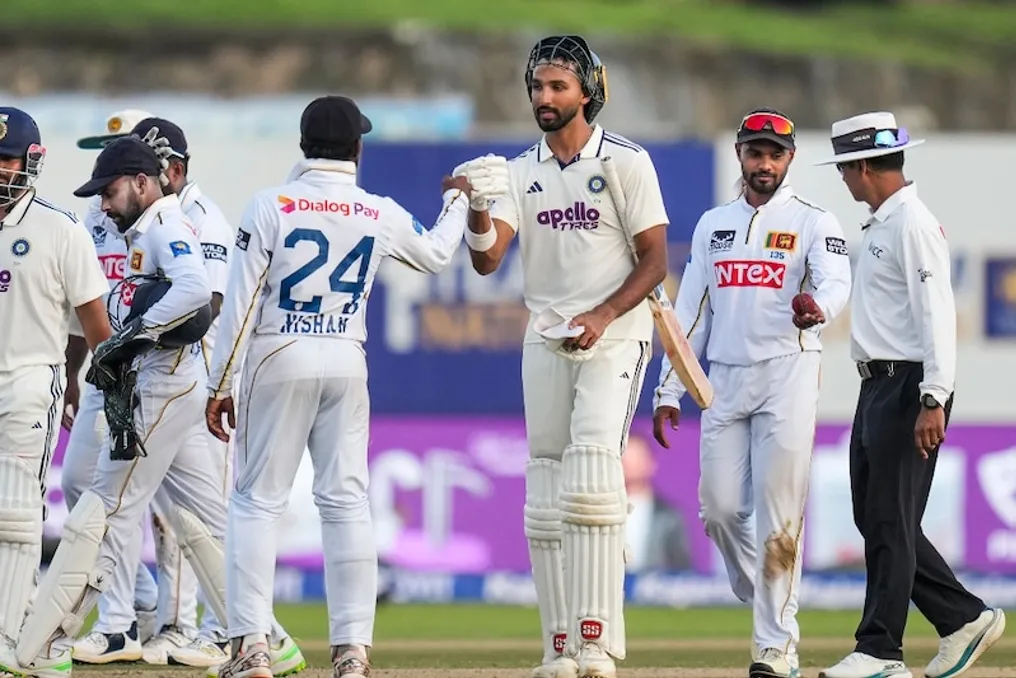
Young Indian batsman Deudhat Padikkal demonstrated outstanding play in the Test match against Sri Lanka in Galle. His performance drew admiration from all observers, especially after he came in at number three instead of the injured Sai Sudarshan.

Padikkal fully capitalized on the opportunity given to him in the first match of the series. He played a memorable innings, scoring 167 runs, which helped India establish a strong position in the game. Furthermore, with this innings, Padikkal equaled several records held by great Indian cricketers.

When the Indian team, which won the toss, faced an early loss with Yashvi Saiswal, Padikkal, coming in at number three, started a partnership with Kell Rahul. Together they put serious pressure on the Sri Lankan bowlers, building a partnership worth over 150 runs. Padikkal completed his magnificent century on the first day.

The second day's play was delayed due to rain, but Padikkal continued to score runs. He played very cautiously against the spinners, helping advance the team's score. Ultimately, he was dismissed by Prabhat Chaisurya on the 92nd over. However, before coming onto the field, Padikkal scored 167 runs, using 15 fours and 1 six, off just 230 balls.

Padikkal became the third Indian batsman to score over 150 runs while batting at number three in a match against Sri Lanka. Before him, only Rahul Dravid (177 runs in Ahmedabad in 2009) and Cheteshwar Pujara (153 runs in Galle in 2017) had achieved this feat. This is also the highest individual score by an Indian player at number three on Sri Lankan soil.

Padikkal became the second left-hander in Indian history to score a century at number three in the 21st century. Before him, Saurav Ganguly reached this milestone in 2002 against Zimbabwe in Delhi. Moreover, this is the first century at number three for the Indian team after 35 Test matches. Earlier, Shubman Gill scored a century at number three against Bangladesh in Chennai in September 2024.

Ajinkya Rahane discusses long wait for debut in Indian Test squad
Read more
www.aajtak.in

Ajinkya Rahane discusses long wait for debut in Indian Test squad

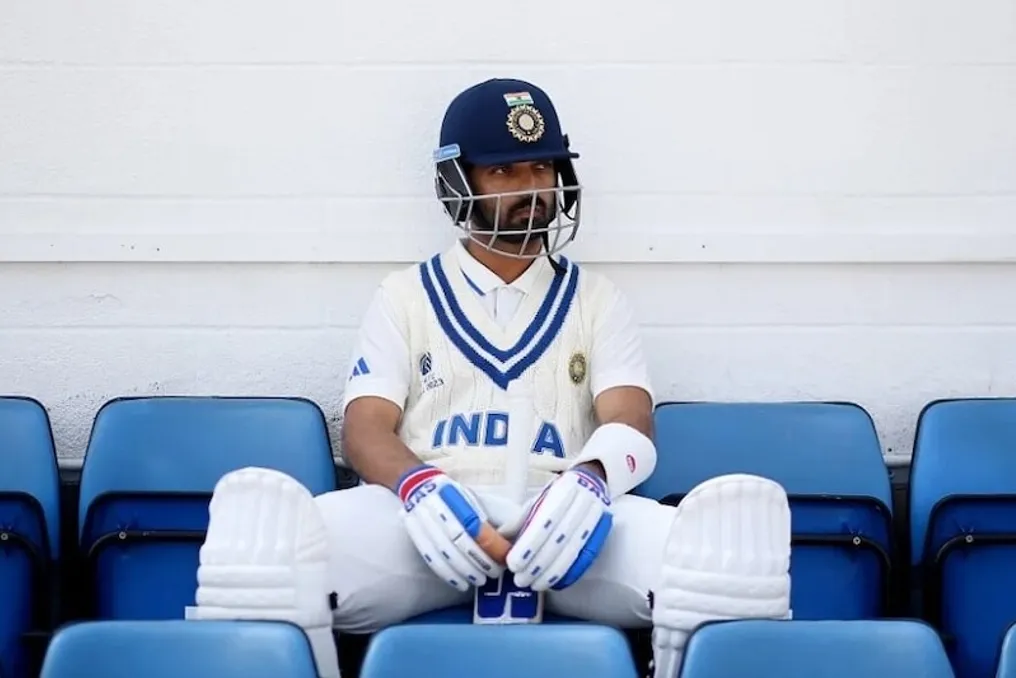
Former Indian batter Ajinkya Rahane shared memories of a difficult period in his career when, despite being included in the Test squad, he could not make the starting XI. The 38-year-old waited nearly two years and 20 matches for his Test debut. During this time, he remained part of the team, primarily serving as the 12th player.

Rahane admitted that this period was challenging. However, instead of feeling disappointed or seeking sympathy, he viewed it as an opportunity for self-improvement. He believes that this waiting period strengthened his approach and mentality, which later helped him build a long career in Tests.

Ajinkya Rahane first debuted for India in limited-overs formats in August 2011. After that, he began to be included in the Test team, but access to the starting lineup was not immediate. Sharing these memories on his YouTube channel, Rahane noted: 'The first two years after I first joined the team in 2011 were very difficult for me. I had to wait 20 matches for my Test debut, and I was the 12th player for two years.'

It is natural for any young player to become upset when constantly being outside the starting lineup. According to Ajinkya Rahane, at that time he faced two options: either seek sympathy from people regarding his situation or use the time to improve himself. He stated: 'I had two options before me. Either I seek sympathy, or I try to improve myself. There is nothing wrong with being the 12th player, fetching water, or helping teammates. I took it positively.'

Rahane did not view the role of the 12th player merely as waiting. He closely observed senior players on the field and in the dressing room, trying to learn from them. He recounted that observing the players changed his mindset and his view of cricket. Rahane believes that this experience contributed to his long-term participation in games for India.

Ajinkya Rahane also spoke about an interesting instance related to developing patience in his career. He linked this to journeys on the local Mumbai train. Rahane said: 'I wouldn't say I had so much patience from the beginning. When you travel on the local Mumbai train, it can be difficult. Patience starts developing from there.'

After consistently scoring runs in home matches, Ajinkya Rahane also felt hope for a spot in the Indian team. In his opinion, after playing well, a player naturally begins to think that their name should now appear in the Indian squad. Rahane reported that after conversations with some senior cricketers, he started focusing on things within his control instead of overthinking the selection.

He emphasized: 'Over time, I realized what would happen when it was supposed to happen. What is under your control, you can do. If you want to play long, patience is very important.'

This wait for Ajinkya Rahane finally ended in March 2013, when he was given the opportunity to debut in Test cricket. After that, he was a vital part of the middle order of the Indian Test team for a long time. For India, Rahane played 144 innings in 85 Tests, scoring 5077 runs. His average was 38.46, and he scored 12 centuries and 26 half-centuries.

Popular