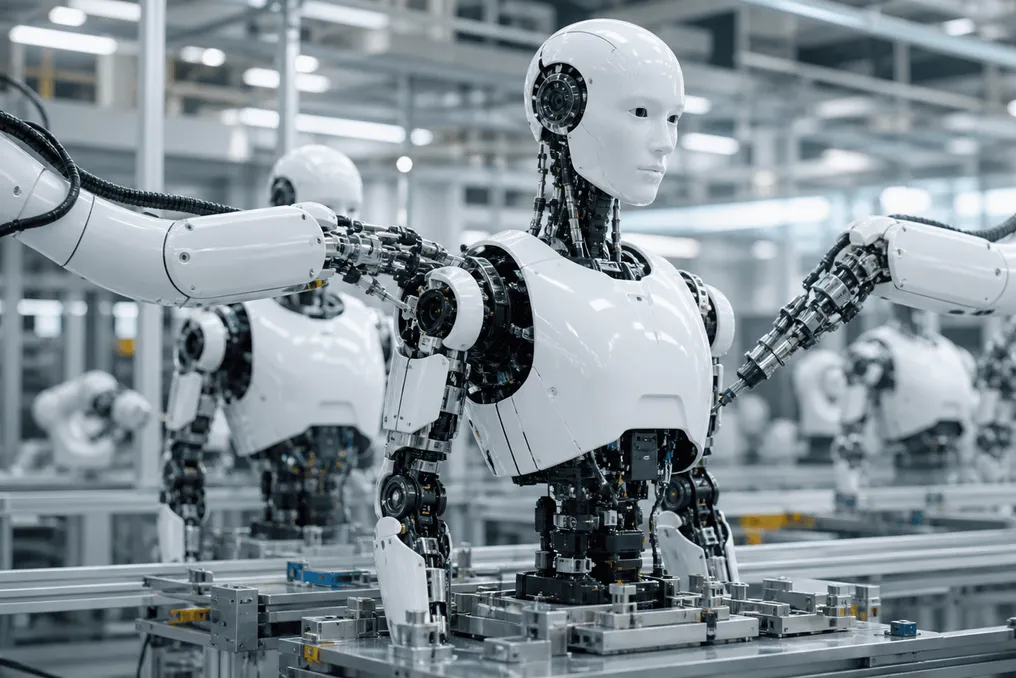
Chinese companies manufacturing humanoid robots now control 97 percent of global shipments. According to data from Smart Analytics Global for the first half of 2026, the total number of humanoid robot shipments reached 19,100 units, representing a 274 percent increase compared to approximately 5,100 units in the first half of 2025. Chinese sellers accounted for 97 percent of the total volume.
AgiBot shipped about 8,400 units, accounting for 44 percent of the global market, surpassing Unitree, which shipped 5,900 units or 30.9 percent. A previous study by CCID in 2025 estimated the share of Chinese manufacturers at 84.7 percent of the global figure. The difference between 85 and 97 percent clearly demonstrates the speed of consolidation of this segment around China.
There is also a shift in shipment leaders. In 2025, Unitree shipped over 5,500 humanoid robots and was the leader in the global ranking. However, by May 2026, Unitree's cumulative production of humanoid robots exceeded 11,000 units. In March 2026, AgiBot released its tenth thousand general-purpose robots, marking the transition from prototype to industrial production.
The question of China's leadership in this segment is no longer raised; rather, the question is whether other countries can catch up. The American counterpart lags significantly: the combined shipments of Tesla, Figure AI, and Agility Robotics in the first half of 2026 constitute only a small fraction compared to Chinese figures.
The US government announced at the end of July a ban on importing new humanoid robots, quadrupeds, and certain components manufactured in China, citing risks to national security of artificial intelligence infrastructure. However, the immediate impact of this ban is limited, as Smart Analytics data was already collected before the ban was implemented, and major Chinese exporters are currently not making large-scale shipments to end consumers in the US. This ban is perceived more as a structural signal than an event affecting the market in the short term.
The structure of application fields is also changing. Linda Sui from Smart Analytics Global noted that industrial and commercial deployments now account for over 70 percent of global shipments, compared to approximately 50 percent a year earlier. The market is shifting from creating demonstration models to equipping factory floors.
An important industry benchmark is the forecast line. Smart Analytics Global predicts that global shipments of humanoid robots in 2026 will reach about 60,000 units, and will exceed 500,000 units by 2030. If this figure is reached, humanoid robots will enter a production trajectory similar to industrial robots of the early 2000s. The share of China in this growth remains an open question. Exports are limited by US policy, domestic demand by application density, and long-term by cost. Next year will show whether the share of shipments from China will increase or stabilize.