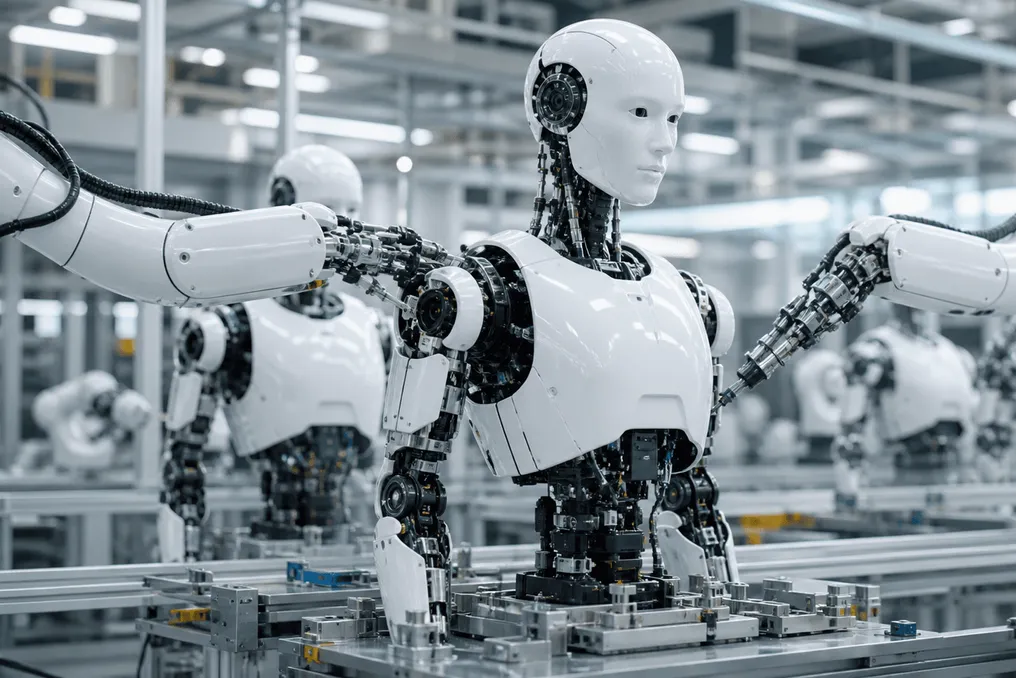
As a result of the boom in humanoid robots in China, an unexpected new category of jobs has emerged—third-party robot repair technicians. This role is the most obvious early example of the formation of a service economy around the rapidly growing base of installed humanoid robots in the country. Training takes one month, and the monthly salary is about six thousand yuan; the most frequent client for such specialists is the quadruped robot Unitree Go2.
According to IDC estimates, global shipments of humanoid robots will reach 18,000 units in 2025. China's Ministry of Industry and Information Technology predicts that China alone will produce over 100,000 humanoid robots in 2026. Unitree founder Wang Xinsin claims that his company's quadruped robots account for 60 to 70 percent of the global market. AgiBot has accumulated over 15,000 total embodied robots by the end of June. When these figures are multiplied by the average number of warranty-covered repairs, the workload has turned into a full-fledged industry.
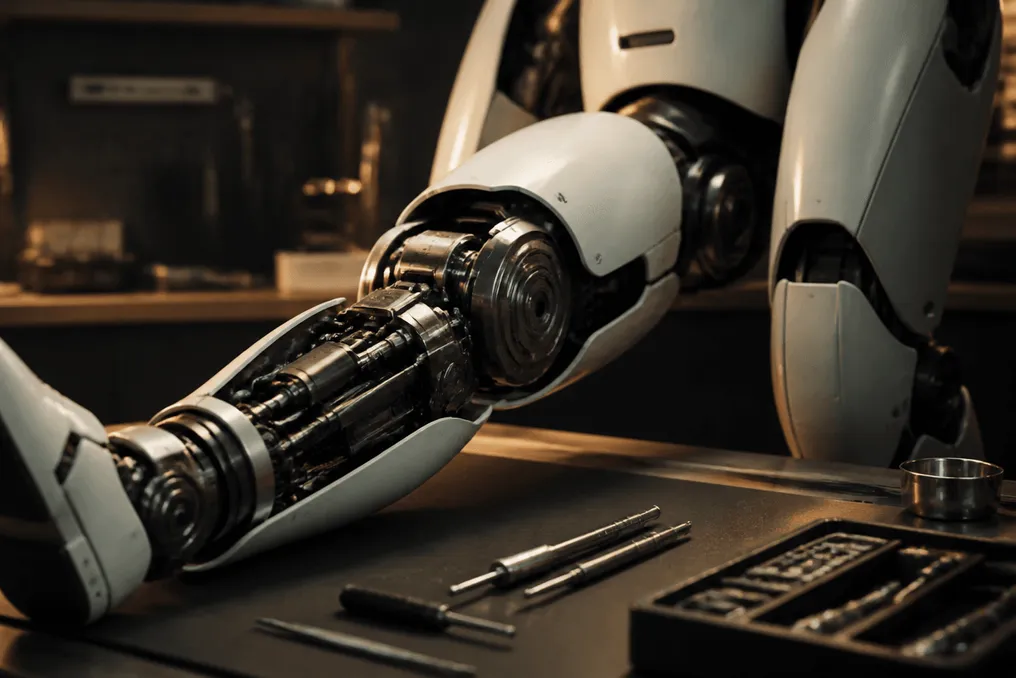
The work resembles drone repair more than phone repair. The robot leg, which mimics human form, is a set of joint modules, each combining a motor, planetary gearbox, encoder, driver board, and bearing. The main types of failures are predictable: sand-textured noise indicates a dry joint, a click means a worn planetary gearbox, and electrical sizzling indicates a short circuit on the board. Most repairs involve replacing parts rather than restoring them.
Authorized dealers can obtain parts from OEMs with geographical and usage scenario restrictions, which has given rise to a parallel secondary market for salvaged components. OEM robot parts are not interchangeable between brands, and circuit diagrams are not published. Some manufacturers even polish the markings on chips on printed circuit boards before shipping. This situation turns third-party repair into a business based on relationships, not just skills. A more accurate look at the labor market shows that the bottleneck is spare parts, not the technicians themselves. This imbalance begins to show up in the price of consumables: a pair of replacement robot legs costs four hundred yuan, which is more than six times more expensive than a similar pair of human shoes.
Third-party operators, such as Kaogong Yunji from Nanjing, are expanding their operations to five service points across the country. There is now an unofficial career ladder in this category: trainee technician, field technician, certified brand service partner, and trainer. The training market is also growing, although the quality of programs is uneven. Some courses are very rigorous, while others are essentially marketing content. The era of humanoid robots in China now possesses something that the previous wave of consumer electronics lacked: a labor market that scales with the installation base, not with the marketing budget. The profession of 'orthopedic doctor' has become real.