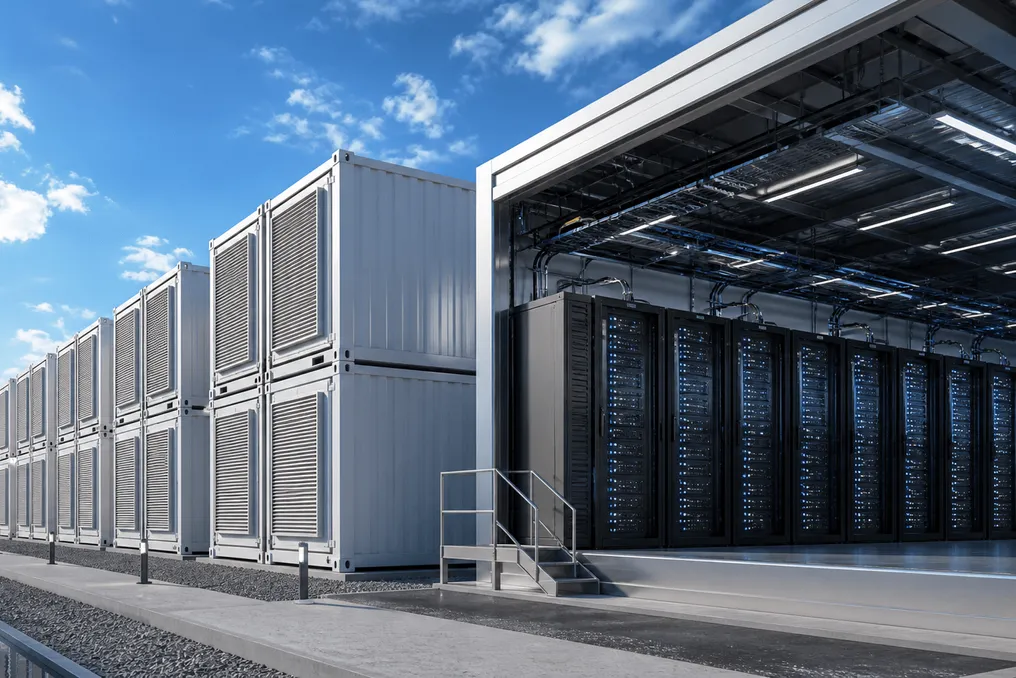
Alibaba Cloud announced the reduction of the data center supply cycle for artificial intelligence to 100 days thanks to its modular CUBE 5.0 architecture. This information was presented during a press tour at the data center in Ulanqab this week. The construction in Ulanqab is Alibaba Cloud's largest and most advanced facility in Northern China and serves as a benchmark example.
The CUBE 5.0 architecture increases the degree of modularity of five key systems—power supply, cooling, security, intelligent control, and fire safety—from 30% to 90%. Furthermore, it utilizes hybrid air and liquid cooling with high direct current voltage, allowing it to support at least three generations of chips.
Economic indicators are crucial. The traditional data center supply cycle in China takes six to twelve months, while in the US it takes twelve to eighteen months. CUBE 5.0 reduces this period to 100 days, distributed as follows: 30 days for factory production, 50 days for on-site installation, and 20 days for commissioning. The unit cost per kilowatt has been reduced by 10%, and the percentage of successful single-product testing is close to 100%. The combination of 100-day delivery, lower cost, and an almost perfect acceptance rate solves the project management triangle problem that previously frustrated AIDC planners.
Ulanqab possesses natural conditions that simplify the construction process. The city is located at a latitude of 42 degrees north and has an average annual temperature of 4.3 degrees Celsius, allowing data centers to use natural cooling for about 10 months of the year, saving over 20% of energy. The city is 240 kilometers from Beijing, and two dedicated dual-ring fiber optic lines provide a round-trip latency of 4.2 milliseconds. With renewable generation, the share of green electricity is 67%, and the basic basalt geology minimizes the risk of natural disasters.
The most underestimated aspect is the technological foundation itself. CUBE 5.0 is not just one product but an integration of Alibaba Cloud's 17 years of infrastructure experience with the Chinese supply chain. Alibaba Cloud has been developing its own data center design since 2009, starting in Fetian. Modularity resulted from standardized Bill of Materials (BOM) specifications jointly developed with leading Chinese component suppliers, which allows for optimizing factory production cycles and assembling components on-site, similar to building with Lego. Plans are underway to triple global modular capacity this year, indicating a shift from serving a single facility to creating a repeatable product line.
Ulanqab's adoption is the clearest indicator of where the next wave of AIDC capacity will be directed. The city has signed 89 data center construction projects and operates with a computing power of about 17.2 million P, with an intelligent share exceeding 90%. Companies such as Huawei, Kuaishou, ByteDance, Century Internet, and CICC Data have established their facilities in the city. The official municipal strategy defines Ulanqab as a 'Token City,' similar to how Shenzhen was once a 'mobile phone city.' The 100-day delivery acts as a manufacturing tool making this ambition achievable.