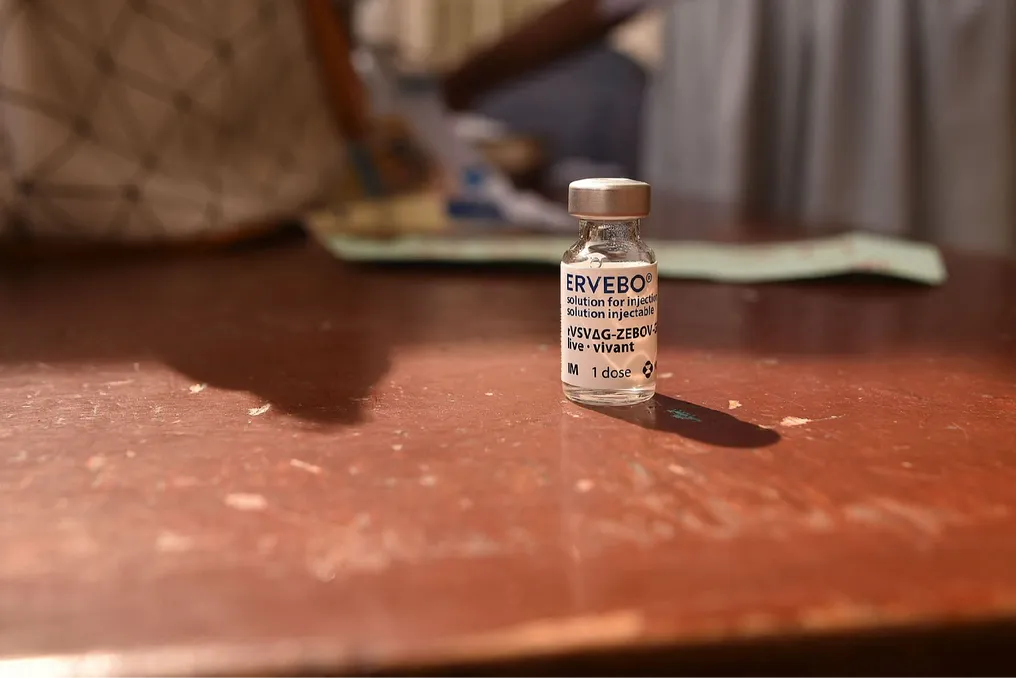
WHO and Africa CDC welcome allocation of Ebola vaccines in DRC
Read more
CGTN
cgtn.com

WHO and Africa CDC welcome allocation of Ebola vaccines in DRC

The World Health Organization (WHO) and the Africa Centres for Disease Control (Africa CDC) expressed their approval of the allocation of tens of thousands of doses of Merck's Ervebo vaccine for the Democratic Republic of Congo (DRC).

The International Coordinating Group for Vaccine Provision (ICG) informed the DRC government about the immediate initial release of 70,000 doses. These doses include 20,000 doses for a Phase III clinical trial aimed at studying the vaccine's effect on the Bundibugyo virus, as well as 50,000 doses for healthcare workers and frontline staff.

The Ervebo vaccine is certified and recommended for the prevention of Ebola disease caused by the Zaire ebolavirus. However, currently, there is no approved vaccine or treatment specifically designed to combat the Bundibugyo virus.

The WHO noted that it is not yet known whether Ervebo can protect people from Bundibugyo, although preliminary laboratory and animal studies suggest it may provide some protection. The clinical trial is expected to provide data that will help determine the further application of this vaccine against this virus.

In a statement released by the two agencies on Thursday, it was stated that 'Africa CDC and WHO are united in supporting the Government of the DRC to protect affected communities, save lives, and stop the Bundibugyo Ebola outbreak while generating the scientific evidence needed to strengthen Africa's preparedness for future outbreaks.'

Medical services emphasized that individuals receiving the vaccine must be informed about its potential risks, benefits, and limitations, and must provide informed consent, especially those participating in the clinical trial.

According to government data, the number of confirmed Ebola cases in the DRC has exceeded 5,000, with the death toll reaching 2,378. This outbreak is the largest in the country's history, surpassing the previous worst epidemic recorded between 2018 and 2020. Earlier this week, WHO Director-General Tedros Adhanom Ghebreyesus stated that the outbreak remains a global health emergency.
Similar stories

WHO makes 70,000 doses of Ervebo vaccine available to combat Ebola outbreak
Read more
noticiasaominuto.com

WHO makes 70,000 doses of Ervebo vaccine available to combat Ebola outbreak

The World Health Organization (WHO) announced the availability of 70,000 doses of the Ervebo vaccine. This batch includes 20,000 doses designated for a Phase 3 clinical trial, aimed at analyzing the vaccine's effect against the Bundibugyo virus, and 50,000 doses reserved for healthcare professionals and frontline workers.

Although there is no confirmation yet that the Ervebo vaccine, which was specifically approved for the Zaire strain of the Ebola virus, can protect against the Bundibugyo virus, initial data obtained in laboratories and animals indicate that it may offer some protection.

The epidemiological situation in the Democratic Republic of Congo (DRCongo) is serious, with the outbreak having already caused 2,476 deaths and recorded 5,208 confirmed cases, according to data released today by the government of Kinshasa. This establishes this Ebola outbreak as the deadliest ever documented.

In a meeting of the Emergency Committee, convened under the International Health Regulations to assess the epidemic, the WHO Director-General, Tedros Adhanom Ghebreyesus, warned that the epidemic is far from being controlled. He stressed that the risk of wider dissemination within the DRCongo and to other nations remains high.

Adhanom Ghebreyesus stated three months ago that the epidemic caused by the Bundibugyo virus in the DRCongo constituted a public health emergency of international concern. He added that since then, the disease has spread rapidly, keeping the risk of national and international propagation high.

According to recent WHO information, the Ebola virus began circulating in the eastern region of the DRCongo in February. However, a study published in the journal Science at the end of July hypothesized that the first infections might have occurred even earlier, possibly in January.

After the declaration of the epidemic in the Ituri province, the virus spread to neighboring Uganda. This country had declared itself Ebola-free on July 28, after recording 20 confirmed cases, 15 of which were classified as imported from the DRCongo, including two deaths.

The current epidemic is linked to the Bundibugyo strain, characterized by a fatality rate ranging between 30% and 50%. The WHO reports that there is no authorized vaccine or specific treatment for this strain.

The Ebola virus is transmitted through direct contact with the body fluids of infected individuals or animals and manifests with severe hemorrhagic fever, vomiting, diarrhea, and internal bleeding.

Africa CDC supports DRC's plan to combat Ebola virus spread
Read more
cgtn.com

Africa CDC supports DRC's plan to combat Ebola virus spread

The Africa Centres for Disease Control and Prevention (Africa CDC) expressed its support for the immediate implementation of measures adopted by the Democratic Republic of Congo (DRC) to contain the growing Ebola outbreak in Bundibugyo.

In a statement released on Monday, the specialized health agency of the African Union highly praised the efforts of the DRC's health authorities, which developed a comprehensive package of 'bold, innovative measures' to localize the outbreak. The agency noted that such national responsibility ensures the necessary autonomy, speed, and accountability for conducting emergency response on a wide scale.

The response measures include mass vaccination and a village-oriented approach aimed at identifying every suspected case and death, as well as ensuring access for every community to protection, medical care, and accurate information.

According to the latest data provided by local health authorities on Tuesday, since the declaration of the 17th Ebola outbreak on May 15, the DRC has registered a total of 4381 confirmed cases and over 2000 deaths.

Africa CDC highlighted the rapid geographical spread of the disease: since May 15, it has increased from 11 health zones in one province to 53 health zones across five provinces of the DRC.

Pointing out that virus transmission is outpacing traditional operations, Africa CDC reported that only about 10% of expected contacts had been accounted for, while approximately four out of five new infections are occurring outside known chains of transmission.

The comprehensive package of measures developed by the DRC government and its partners also covers strengthening humanitarian governance, including the safe resumption of schools, as well as ensuring strong coordination and full financial accountability.

The agency emphasized that the strategic use of the existing vaccine Ervebo—due to its potential cross-protection—is currently the only available vaccination strategy that must be rapidly and widely applied to reduce severe illness and mortality.

The statement noted: 'This recommendation is based on the urgency of the outbreak, the growing, though not yet conclusive, body of evidence for cross-protection, and the established safety profile and availability of Ervebo.'

Popular