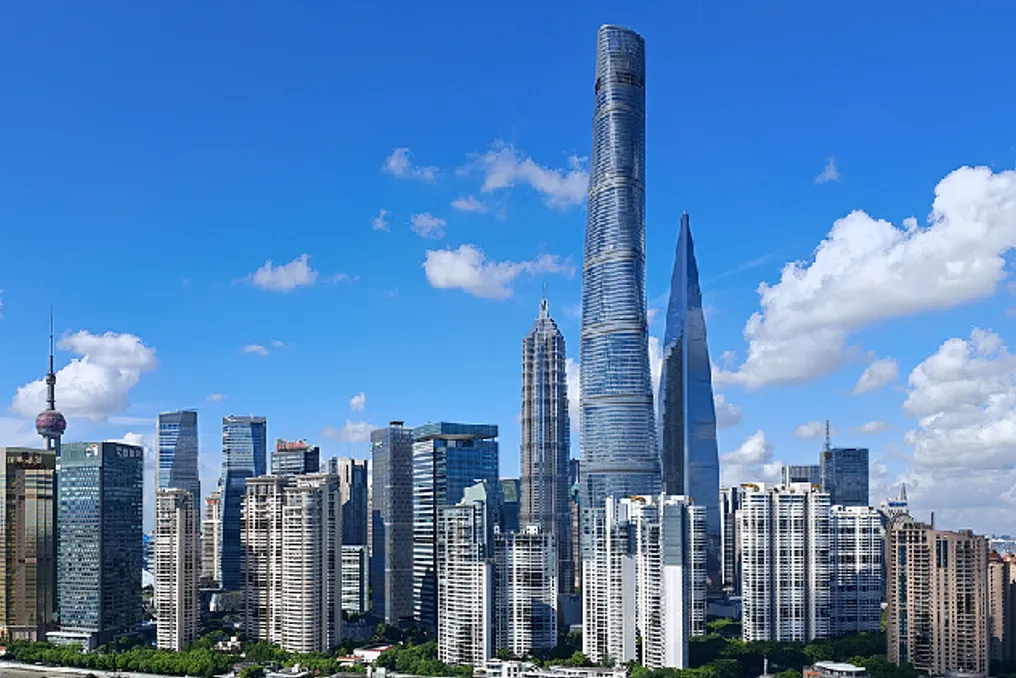
The speed of modern technology demonstrates the region's potential, where close interaction transforms geographical proximity into a powerful economic and technological asset. For instance, a low-altitude flight can transport passengers from Taicang in Jiangsu Province to Pudong, Shanghai, in about 20 minutes, covering a distance of approximately 70 kilometers by road. An industrial robot can leave the production line in just 12 minutes, and data transmission across the computing network takes only one millisecond.
The Yangtze River Delta (YRD), located on China's eastern coast in the lower reaches and mouth of the Yangtze River, is one of the country's most dynamic, open, and innovative city clusters. This region includes the municipality of Shanghai and the provinces of Jiangsu, Zhejiang, and Anhui. It is home to approximately 17% of China's population while occupying only 4% of the country's territory. In the first quarter of this year, the region's aggregate GDP reached 8.5 trillion yuan ($1.26 trillion), accounting for over a quarter of the national figure.
Recognizing the immense potential of coordinated regional development, Chinese President Xi Jinping announced in November 2018 that the integrated development of the YRD would be adopted as a national strategy. Speaking at the opening ceremony of the First China Import and Export Fair in Shanghai, Xi stated: 'We will make this a national strategy and sincerely implement our new philosophy of development. We will build a modern economic system and adopt higher standards of reform and openness.'
Under the guidance of this strategy, the region has gained significant advantages and become a model of high-quality development through its integration. In August 2020, President Xi held a symposium in Hefei, Anhui Province, to outline specific steps for advancing YRD integration. This was the first such meeting since the strategy was elevated to a national priority. Xi emphasized the need for a deeper understanding of the delta's role in China's economic and social growth, as well as the necessity of better promoting coordinated regional development amid serious and complex challenges.
This approach is reflected in the economy, vividly illustrated by the production of a humanoid robot. The work begins in Shanghai, where the company conducts research, development, and final assembly. Less than 100 kilometers to the west, in Changzhou and Wuxi of Jiangsu Province, key components such as motors and joint modules are supplied. Further south, in Jiading, Zhejiang Province, multimodal data training and algorithm development take place. Additionally, 400 kilometers to the west, in Benbu, Anhui Province, the main hardware, including self-developed six-axis force sensors, is supplied.
These close industrial ties have formed a cooperation network across the region. For one humanoid robot manufacturer, an order can go from placement to shipment in less than a day, and key suppliers can respond within hours. The cycle from research and development to mass production has been reduced from over a year to approximately six months. By leveraging its own strengths and close interaction, the cities of the YRD are uniting previously disparate industrial resources into integrated supply chains, strengthening the overall competitiveness of the industry.
The region's economic power continued to grow parallel to this integration. In 2025, the YRD's aggregate GDP reached 34.66 trillion yuan, which was 5.4% higher year-on-year at constant prices and accounted for about 24.7% of China's total economy.
Striving for high-quality, sustainable, and long-term development, Xi has repeatedly emphasized innovation in regional development. Presiding over a symposium on November 30, 2023, in Shanghai, he reiterated the need to strengthen inter-regional cooperation in science and technology, as well as industrial innovation. The region is being positioned to be a source of scientific and technological innovation by pooling innovative forces and resources across different fields.
Recently, scientific and technological departments from Shanghai, Jiangsu, Zhejiang, and Anhui jointly established the YRD Science and Technology Innovation Community office. In May, the region launched an action plan for this community, promising to sign a coordinated legislative framework for scientific and technological innovation, establish a joint fund, and launch 29 joint research projects, including real-time millisecond-level 6G intelligent wireless technologies. By June 2025, the YRD had created 26 national-level advanced manufacturing clusters, accounting for 32.5% of the national figure and covering sectors such as large-scale aviation, biomedicine, new materials, and high-tech equipment, thereby cementing its role as a center for industrial modernization. The region's R&D intensity, measured by R&D expenditure as a percentage of GDP, increased from 2.81% in 2018 to 3.34% in 2023.