Engineering teams often assess a system's scalability based on performance metrics: operational stability, the servers' ability to handle load, and the timeliness of releases. However, for a brand that sells through D2C channels, mobile apps, and retail stores simultaneously, such an assessment only reveals half the picture. A more complex criterion is the alignment of technological solutions with the business model itself.
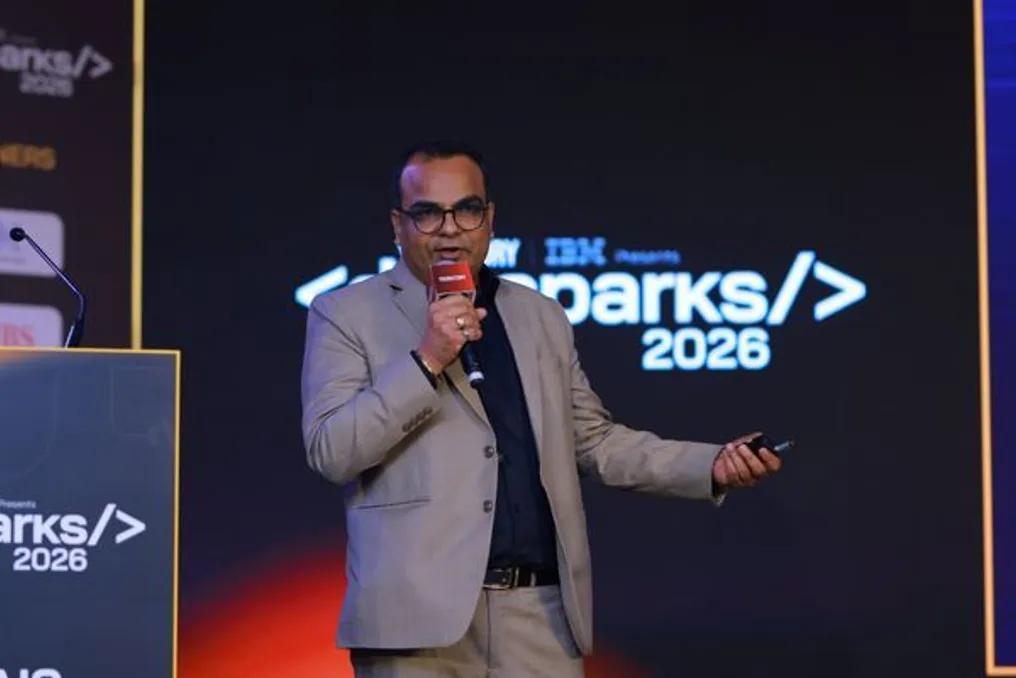
This question became the central theme of his presentation at the DevSparks Hyderabad 2026 event, titled 'Beyond Code: Creating Technologies That Scale Business.' The event gathered developers, technology leaders, startups, and Global Centers of Excellence for sessions focused on agent AI, cybersecurity, cloud infrastructure, and developer productivity.
The presentation was given by Achal Sharma, CTO of Technosport—a clothing brand based in Bengaluru that manufactures apparel from yarn to finished product and manages its own retail and digital business. Sharma has nearly two decades of experience in engineering leadership, having previously worked at Myntra, Mobile Premier League, and Wakefit before joining Technosport.
Sharma pointed out a common misconception from his career: that traffic spikes during sales are solved by adding more servers. He noted, 'It's not always the servers, architecture, or a well-defined system that is the culprit.' He provided examples where server capacity was sufficient during peak loads, but the bottleneck was found elsewhere: in inventory levels, code development speed, or some other part of the customer experience. According to him, the solution depends on accurately identifying the failure point, not automatically defaulting to infrastructure as the answer.
Sharma also extended this thought to the topic of customer experience. Users do not discuss checkout APIs or backend architecture; they notice whether their order arrived on time and what went wrong if it didn't. At Technosport, this experience passes through a layer that most digital brands overlook: manufacturing, sizing, and in-store inventory. The company uses artificial intelligence to forecast demand while simultaneously working to eliminate gaps in inventory accuracy, in-store availability, and product image precision.
He reported that in the last fiscal year, Technosport achieved revenue of 600 crore rupees, plans to exceed 1000 crore rupees this year, and is migrating its website from Shopify to a proprietary development. Regarding the use of AI tools in engineering workflows, Sharma emphasized that specificity matters more than the tool itself. He stated, 'If you generalize your requirement from a business perspective and provide it to an agent, it will give you a better result,' contrasting this with vague prompts that yield generic answers.
He applied this logic to how engineers evaluate their work, asserting that technical feasibility should not be the sole filter for deciding what to build. He posed the question: 'Can we build it? The next question: should we build it?' The core idea of Sharma's session was that engineering decisions carry more weight when made with business context in mind, rather than in isolation. Choosing infrastructure, implementing AI, and even debating what needs to be built are continuations of the same discipline: understanding real business needs before deciding on the method of implementation.