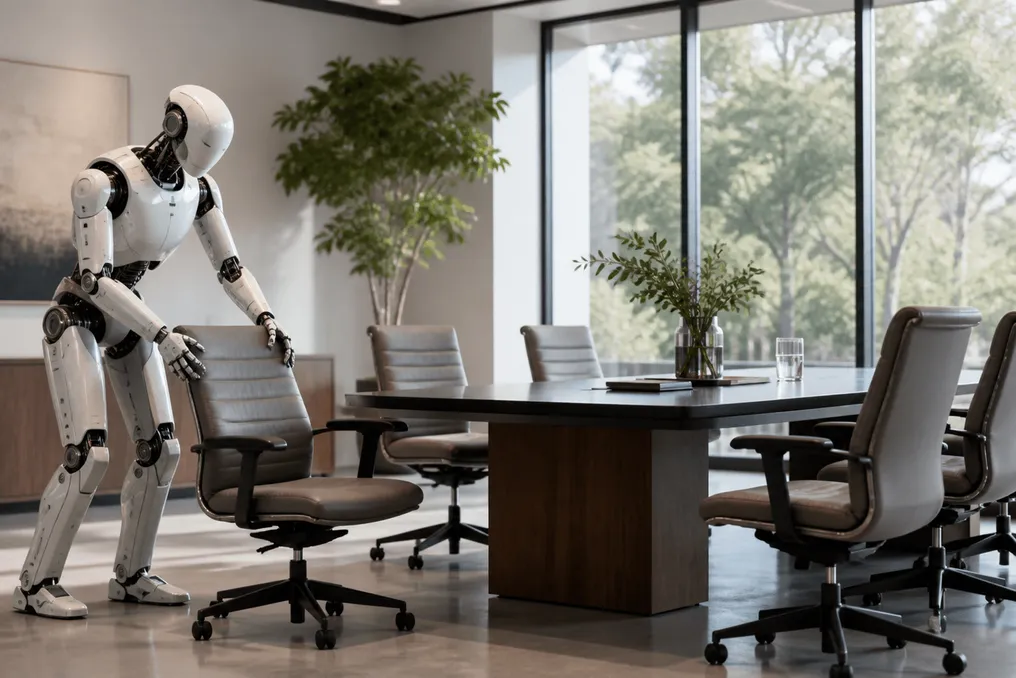
Robots are now required to prove their ability to perform real work, rather than just demonstrating physical capabilities such as high speed or jumping. At the World Robotics Conference in 2026, Unitree founder Wang Xinsin demonstrated a robot that tidied up a meeting room, performing seven or eight tasks, switching between them using a single model, and handling external disturbances. He considers such scenarios sufficiently practical.
According to the 'Humanoid Robot Industry Development Report for 2026,' published by Zhang Feng, chairman of the Chinese Society of Humanoid Robots, over 40,000 units were shipped in China in the first half of 2026, with the global share reaching 97%. However, increased shipments alone do not guarantee commercialization.
Leading companies, including Unitree, Starship Navigator, and Galaxy General, agree that the key barrier is the ability to operate in unfamiliar environments, quickly learn new tasks, and function with near-human efficiency. Although Unitree presented a robot capable of speeds of 12.65 meters per second, such capabilities are still far from factory conditions; the robot has been used in automotive plants since 2024 but has not scaled due to insufficient efficiency and generalization.
Starship Navigator founder Gao Ziyang proposed measuring progress through three parameters: speed, accuracy, and generalization. A robot folding a short-sleeved shirt took about two minutes, and its task completion rate is approximately 70–80% of human level, requiring further work on millimeter precision. Generalization relates to the cost of training a robot worker: about 10 hours of additional training is needed for a new task, with the goal of reducing this time to one hour next year.
Starship Navigator's automated warehouse, which works with JD.com, handles picking, grasping, placing, and packaging, processing over 100 orders daily without human intervention and currently fulfilling thousands of productive orders managed by models. The focus has shifted from selling robots themselves to selling performance, and value has moved from hardware to intelligence.
In response to the question of the 'ChatGPT moment,' Wang Xinsin assesses readiness at 80%: if a robot in an unfamiliar home can perform about 80% of tasks via voice instruction, embodied intelligence will reach a tipping point; his forecast is two to three years with a fast pace and five to ten years with a slow one. Wang He from Galaxy General estimates current models to be around GPT-2 level, aiming to reach ChatGPT level by 2028.
What lies between robots and the ChatGPT moment is generalization: many models achieve nearly one hundred percent success in fixed environments but sharply decrease efficiency when the environment changes, and the last millimeters may contain an error that the robot cannot promptly correct. The biggest bottleneck is the insufficient alignment between AI and robot input and output. Data is a scarce production factor, and a scalable brain may require tens of millions of hours, whereas the industry only has one hundred thousand. Over 40,000 units sold in the first half proves that robots are leaving the labs; however, whether they can reliably perform most tasks in an unfamiliar environment will determine if they are merely sellable machines or a source of continuously created value.